Khyber Pakhtunkhwa Governor's rule stokes rage, mineral fears
Synopsis
Pakistan has suspended an elected government in Khyber Pakhtunkhwa, deployed the army and detained the Chief Minister — and the Governor's first moves involved minerals and gold-mining leases. A Dawn analysis warns the silence on the streets is not consent, and that decades of 'mainstreaming' could unravel within six months.
Key Takeaways
Pakistan imposed an emergency and Governor's rule in Khyber Pakhtunkhwa , deploying the army and detaining the Chief Minister .
A technocratic council replaced the provincial cabinet; the arrangement is constitutionally valid for a maximum of six months .
Pakistan Tehreek-e-Insaf's seat tally in the province grew from 35 of 99 (2013) to around 90 of 115 (2024).
Casualties rose from 169 killed in 2021 to 581 killed in 2025 , citing PIPS figures.
The Governor announced plans to extract and sell minerals and later cancelled all gold-mining leases .
The Pashtun Tahaffuz Movement has been banned, adding an ethnolinguistic edge to centre-province ties.
The imposition of Governor's rule in Pakistan's Khyber Pakhtunkhwa province and the suspension of its elected government have deepened a sense of marginalisation among residents and fuelled fears over the province's mineral wealth, according to an analysis published in the leading Pakistani daily Dawn. The report warns that decades of 'mainstreaming' could be undone if the system is bent beyond breaking point.
According to the analysis, an emergency was declared, the army was deployed, the Chief Minister was placed under preventive detention, and a technocratic council replaced the provincial cabinet.
Key Developments in Khyber Pakhtunkhwa
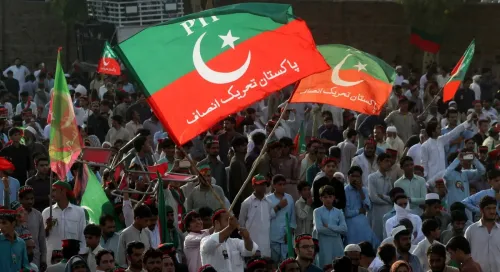
The move sidelines a province where the Pakistan Tehreek-e-Insaf has steadily tightened its electoral grip. The party won 35 of 99 general seats in 2013, rose to 66 of 99 in 2018, and secured around 90 of 115 in 2024, the report noted.
That trajectory means the suspended government represented a clear and growing mandate. Its removal has, according to the analysis, sharpened the province's sense of distance from the federal centre.
Constitutional Limits on Governor's Rule
The report stressed that the arrangement has a fixed legal ceiling. “This dispensation — at least Governor's rule and the attendant technocracy — is constitutionally valid for a maximum of six months (two months at a time, to be extended by a joint sitting of parliament) even if, as it would ominously appear, the stewards of this interregnum are settling in as if for a full term,” it stated.
It further warned that the legitimacy of any decision with permanent political, administrative or economic implications for the province will be put under the microscope.
Security Situation and Mineral Concerns
The analysis acknowledged that security in the province is not under control. Citing figures from PIPS, it said annual casualties rose from 169 killed and 122 injured in 2021 to 581 killed and 698 injured in 2025.
Notably, the report said the emergency and Governor's rule appeared to confirm fears that the move was aimed at the province's mineral wealth. The Governor announced plans to extract and sell minerals and later cancelled all gold-mining leases, it noted.
Ethnolinguistic Tensions and Political Fallout
The report observed that relations between the province and the centre have taken on a distinctly ethnolinguistic tone, with the Pashtun Tahaffuz Movement banned and the Pakistan Tehreek-e-Insaf government suspended.
It cautioned against reading the lack of mass protest as acceptance. “Trauma unexpressed will always find a channel. It would be grave folly to assume that the absence of an immediate, widespread, and sustained outpouring of rage in reaction to the imposition of emergency and Governor's rule is proof that such rage does not exist,” the report stated.
“By the end of six months, if these lessons have not been learnt, and if there is an attempt to bend the system beyond breaking point, decades of 'mainstreaming' can be brought to nought,” it added.
What Lies Ahead
The analysis underlined that governance cannot be divorced from politics. “Governance is an extension of the political process, a product of it, a manifestation of the public will. And as such, its sustainability rests on foundations of political legitimacy, even if it is sidestepped in the short term,” it stated.
With the six-month constitutional window now the key marker, attention will turn to whether Islamabad restores elected rule in Khyber Pakhtunkhwa or seeks extensions through parliament.
Point of View
Yet the Governor's earliest headline actions concerned minerals and mining leases — a sequence that hands critics their strongest argument. Suspending a government that won roughly 90 of 115 seats, while banning a Pashtun rights movement, risks converting a political dispute into an ethnic grievance in a frontier province already reeling from rising violence. For India, an increasingly unstable Khyber Pakhtunkhwa matters, given its long history as a militancy corridor. The six-month constitutional clock will reveal whether this is a stopgap or a quiet re-engineering of the province's politics.
NationPress
28 Nov 2026
Frequently Asked Questions
What has happened in Khyber Pakhtunkhwa?
Pakistan has suspended the elected provincial government and imposed Governor's rule in Khyber Pakhtunkhwa. An emergency was declared, the army deployed, the Chief Minister placed under preventive detention and a technocratic council installed in place of the cabinet.
How long can Governor's rule last in Khyber Pakhtunkhwa?
It is constitutionally valid for a maximum of six months, according to the Dawn analysis. It runs two months at a time and must be extended by a joint sitting of parliament.
Why are there fears over mineral wealth in Khyber Pakhtunkhwa?
The report said the Governor announced plans to extract and sell minerals and later cancelled all gold-mining leases. This appeared to confirm fears that the move was aimed at the province's mineral resources.
How bad is the security situation in Khyber Pakhtunkhwa?
Citing PIPS figures, the report said annual casualties rose from 169 killed and 122 injured in 2021 to 581 killed and 698 injured in 2025. It acknowledged the situation is not under control.
Which party governed Khyber Pakhtunkhwa before Governor's rule?
The Pakistan Tehreek-e-Insaf led the province, winning around 90 of 115 general seats in 2024. Its tally had grown from 35 of 99 in 2013 and 66 of 99 in 2018.