AI must work for ordinary Indians, not copy US models: Ambassador Kwatra
Synopsis
India's top diplomat in Washington flipped the usual AI debate on its head in Seattle — insisting the real test for AI in India is not which frontier model wins, but whether a grocery-shop owner paying ₹300 a month gets a useful outcome. With Microsoft's $17.5 billion and Amazon's $48 billion India bets as backdrop, Ambassador Kwatra's message to Big Tech was blunt: build for Indian society, or don't expect scale.
Key Takeaways
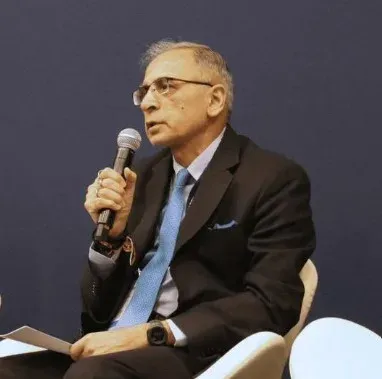
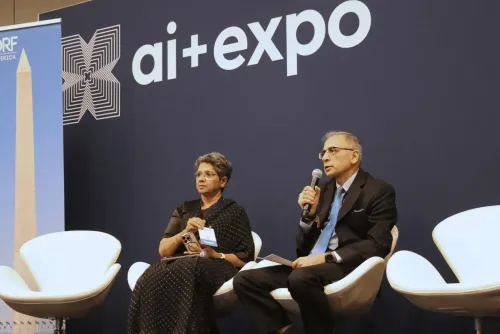
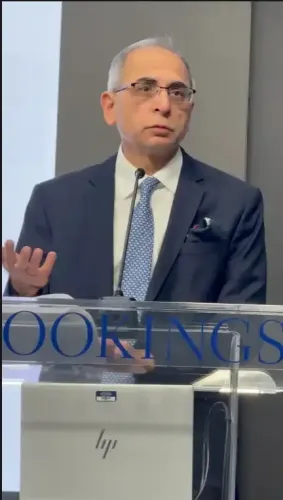
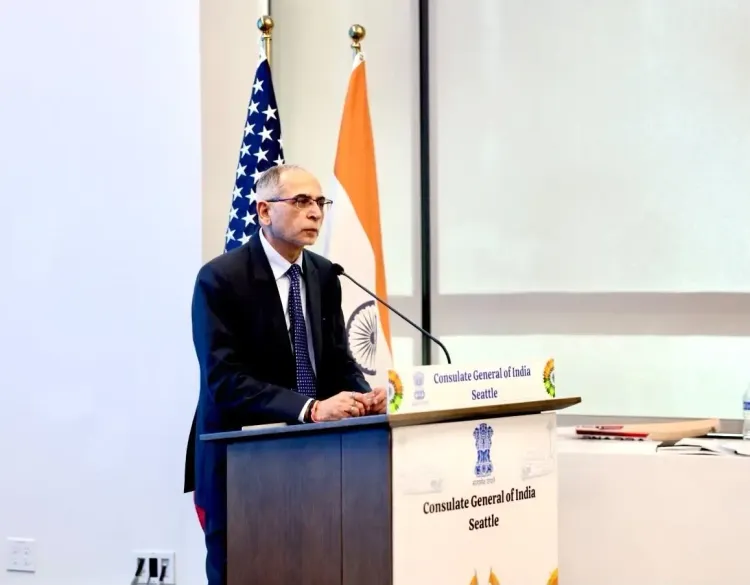
India's Ambassador to the US, Vinay Kwatra , told the Ideas4India forum in Seattle on 17 September 2026 that AI models built for the US cannot simply be replicated in India.
He set a practical benchmark: a small grocery owner willing to pay ₹300 a month for AI only if it produces a useful outcome.
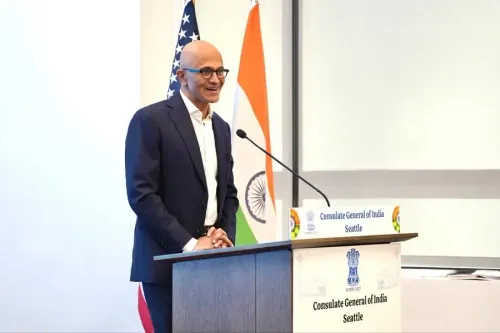
Satya Nadella , Microsoft Chairman and CEO, echoed the theme, citing an AI-on-WhatsApp tool that helped an Indian farmer access government scheme information.
Kwatra said financing for AI will follow demonstrated outcomes, not computing capacity: 'Money will come only if there is an outcome associated with that inference.' Microsoft has announced a $17.5 billion India investment for 2026–2029 ; Amazon has announced $48 billion for 2026–2030 .
More than 40 Indian-origin technology executives attended the forum, convened as a follow-up to the India AI Impact Summit 2026 .
India's Ambassador to the United States, Vinay Kwatra, has said artificial intelligence will achieve meaningful scale in India only if it delivers tangible benefits to ordinary citizens and small businesses — firmly cautioning technology leaders against assuming that models built for Silicon Valley can be transplanted wholesale into the Indian context.
Speaking at the Ideas4India forum in Seattle on 17 September 2026, Kwatra framed India's engagement with AI as fundamentally development-driven, shaped by the outcomes it produces rather than the sophistication of its architecture.
'I can tell you what works in Bay Area and Seattle will not work in India,' he said.
The Grocery-Owner Test
Kwatra illustrated his argument with a concrete example: a small grocery-shop owner in India. Such a business, he said, would be willing to pay ₹300 a month for an AI-enabled service — but only if it delivered a useful, measurable outcome. The anecdote was directed at a room of technology executives who had raised questions about India's AI capabilities, talent, infrastructure, and role in developing frontier technology.
'So I think all questions on AI get answered on outcome at the level of society,' Kwatra said.
He pointed to India's digital public infrastructure — widely credited with accelerating financial inclusion — as proof that technology finds acceptance in India when it produces results people can actually use. The implication was clear: AI must follow the same logic.
Rethinking Who Creates Technology
The ambassador also pushed back on a narrow definition of technological creation, arguing that what counts as innovation differs according to a person's level of development and immediate circumstances.
'So when I'm struggling for my food, then food security is my creation,' Kwatra said, challenging participants to broaden their understanding of what meaningful technology contribution looks like in a developing economy.
He added that AI deployment in India would happen across all three layers of the stack — sovereign models, sectoral applications, and consumer-facing services — but at a pace and scale that both society and infrastructure could genuinely support.
'AI will get positioned in India in all three layers, but at a scale and at the level which society can absorb and infrastructure can support,' he said.
Financing Follows Outcomes
On the question of funding India's AI ambitions, Kwatra was equally direct: capital would flow only where results could be demonstrated. 'Money will come only if there is an outcome associated with that inference,' he said, linking investment explicitly to proven deployment value rather than theoretical computing capacity.
He also delineated separate responsibilities between government and the private sector. Decisions around sovereign AI models, data governance, and whether Indian datasets should be available for global model training were questions for authorities to resolve. Corporate India, he argued, had a parallel and complementary role — and he called on Indian companies, not just policymakers, to answer questions about large language model development.
Nadella, Big Tech Investment, and What Comes Next
Microsoft Chairman and Chief Executive Satya Nadella, the forum's guest of honour, echoed the inclusive-access theme. He recalled a demonstration in India where an AI-enabled service helped a farmer query a government scheme through WhatsApp — precisely the kind of ground-level use case Kwatra had argued must anchor India's AI strategy.
The 17 September gathering was organised by the Consulate General of India in Seattle as a follow-up to the India AI Impact Summit 2026, bringing together more than 40 Indian-origin chief executives and chief technology officers. The consulate noted that Microsoft has announced a $17.5 billion investment in India between 2026 and 2029, while Amazon has announced a $48 billion commitment between 2026 and 2030 — underscoring the commercial scale behind India-US technology cooperation.
Kwatra also acknowledged the contribution of Indian-origin technology leaders in the United States, noting that their achievements shape global perceptions of India even when the connection is not immediately visible. As both governments and corporations map their AI strategies, the ambassador's message pointed toward one clear benchmark: deployment that works at the bottom of the pyramid, not just at the frontier.
Point of View
Which has leaned heavily on headline investment numbers rather than verified ground-level deployment outcomes. The irony is that India's digital public infrastructure — Aadhaar, UPI, ONDC — already demonstrated this logic works, yet the AI conversation keeps reverting to frontier-model rivalry. Kwatra's insistence that 'money will come only if there is an outcome associated with that inference' is also a quiet warning to domestic AI startups: vaporware will not be funded on national-interest grounds alone.
NationPress
18 Sept 2026
Frequently Asked Questions
What did India's Ambassador Vinay Kwatra say about AI at the Seattle forum?
Ambassador Vinay Kwatra said AI will gain meaningful scale in India only if it delivers practical benefits to ordinary citizens and small businesses, warning that models designed for the US market cannot simply be transplanted into India. He spoke at the Ideas4India forum in Seattle on 17 September 2026.
What was the ₹300-a-month example Kwatra used?
Kwatra used a small grocery-shop owner as his benchmark, saying such a business would pay ₹300 a month for an AI service only if it produced a tangible, useful outcome. The example was meant to anchor the AI debate in real-world demand rather than technological ambition.
What role did Satya Nadella play at the Ideas4India forum?
Microsoft Chairman and CEO Satya Nadella was the guest of honour at the 17 September 2026 forum. He reinforced the inclusive-access theme by recalling a demonstration where an AI-enabled tool helped an Indian farmer access information about a government scheme via WhatsApp.
What are Microsoft's and Amazon's investment commitments in India?
Microsoft has announced a $17.5 billion investment in India between 2026 and 2029, while Amazon has announced a $48 billion commitment between 2026 and 2030. The consulate cited both as examples of the commercial relationship underpinning India-US technology cooperation.
What is the India AI Impact Summit 2026, and how does this forum relate to it?
The India AI Impact Summit 2026 was a flagship event focused on India's artificial intelligence strategy. The Ideas4India gathering in Seattle on 17 September 2026, organised by the Consulate General of India in Seattle, served as a follow-up, bringing together more than 40 Indian-origin technology chief executives and chief technology officers.