South Korea's Lee thanks Turkmenistan for Iran evacuation amid US-Iran war
Synopsis
As the US-Iran war forced 30-plus South Koreans to flee Iran overland in March 2026, it was Turkmenistan that opened the corridor. President Lee’s public thanks at Cheong Wa Dae — paired with 13 new bilateral agreements and Ashgabat’s endorsement of the END denuclearisation initiative — signals how a humanitarian crisis quietly deepened a geopolitically significant friendship.
Key Takeaways
President Lee Jae Myung thanked President Serdar Berdimuhamedow on 15 September 2026 for Turkmenistan’s role in evacuating South Koreans from Iran.
More than 30 South Koreans were evacuated overland through Turkmenistan in March 2026 , shortly after the US-Israel military campaign against Tehran began in late February 2026 .
The two leaders met at Cheong Wa Dae on the sidelines of the inaugural South Korea-Central Asia Summit , scheduled for Wednesday, 16 September 2026 .
Turkmenistan expressed support for Lee’s END initiative (Exchange, Normalisation and Denuclearisation) on the North Korea question.
The two nations signed 13 bilateral agreements and MOUs covering investment, infrastructure, and transnational crime cooperation.
South Korea-Turkmenistan ties date to a mutually beneficial partnership forged in 2008 .
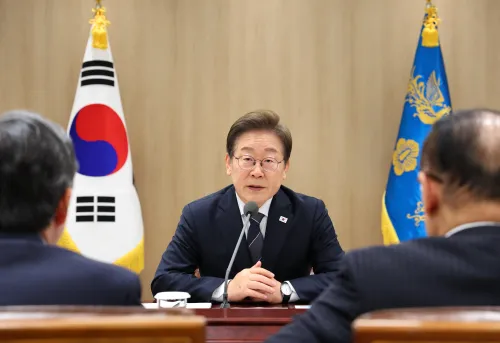
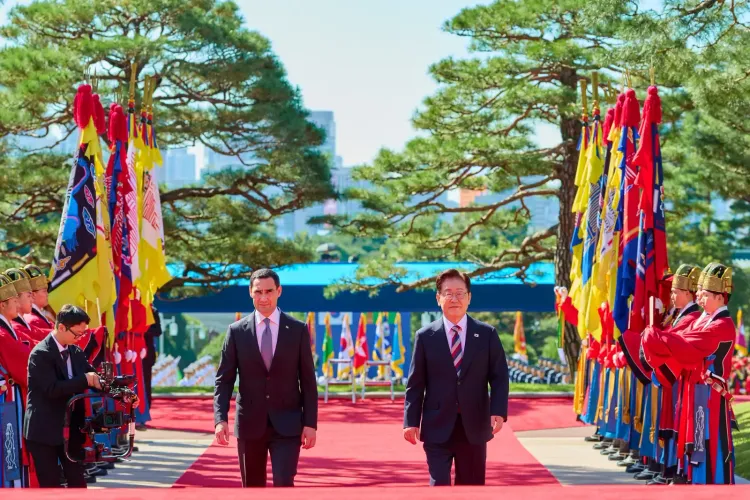
South Korean President Lee Jae Myung on Tuesday, 15 September 2026, formally thanked Turkmenistan's President Serdar Berdimuhamedow for facilitating the safe evacuation of South Korean nationals from Iran after the outbreak of the US-Iran war earlier this year. The expression of gratitude came during a bilateral summit at Cheong Wa Dae, held on the sidelines of the inaugural South Korea-Central Asia Summit scheduled for Wednesday.
The Evacuation That Triggered the Thanks
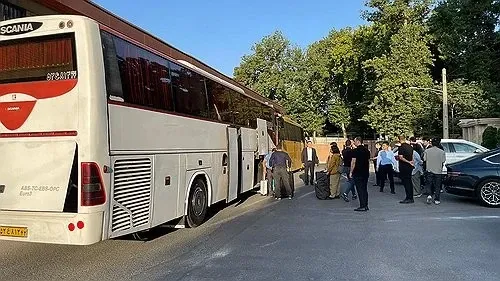
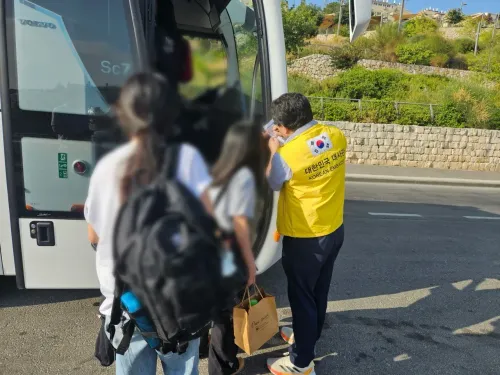
More than 30 South Koreans stranded in Iran were evacuated overland through Turkmenistan in March 2026, shortly after the United States and Israel launched military operations against Tehran in late February 2026. The land corridor through Turkmenistan proved critical as air routes became untenable amid the conflict.
“I deeply thank you for your special consideration in allowing our people and their families in Iran to safely escape through Turkmenistan during urgent situations in the Middle East last year and this year,” President Lee told Berdimuhamedow. He added: “The warm hand you extended at a difficult moment properly showed the deep trust and friendship between the two countries.”
Bilateral Ties and Strategic Interests
Lee also highlighted the broader trajectory of South Korea-Turkmenistan relations, noting that the two nations have steadily built a foundation for substantive cooperation since establishing a mutually beneficial partnership in 2008. He pointed to the potential of Turkmenistan’s extensive natural resources and its strategically significant location bordering the Caspian Sea and the wider Central Asia region as areas ripe for deeper collaboration.
Berdimuhamedow, for his part, said his country “assesses highly” Seoul’s continued backing of Turkmenistan’s international initiatives. He also signalled Ashgabat’s alignment with South Korea’s position on the Korean Peninsula, explicitly endorsing President Lee’s END initiative — standing for Exchange, Normalisation and Denuclearisation — as a framework for resolving the North Korea impasse. “We have consistently maintained the position that all issues pertaining to the Korean Peninsula should be resolved through peaceful dialogue and diplomatic means, and will continue to do so,” Berdimuhamedow said.
Agreements Signed
Following the summit talks, the two governments signed 13 bilateral agreements and memorandums of understanding (MOUs) spanning investment promotion, infrastructure development, joint responses to transnational organised crime, and other sectors. The breadth of the deal sheet reflects a deliberate effort by Seoul to expand its economic and security footprint across Central Asia at a moment when regional geopolitics are in flux.
Broader Context: South Korea-Central Asia Summit
The Lee-Berdimuhamedow meeting is one of several bilateral engagements anchored around the inaugural South Korea-Central Asia Summit in Seoul on Wednesday. The summit format signals Seoul’s intent to institutionalise its engagement with the region — a bloc that has grown in strategic relevance as global supply chains and energy routes are reshaped by ongoing conflicts. This comes amid South Korea’s active diplomatic posture following the US-Iran war, which directly exposed Korean nationals abroad to new risks and underscored the value of trusted regional partnerships.
How the broader South Korea-Central Asia Summit framework develops in the coming months will determine whether Tuesday’s warm bilateral symbolism translates into durable strategic depth.
Point of View
A region that Washington and Beijing have long treated as a secondary theatre. Whether this institutionalises into a durable South Korea-Central Asia axis, or remains a summit photo-op, will be tested by how many of those MOUs translate into funded projects.
NationPress
15 Sept 2026
Frequently Asked Questions
Why did South Korea’s president thank Turkmenistan?
President Lee Jae Myung thanked Turkmenistan for allowing more than 30 South Korean nationals to evacuate Iran via a land route through Turkmenistan in March 2026, after the United States and Israel launched military operations against Tehran in late February 2026. Without the Turkmenistan corridor, those citizens would have had no safe exit as air routes became untenable.
How many South Koreans were evacuated from Iran, and how?
More than 30 South Koreans were evacuated overland through Turkmenistan in March 2026, shortly after the outbreak of the US-Iran war. The land route was used because the conflict made air evacuation from Iran unsafe or impossible.
What is the South Korea-Central Asia Summit?
The South Korea-Central Asia Summit is an inaugural multilateral diplomatic forum convening in Seoul on Wednesday, 16 September 2026. It marks Seoul’s effort to institutionalise engagement with Central Asian states at a time when regional geopolitics are being reshaped by global conflicts and shifting supply chains.
What is President Lee’s END initiative on North Korea?
END stands for Exchange, Normalisation and Denuclearisation — a diplomatic framework proposed by President Lee Jae Myung for resolving the North Korea question. Turkmenistan’s President Berdimuhamedow explicitly endorsed the initiative during the 15 September 2026 summit, stating that all Korean Peninsula issues should be resolved through peaceful dialogue.
What agreements did South Korea and Turkmenistan sign?
The two countries signed 13 bilateral agreements and MOUs following the summit, covering investment promotion, infrastructure projects, and joint responses to transnational organised crime, among other sectors. The signings reflect a broadening of ties that began with a mutually beneficial partnership established in 2008.