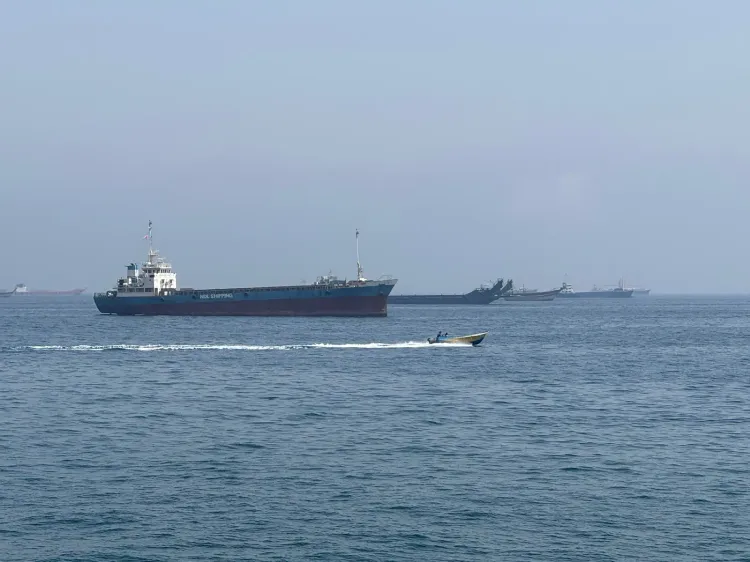
LPG tanker hit by debris near Strait of Hormuz in second attack Monday
Synopsis
Three commercial tankers struck in four days near the Strait of Hormuz — the world's most critical oil chokepoint. While Iran's IRGC openly claimed the Thursday strike on the Togo-flagged 'Trend,' Monday's twin attacks remain unattributed, raising urgent questions about who is targeting vessels and whether the waterway can remain safe for global energy trade.
Key Takeaways
An LPG tanker was struck by debris from unknown projectiles transiting outbound through the Strait of Hormuz on 21 September 2026 ; all crew reported safe.
A second tanker was hit earlier the same day during an inbound transit, leaving two crew members with minor injuries.
Three tanker strikes have now been recorded in the Strait of Hormuz within a four-day window .
Iran's IRGC navy claimed responsibility for the Thursday strike on the Togo-flagged tanker 'Trend' , describing it as a response to 'illegal' passage.
The UKMTO is advising all vessels in the area to transit with caution and report suspicious activity; investigations are ongoing.
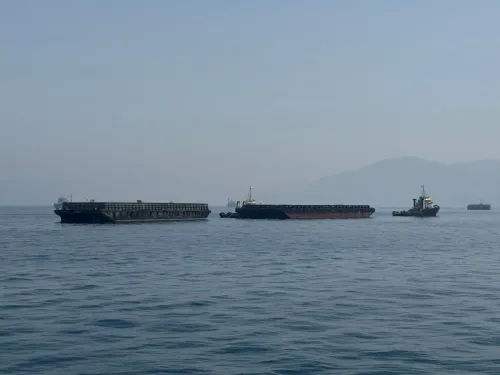
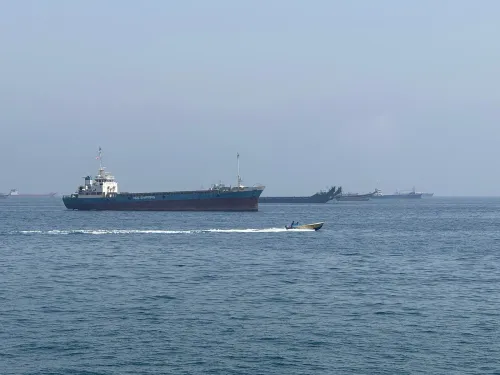
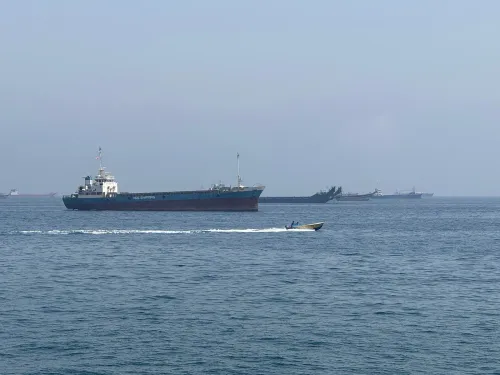
An LPG tanker was struck by debris from unknown projectiles while transiting outbound through the Strait of Hormuz on Monday, 21 September 2026, the United Kingdom Maritime Trade Operations (UKMTO) confirmed after receiving a delayed report from the vessel's master. All crew members were reported safe, with no environmental damage recorded.
Second Attack in a Single Day
The incident marked the second tanker-related attack logged by the UKMTO on Monday. Earlier that day, a separate tanker transiting the Strait of Hormuz was struck by an unknown projectile during an inbound transit, leaving two crew members with minor injuries. That vessel also continued to its next port of call under its own power, with no environmental impact reported.
Both vessels are proceeding to their respective destinations as authorities investigate the circumstances of each strike. The UKMTO has advised all vessels operating in the area to transit with caution and report any suspicious activity.
A Pattern Forming: Three Strikes in Four Days
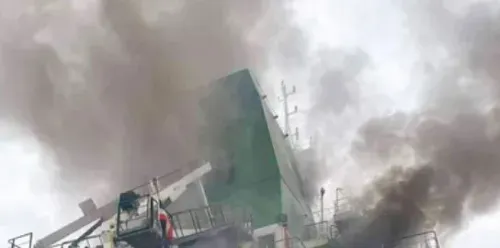
Monday's twin incidents came just three days after the UKMTO reported that another tanker had been hit by an unknown projectile in the same waterway, triggering a fire onboard. All crew in that earlier incident were also reported safe. Taken together, three separate tanker strikes have now been recorded in the Strait of Hormuz within a four-day window — a frequency that has heightened alarm among maritime security officials and shipping operators worldwide.
Notably, the strait is one of the world's most critical energy chokepoints, through which an estimated 20% of global oil trade passes daily. Any sustained disruption risks cascading effects on crude supply chains and energy prices.
Iran's IRGC Claims Responsibility for Friday Strike
The Islamic Revolutionary Guard Corps (IRGC) navy claimed responsibility for the strike that occurred the previous Thursday night, acknowledging in a statement published on its official outlet Sepah News that it had targeted a Togo-flagged oil tanker named 'Trend'. The IRGC described the vessel as having attempted an 'illegal' passage through the strait after being, in its characterisation, 'deceived and provoked' by the US Army.
The IRGC navy warned that any attempt at what it termed illegal passage through the waterway would lead to 'destruction,' and stated that its forces 'are still in control of the Strait of Hormuz with strength and will not let passage by any aggressor.' No group has yet claimed responsibility for Monday's two incidents.
Implications for Shipping and Energy Markets
The repeated targeting of commercial tankers in the Strait of Hormuz is likely to force shipping companies to reassess insurance premiums and transit protocols. War-risk insurance rates on Gulf routes have historically spiked during periods of heightened tension in the strait. Analysts note that the incidents align with a broader pattern of maritime pressure tactics that have episodically flared in the region since 2019.
With investigations ongoing and no formal attribution confirmed for Monday's attacks, shipping authorities are closely monitoring the situation for further escalation.
Point of View
And the frequency is accelerating. The IRGC's public claim for the 'Trend' strike is significant: it signals deliberate, state-sanctioned interdiction rather than rogue action, which raises the threshold for any diplomatic off-ramp. What mainstream coverage underplays is the insurance and logistical fallout: war-risk premiums on Gulf routes will climb regardless of attribution, effectively taxing global energy supply at a moment of already-elevated geopolitical uncertainty. If Monday's attacks go unattributed and unpunished, the Strait of Hormuz risks becoming a de facto contested waterway — with consequences that extend far beyond the ships involved.
NationPress
22 Sept 2026
Frequently Asked Questions
What happened to the LPG tanker near the Strait of Hormuz on 21 September?
An LPG tanker was struck by debris from unknown projectiles while transiting outbound through the Strait of Hormuz on 21 September 2026, according to the UKMTO. All crew members were reported safe, no environmental damage was recorded, and the vessel proceeded to its next port of call.
How many tankers were attacked near the Strait of Hormuz recently?
Three tankers have been struck in or near the Strait of Hormuz within a four-day window. Two incidents were recorded on Monday, 21 September, and one — involving the Togo-flagged tanker 'Trend' — occurred the previous Thursday night.
Did Iran's IRGC claim responsibility for the attacks?
Iran's IRGC navy claimed responsibility specifically for the Thursday-night strike on the Togo-flagged tanker 'Trend,' stating it was targeted for attempting 'illegal' passage through the strait. No group has claimed responsibility for Monday's two separate incidents.
What is the UKMTO and what has it advised?
The United Kingdom Maritime Trade Operations (UKMTO) is a UK-run maritime security body that monitors commercial shipping in the Gulf and broader region. Following the incidents, it has advised all vessels in the area to transit with caution and report any suspicious activity while investigations continue.
Why does the Strait of Hormuz matter for global energy supply?
The Strait of Hormuz is one of the world's most critical oil and gas chokepoints, with an estimated 20% of global oil trade passing through it daily. Sustained attacks or closures in the strait can severely disrupt energy supply chains and drive up crude prices internationally.