Macron calls Trump's France remarks 'unacceptable and stupid' amid protest unrest
Synopsis
French President Macron didn't name Trump — but he didn't have to. Calling foreign leaders' remarks on the France protests 'unacceptable and stupid' and explicitly rejecting the migration-and-Islamists narrative as 'completely false', Macron added a sharp diplomatic edge to a domestic crisis, accusing foreign politicians of using France as a prop for their own election campaigns.
Key Takeaways
Emmanuel Macron on 22 October 2026 called foreign commentary on France's unrest 'unacceptable and stupid', in remarks widely directed at Donald Trump .
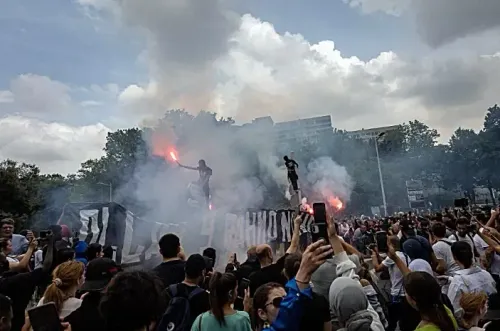
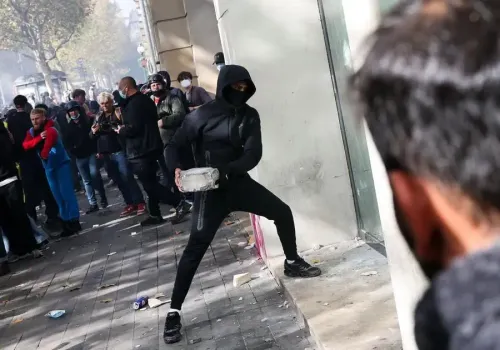
Trump had blamed immigration for unrest in France and Italy; French authorities attribute the violence to radical groups amid protests over living costs and education .
Macron rejected claims that France was 'overrun by migrants and Islamists' as 'completely false' .
He flagged the spread of AI-generated images falsely depicting scenes of unrest in France as fuelling disinformation.
Foreign Minister Jean-Noel Barrot said his office would brief affected countries to prevent further spread of false narratives on social media.
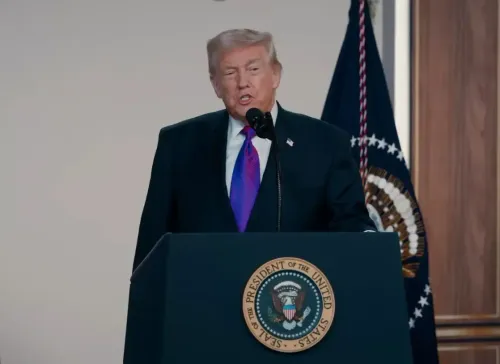
French President Emmanuel Macron on 22 October 2026 sharply rebuked foreign leaders — including those 'on the other side of the Atlantic' — for exploiting France's volatile social climate for political gain, following a weekend of looting and unrest in Paris and other French cities. The rebuke was widely understood as directed at US President Donald Trump, who had publicly blamed immigration for the unrest sweeping parts of Europe.
What Triggered the Diplomatic Spat
Protests over soaring living costs and education policy have gripped France in recent days, drawing international attention. Trump had warned that France and Italy risk further instability unless their governments tighten border controls, framing the unrest as a consequence of immigration policy. French authorities, however, have attributed much of the recent violence to radical groups rather than migrants.
Macron pushed back forcefully, describing the foreign commentary as evidence of 'foreign manipulation of information' in the wake of the weekend's incidents. 'And that has led to comments that are as unacceptable as they are stupid, from many people, including foreign leaders,' he said.
Macron's Direct Response to Trump
When a reporter asked whether his criticism was directed specifically at Trump, Macron replied simply: 'Among others.' He went on to reject Trump's characterisation of France as being 'overrun by migrants and Islamists', calling the assertion 'completely false'.
Macron also flagged the spread of AI-generated images depicting scenes he said had never actually occurred in France, arguing they were fuelling misleading narratives about the scale and nature of the unrest. 'AI-generated images depicting scenes that never actually happened in France. We've had people claiming that we were invaded by hordes of migrants and Islamists, which is completely false,' he said.
Macron Accuses Foreign Leaders of Political Opportunism
The French president appeared particularly aggrieved that leaders in the middle of election campaigns were amplifying unverified content about France. 'When I see leaders who are in the middle of election campaigns, whether in the region or on the other side of the Atlantic — who sometimes naively repeat AI-generated content or spread narratives that certain circles are clearly trying to promote about what happened in France — they're using our country for their own political campaigns... And we don't need that,' he said.
He also took aim at the broader sentiment underlying the foreign criticism. 'The fact is, all the people who are speaking ill of our country right now are people who don't love our country,' Macron added. 'So those people really bother me.'
France's Foreign Ministry Steps In
French Foreign Minister Jean-Noel Barrot said his office was prepared to brief the countries concerned with accurate information, specifically to prevent the further spread of false claims on social media. He framed the outreach as a damage-control measure aimed at stopping the amplification of misleading narratives abroad.
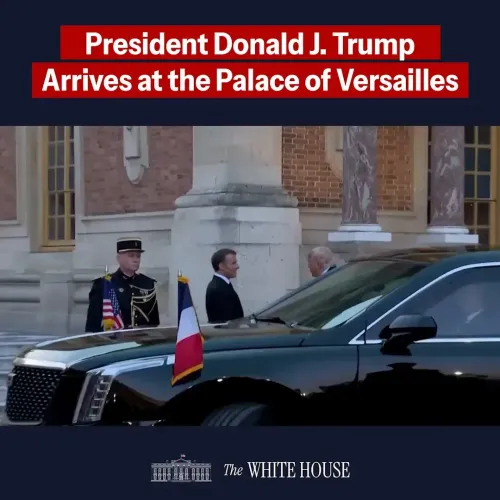
This comes amid a broader European trend of leaders pushing back against what they describe as foreign interference in domestic discourse through coordinated disinformation, particularly around elections and civil unrest. The episode marks one of the sharpest public exchanges between Paris and Washington in recent memory, and is likely to add friction to an already strained transatlantic relationship.
Point of View
He reshapes a debate about governance failures into a story about external interference. The Trump-immigration framing, however false Macron says it is, has already reached millions of social media users; a ministerial clarification will not undo that reach. What's striking is how openly Macron called out the AI disinformation loop — a rare instance of a sitting head of state directly naming synthetic media as a threat to his country's international image. The transatlantic fallout, coming as both the US and France navigate their own political pressures, suggests this is far from the last word.
NationPress
22 Oct 2026
Frequently Asked Questions
What did Macron say about Trump's remarks on the France protests?
Macron called the comments of foreign leaders, including those 'on the other side of the Atlantic', both 'unacceptable and stupid', and rejected Trump's claim that France was overrun by migrants and Islamists as 'completely false'. When asked directly if he meant Trump, Macron replied 'Among others.'
What caused the protests and unrest in France?
Protests in France were driven by soaring living costs and education policy grievances. French authorities have attributed much of the recent violence to radical groups, rejecting the framing that immigration was the primary cause.
What role did AI-generated images play in the France unrest coverage?
Macron said AI-generated images depicting events that never actually occurred in France were circulated widely, fuelling false narratives about the scale of the unrest. He argued these fabricated visuals were being used to promote the claim that France had been 'invaded by hordes of migrants and Islamists.'
How has the French government responded to foreign disinformation about the protests?
French Foreign Minister Jean-Noel Barrot said his office was prepared to brief the countries concerned with accurate information to prevent the further spread of false claims on social media. Macron himself publicly addressed the issue to counter misleading international narratives.
Why did Macron accuse foreign leaders of political opportunism?
Macron argued that leaders in the middle of election campaigns — in Europe and the United States — were amplifying unverified or AI-generated content about France to serve their own political interests. He said France did not need foreign politicians using its domestic troubles as campaign material.