Will Malaysia Hold a Special ASEAN Meeting on Border Clashes?
Click to start listening
Synopsis
In a crucial move, Malaysian PM Anwar Ibrahim has announced a Special ASEAN Foreign Ministers' Meeting to address escalating tensions between Cambodia and Thailand. This meeting aims to promote peace and de-escalation, following recent clashes and international discussions with high-profile leaders, including US President Donald Trump.
Key Takeaways
- Malaysia is set to convene a Special ASEAN Foreign Ministers' Meeting.
- The meeting will focus on de-escalation of tensions between Cambodia and Thailand.
- Both nations have accused each other of violating peace agreements.
- US President Trump is involved in the diplomatic discussions.
- Regional stability remains a priority for ASEAN.
Kuala Lumpur, Dec 13 (NationPress) Malaysian Prime Minister Anwar Ibrahim announced on Saturday that Malaysia, as the ASEAN chair, will organize a Special ASEAN Foreign Ministers' Meeting shortly to address the escalating tensions along the Cambodia-Thailand border.
He emphasized that the meeting's purpose will be to evaluate the current circumstances and promote measures to reduce tensions.
In a social media update, the Prime Minister revealed that he had a conversation with US President Donald Trump, where they deliberated on the ongoing conflict, bilateral relations, and global matters of shared interest.
During this exchange, Anwar articulated Malaysia's commitment to encourage both nations to exercise restraint and return to dialogue using bilateral and ASEAN frameworks, as reported by Xinhua.
Anwar reaffirmed that Malaysia stands ready to support initiatives aimed at diffusing the situation, protecting civilians, and reinstating regional stability, in accordance with ASEAN's spirit of good neighborliness.
The caretaker Prime Minister of Thailand, Anutin Charnvirakul, and Cambodian Prime Minister Hun Manet disclosed that they engaged in separate discussions with Trump on Friday regarding the border dispute.
On that same day, Trump announced via social media that both leaders had agreed to implement a ceasefire effective Friday evening.
Anutin informed the media on Friday evening from the Government House that during his briefing with Trump about the border conflict, he claimed that Cambodia was the first to breach the joint peace declaration by not withdrawing its troops as previously agreed, leading to casualties and damage on the Thai side.
He asserted that Thailand subsequently took countermeasures to protect the lives and property of its citizens, emphasizing that for a new ceasefire to be established, Cambodia must first withdraw its forces and clear landmines along the border.
Hun Manet mentioned that he had a phone conversation with Anwar on Thursday and spoke with Trump on Friday.
"Cambodia has consistently adhered to peaceful methods for resolving disputes, as outlined in the KL Joint Declaration," he stated.
He proposed that the militaries or agencies of the United States and Malaysia could utilize their information-gathering resources, such as satellite imagery from that period and the following 24 hours, to verify which side initiated the fire.
Trump remarked on Friday through social media that Thailand and Cambodia have agreed to revert to the original peace agreement he facilitated earlier this year with the assistance of Prime Minister Anwar Ibrahim.
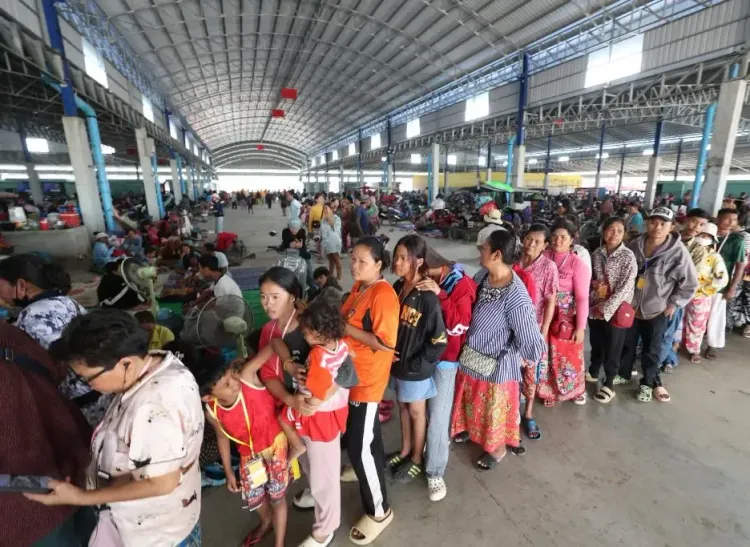
After armed confrontations in late July, the conflict along the Thailand-Cambodia border reignited on December 7. Both sides accused each other of instigating the conflict, confirming casualties. At least 10 Cambodian civilians and 11 Thai soldiers lost their lives, with hundreds of thousands displaced from their homes.
Armed confrontations between Cambodian and Thai troops erupted on July 24 along their border, resulting in numerous casualties, with both sides accusing each other of breaching international law.
A consensus was reached on August 7 concerning the details of a ceasefire, with both parties signing an agreement at the extraordinary meeting of the General Border Committee held in Kuala Lumpur, Malaysia.
On October 26, the two leaders signed a joint declaration on peace during the sidelines of the 47th ASEAN Summit in the Malaysian capital.
Point of View
It is essential to recognize Malaysia's proactive role in addressing the Cambodian-Thai border situation. By convening a Special ASEAN Meeting, Malaysia aims to foster dialogue and cooperation among nations, reflecting its commitment to regional stability and peace.
NationPress
13/12/2025
Frequently Asked Questions
What is the purpose of the Special ASEAN Meeting?
The Special ASEAN Meeting aims to assess the current border tensions between Cambodia and Thailand and to support de-escalation measures.
Who is involved in the discussions regarding the border conflict?
The discussions involve Malaysian Prime Minister Anwar Ibrahim, US President Donald Trump, Thailand's caretaker PM Anutin Charnvirakul, and Cambodian PM Hun Manet.
What triggered the recent clashes at the Cambodia-Thailand border?
The recent clashes were triggered by accusations from both sides of violating peace agreements, resulting in casualties and displacement of civilians.
What has been Malaysia's stance on the conflict?
Malaysia has expressed its readiness to mediate and support peaceful dialogue between Cambodia and Thailand to restore stability in the region.
What agreements have been previously made regarding the border situation?
A ceasefire agreement was reached on August 7, and a joint declaration on peace was signed during the 47th ASEAN Summit in October.