MEA: World must call out nations backing cross-border terrorism
Synopsis
India is mounting a coordinated diplomatic offensive on terrorism across three fronts simultaneously — MEA in New Delhi, NSA Doval at a major security forum in Moscow, and India's UN envoy at the Security Council in New York. The message is unified and unambiguous: nations backing cross-border terrorism must be named and held accountable, with Pakistan squarely in the crosshairs.
Key Takeaways
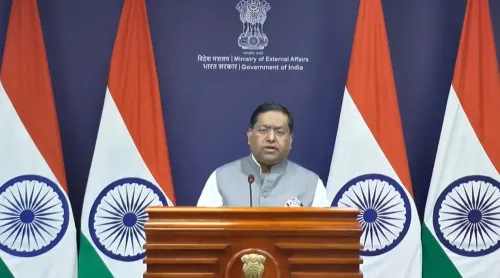
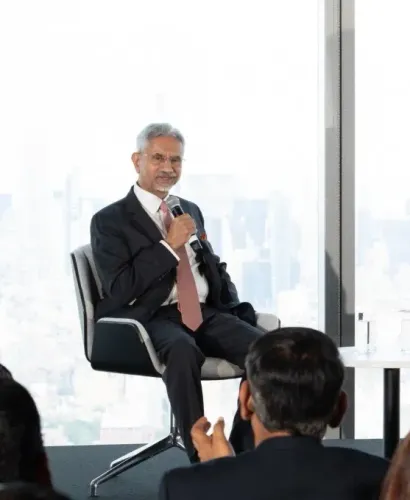
MEA spokesperson Randhir Jaiswal on 29 May said the international community must 'call out' nations that support and promote cross-border terrorism.
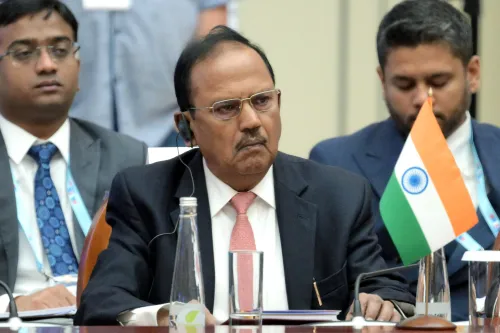
NSA Ajit Doval told the International Security Forum in Moscow that there can be 'no double standards' in fighting terrorism and responsible nations must choose sides decisively.
Doval called for reforms to post- 1945 international institutions and greater representation for the Global South .
India's Permanent Representative P.
Harish at the UN Security Council demanded Pakistan 'credibly and irrevocably' end all support for terrorism.
Harish warned that Pakistan's 'doctrine of bleeding India by 1,000 cuts' exposes its commitment to the UN Charter as hollow rhetoric.
The Ministry of External Affairs (MEA) on Friday, 29 May declared that the international community must publicly name and hold accountable nations that support terrorism and facilitate cross-border attacks — a pointed reiteration of India's long-standing position amid heightened diplomatic activity targeting Pakistan.
MEA's Direct Warning
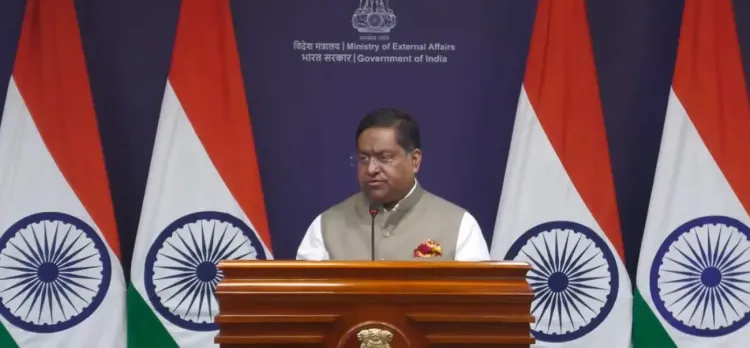
MEA spokesperson Randhir Jaiswal, speaking at the weekly media briefing in New Delhi, said: 'How we look at cross-border terrorism, on that, I need not repeat — cross-border terrorism is a threat which the whole world must come together and combat. We must call out countries who are supportive of terrorism and who are promoting cross-border terrorism from their territories.'
Jaiswal was responding to a question about National Security Advisor (NSA) Ajit Doval's remarks on terrorism during his ongoing visit to Moscow.
NSA Doval's Remarks in Moscow
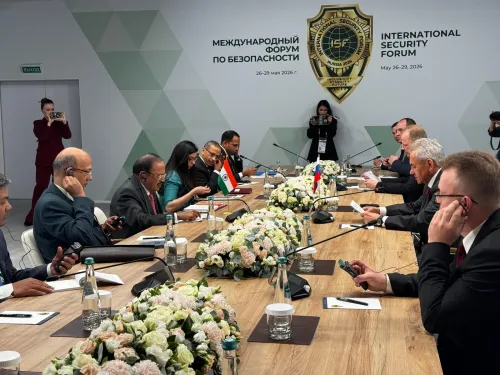
On Thursday, NSA Doval addressed the first International Security Forum and the 14th Meeting of High Representatives for Security Matters in Moscow, hosted by Sergei Shoigu, Secretary of the Security Council of the Russian Federation. The forum deliberated on 'Challenges and Threats to International Security in the context of the Emergence of the Multipolar World.'
Doval stated that there cannot be any double standards in the fight against terrorism, and that responsible nations must evaluate their choices — whether to support sponsors of terrorism or counter them with decisive action. He also called for urgent reforms in post-Second World War (1945) international institutions to make them effective against contemporary security threats, with greater representation for the Global South.
Doval additionally highlighted the need to ensure safe and uninterrupted movement of trade through international waterways, including the Strait of Hormuz and the Red Sea, calling for special attention to the situation in West Asia. The Indian Embassy in Russia posted a detailed account of his remarks on X.
India's Stand at the UN Security Council
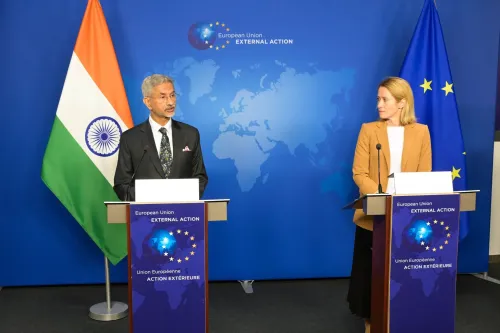
The MEA's statement follows India's sharp remarks at the United Nations Security Council on Tuesday. India's Permanent Representative P. Harish demanded that 'Pakistan must credibly and irrevocably end its support for all forms of terrorism,' warning that 'Pakistan will have to accept that there are consequences to its sponsorship of cross-border terrorism.'
Harish was responding to Pakistan's Permanent Representative Asim Iftikhar Ahmad, who had made remarks against India during the Council debate on 'Upholding the Purposes and Principles of the UN Charter and Strengthening the UN-Centred International System.' Harish declared: 'India has every right to defend itself from such cross-border terrorism.'
Pattern of Escalation
Harish also took direct aim at Pakistan's invocation of the UN Charter, stating: 'The use of cross-border terrorism by Pakistan and its doctrine of bleeding India by 1,000 cuts exposes its hollow rhetoric and the rhetoric of commitment to the UN Charter.' He added that 'Pakistan's harnessing of the malevolent forces of terrorism, religious extremism, violent radicalism, and anti-India rhetoric has continued unabated since its creation.'
This comes amid a broader pattern of India escalating its diplomatic offensive across multilateral forums, from Moscow to New York, to isolate state sponsors of terrorism. With NSA Doval's Moscow visit ongoing and India's UNSC interventions sharpening in tone, New Delhi appears to be building a coordinated international case against cross-border terrorism.
Point of View
Moscow, and New York is not coincidental — it reflects a deliberate strategy to build multilateral consensus against state-sponsored terrorism at a moment of heightened India-Pakistan tensions. What is notable is the shift in register: India is no longer confining these arguments to bilateral settings but is internationalising the framing, invoking Global South solidarity and waterway security alongside the terrorism charge. The risk is that without a concrete multilateral mechanism to 'call out' such nations, the rhetoric — however coordinated — may remain declaratory. The real test will be whether India can convert this diplomatic momentum into binding outcomes at forums like the Financial Action Task Force or the UN Counter-Terrorism Committee.
NationPress
12 Oct 2026
Frequently Asked Questions
What did India's MEA say about cross-border terrorism on 29 May?
MEA spokesperson Randhir Jaiswal said the international community must publicly call out nations that support and promote cross-border terrorism from their territories. He made these remarks at the weekly media briefing in New Delhi on 29 May, in response to a question about NSA Ajit Doval's statements in Moscow.
What did NSA Ajit Doval say at the Moscow security forum?
NSA Doval stated at the International Security Forum in Moscow that there can be no double standards in the fight against terrorism, and that responsible nations must choose whether to support sponsors of terrorism or counter them with decisive action. He also called for reforms in post-1945 international institutions and flagged security concerns over the Strait of Hormuz and the Red Sea.
What did India say about Pakistan at the UN Security Council?
India's Permanent Representative P. Harish demanded that Pakistan 'credibly and irrevocably' end its support for all forms of terrorism and warned that Pakistan would face consequences for sponsoring cross-border terrorism. He also accused Pakistan of pursuing a 'doctrine of bleeding India by 1,000 cuts' that contradicts its stated commitment to the UN Charter.
Why is India escalating its diplomatic messaging on terrorism now?
India's coordinated statements across New Delhi, Moscow, and New York come amid heightened India-Pakistan tensions and appear designed to build international consensus against state-sponsored cross-border terrorism. The timing — with NSA Doval's Moscow visit ongoing and India active at the UNSC — suggests a deliberate multilateral strategy.
What is the significance of NSA Doval's Moscow visit?
Doval attended the first International Security Forum and the 14th Meeting of High Representatives for Security Matters, hosted by Russian Security Council Secretary Sergei Shoigu. The forum focused on international security challenges in a multipolar world, and Doval used the platform to press India's position on terrorism and call for reformed global institutions.