Modi condemns UAE attacks, thanks Sheikh Mohamed for protecting Indian community
Synopsis
PM Modi's Abu Dhabi visit went beyond diplomacy — it was a direct condemnation of attacks on the UAE, a personal assurance of India's solidarity, and a strategic statement on keeping the Strait of Hormuz open. With 3.5 million Indians in the UAE and critical energy routes at stake, New Delhi's message was as economic as it was diplomatic.
Key Takeaways
PM Narendra Modi visited Abu Dhabi on 15 May and met UAE President Sheikh Mohamed bin Zayed Al Nahyan .
Modi strongly condemned the attacks on the UAE , calling them 'unacceptable in any form.' He expressed gratitude for the UAE's care of the approximately 3.5 million-strong Indian diaspora during the crisis.
Modi declared keeping the Strait of Hormuz 'free, open and safe' India's 'highest priority.' India pledged full support for the 'restoration of peace and stability' in the UAE and the wider region.
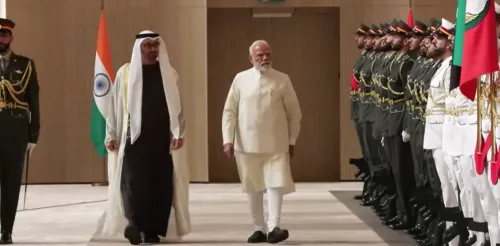
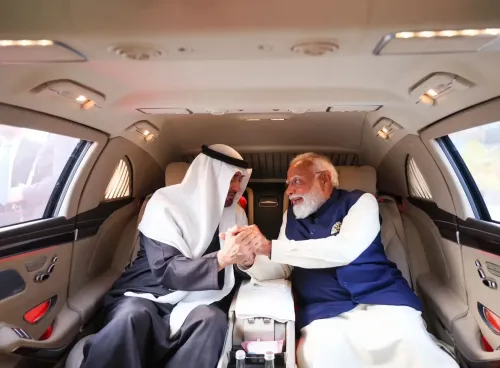
Modi described the UAE as his 'second home' and acknowledged the honour of a UAE Air Force jet escort on arrival.
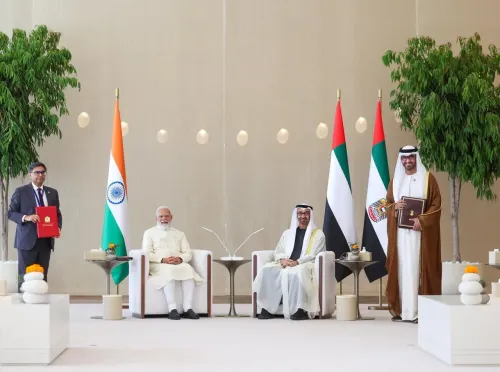
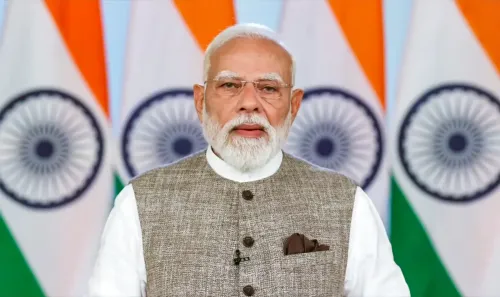
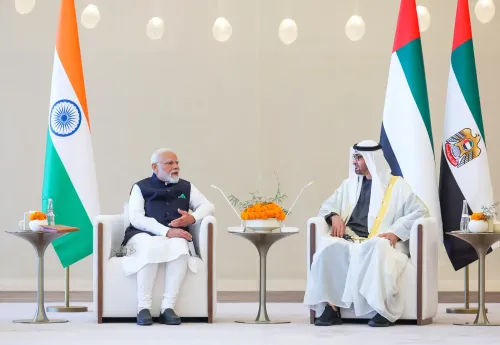
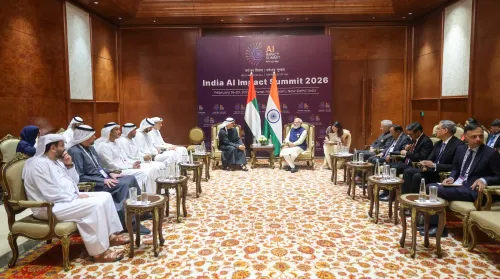
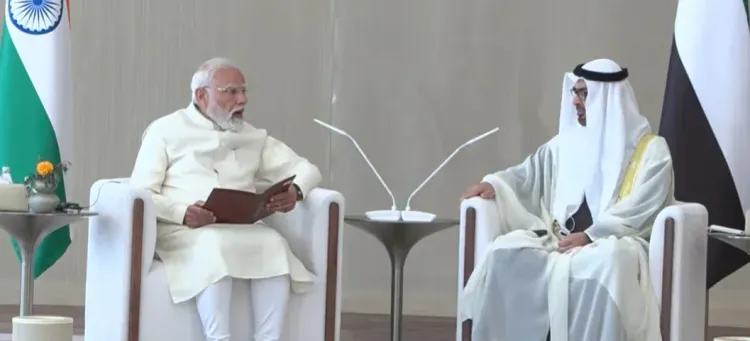
Prime Minister Narendra Modi on Friday, 15 May condemned the attacks on the United Arab Emirates and expressed gratitude to UAE President Sheikh Mohamed bin Zayed Al Nahyan for the care extended to the Indian community during the crisis. The remarks came during a bilateral meeting in Abu Dhabi, underscoring the depth of the India-UAE strategic partnership at a moment of acute regional tension.
Modi's Condemnation and Commendation
Speaking directly to President Sheikh Mohamed bin Zayed Al Nahyan, Prime Minister Modi said, 'We strongly condemn the attack that took place in the UAE. The way the UAE was targeted is unacceptable in any form. In these difficult circumstances, the restraint and courage you demonstrated are highly commendable.'
Modi further added, 'We congratulate you for the steps taken under your leadership for maintaining national unity, security and territorial integrity.' The remarks signal India's unambiguous alignment with the UAE at a time when West Asia is navigating a volatile security environment.
Gratitude for the Indian Diaspora's Safety
The Indian community in the UAE — numbering approximately 3.5 million, one of the largest diaspora concentrations in the world — has been at the centre of New Delhi's concerns during the ongoing regional crisis. Modi expressed 'heartfelt appreciation' to the UAE government and the royal family for looking after Indian nationals 'like members of your own family.'
This acknowledgement carries diplomatic weight: the welfare of overseas Indians has been a consistent foreign-policy priority for the Modi government, and the UAE's proactive protection of the diaspora during a crisis reinforces the bilateral relationship beyond trade and investment.
Strait of Hormuz: India's Strategic Priority
Prime Minister Modi used the Abu Dhabi meeting to articulate India's position on the broader West Asia conflict, stressing that keeping the Strait of Hormuz 'free, open and safe' is India's 'highest priority.' He called for strict adherence to international laws, saying, 'The impact of the war-like situation in the West Asia conflict is being felt across the world. India has always given priority to dialogue and diplomacy for resolving issues.'
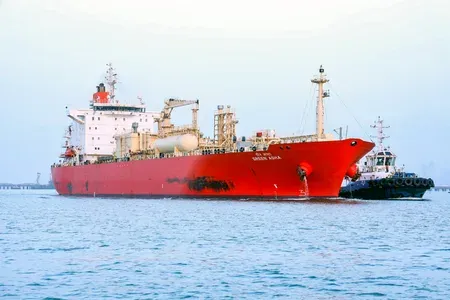
The Strait of Hormuz is a critical chokepoint through which a significant share of India's crude oil imports transit. Any disruption to navigation there would have direct consequences for India's energy security and inflation outlook — giving Modi's statement both diplomatic and economic dimensions.
India's Offer of Support and the 'Second Home' Sentiment
Modi reaffirmed India's solidarity with the UAE, stating, 'India stands shoulder to shoulder with the UAE in every situation and will continue to do so in the future as well. India is ready to provide every possible support for the restoration of peace and stability at the earliest.'
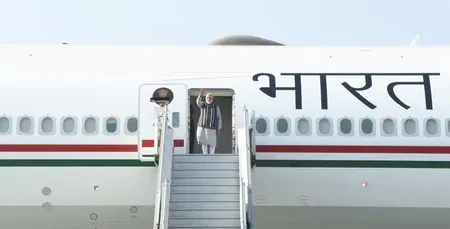
On a personal note, Modi described the UAE as his 'second home,' and acknowledged the honour of being escorted by UAE Air Force jets upon arrival — a gesture he said was 'an honour to the people of India.' Earlier, upon landing at Abu Dhabi Airport, he posted on social media platform X that he looked forward to discussions on strengthening ties 'across key sectors, such as energy, investment, supply chains, and more.'
What This Visit Signals
The Abu Dhabi visit comes at a moment when West Asia is under significant strain, and India's diplomatic positioning — condemning the attacks on the UAE while calling for dialogue and open sea lanes — reflects a calibrated balancing act. India has historically avoided taking hard sides in Gulf conflicts, but the explicit condemnation of attacks on the UAE marks a notably direct statement. With bilateral trade, energy dependence, and diaspora welfare all in play, New Delhi's engagement with Abu Dhabi carries strategic stakes well beyond the ceremonial.
Point of View
Trade, and diaspora stakes in the UAE that make neutrality increasingly untenable, but a public condemnation also narrows India's room to mediate. Modi's framing of the Strait of Hormuz as India's 'highest priority' is the more consequential signal: it places India squarely in the camp of those who will resist any disruption to Gulf sea lanes, with implications for how New Delhi might respond if the situation escalates. The diaspora-welfare angle, while genuine, also serves a domestic audience ahead of any potential evacuation scenario — a lesson India absorbed from the 2011 Libya and 2015 Yemen operations.
NationPress
28 Sept 2026
Frequently Asked Questions
Why did PM Modi visit Abu Dhabi on 15 May?
PM Modi visited Abu Dhabi on 15 May to hold bilateral talks with UAE President Sheikh Mohamed bin Zayed Al Nahyan amid an ongoing regional crisis involving attacks on the UAE. The visit focused on India-UAE solidarity, the safety of the Indian diaspora, and India's position on West Asia stability.
What did PM Modi say about the attacks on the UAE?
Modi said, 'We strongly condemn the attack that took place in the UAE. The way the UAE was targeted is unacceptable in any form.' He also commended the UAE leadership's restraint and courage during the crisis.
Why is the Strait of Hormuz important to India?
The Strait of Hormuz is a critical maritime chokepoint through which a large share of India's crude oil imports pass. Any disruption would directly affect India's energy security and domestic prices, which is why Modi declared keeping it 'free, open and safe' India's highest priority.
How large is the Indian community in the UAE?
The Indian diaspora in the UAE numbers approximately 3.5 million, making it one of the largest concentrations of overseas Indians anywhere in the world. Their welfare during the crisis was a central concern raised by PM Modi during his Abu Dhabi meeting.
What did Modi post on social media before the bilateral meeting?
Before the meeting, Modi posted on social media platform X thanking UAE President Sheikh Mohamed bin Zayed Al Nahyan for receiving him at Abu Dhabi Airport and expressing his anticipation of discussions on energy, investment, supply chains, and other key sectors.