MQ-9 Reaper drones named top US strike asset in Iran ops by Air Force
Synopsis
The MQ-9 Reaper — not the F-35 or any manned fighter — was America's most-used strike asset in Iran-linked operations, the Air Force Chief told Congress. With a $1.4 billion CCA budget request and no retirement plans for the MQ-9, the US is signalling a structural shift: the future of air combat is unmanned, and it's already flying.
Key Takeaways
General Kenneth Wilsbach told the House Armed Services Committee the MQ-9 Reaper was the top strike platform in Operation Epic Fury , surpassing all manned aircraft.
The exact number of strikes is classified, but Wilsbach said 'no other platform is even close to the MQ-9.' Air Force Secretary Troy Meink confirmed the MQ-9 fleet will not be retired; successor multi-platform systems are under evaluation.
The Pentagon's FY2027 budget includes $1.4 billion for Collaborative Combat Aircraft (CCA) development.
CCA autonomous systems are already flying alongside manned fighters including the F-47 , F-22 , and F-35 .
Fully autonomous combat aviation remains a future goal; the Air Force says it is 'learning and adjusting' from current CCA flights.
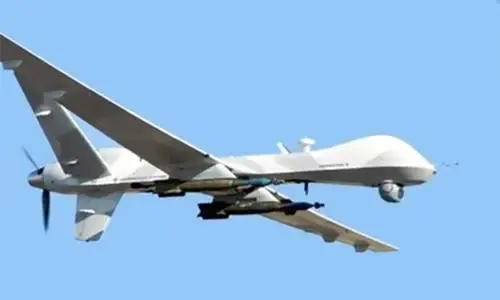
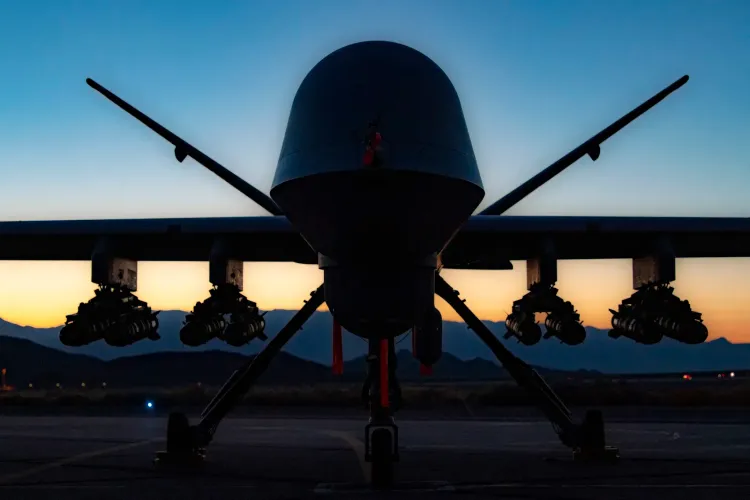
The US Air Force's MQ-9 Reaper drones emerged as the most heavily utilised strike platform during recent operations linked to Iran, senior Air Force officials told Congressional committees this week, describing the unmanned aircraft as a critical force multiplier in combat missions across the Middle East.
MQ-9's Role in Operation Epic Fury
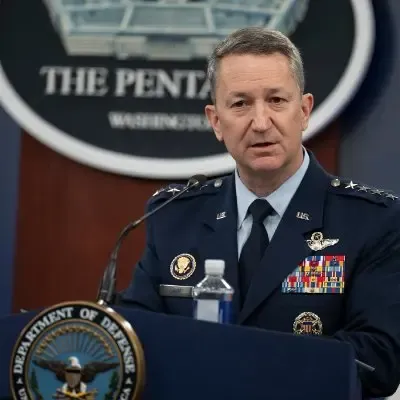
Air Force Chief of Staff General Kenneth Wilsbach told the House Armed Services Committee that the MQ-9 had played a decisive operational role during Operation Epic Fury, underscoring the growing centrality of unmanned systems in modern US warfare.
'For Epic Fury, perhaps maybe the most valuable player was unmanned and that's the MQ-9,' Wilsbach said. 'We've made many, many strikes. I don't want to say how many because the number's classified, but no other platform is even close to the MQ-9.'
Wilsbach added that the MQ-9 provided 'a lot of utility' while significantly reducing risk to pilots and crews — a factor that has elevated its profile in Pentagon planning circles.
No Retirement Plans for MQ-9 Fleet
Air Force Secretary Troy Meink told lawmakers the service had no intention of retiring the MQ-9 fleet despite broader force modernisation drives. He indicated the Air Force was instead evaluating successor systems capable of operating alongside both manned fighters and other autonomous aircraft.
'We are not divesting the MQ-9,' Meink said. 'We are looking at what is the follow-on to the MQ-9 aircraft, and it's probably going to be not one platform, it'll probably be multiple platforms.'
Collaborative Combat Aircraft and the Autonomy Push
General Wilsbach pointed to the development of Collaborative Combat Aircraft (CCA) — autonomous systems designed to fly alongside manned platforms such as the F-47, F-22, and F-35. He confirmed the systems were already airborne and demonstrating promising results.
'The autonomous systems are working,' Wilsbach told Senators. 'We're learning from it and adjusting as we go.'
The Pentagon's proposed FY2027 budget allocates $1.4 billion for CCA development as part of a broader push towards autonomy, artificial intelligence, and advanced battle management systems. House Armed Services Committee Chairman Mike D. Rogers urged the Air Force to accelerate the shift toward remotely operated combat aircraft to cut pilot risk and lower operational costs.
Budget Debate and Future Air Combat Strategy
The disclosures came as the Department of the Air Force defended its FY2027 budget before both the House and Senate Armed Services Committees, amid intensifying debate in Washington over the balance between costly next-generation manned fighters and lower-cost autonomous systems. Congressional leaders repeatedly pressed officials on whether the Pentagon was moving fast enough on unmanned platforms.
Wilsbach acknowledged that fully autonomous combat aviation remained some distance away, but indicated the trajectory was firmly set. This comes amid broader US efforts to restructure its air combat doctrine following the operational lessons of recent Middle East engagements.
Point of View
Not just a budget defence. The real subtext is the F-35 vs. autonomy debate: every dollar spent on a $80-million manned fighter is a dollar not spent on a fleet of drones that can absorb attrition without a body bag. The $1.4 billion CCA ask is modest by Pentagon standards, but the direction it signals is not. If the MQ-9's successor is 'multiple platforms,' the US is quietly moving toward a swarm-and-support model — and the geopolitical implications for adversaries calculating US risk tolerance are significant.
NationPress
12 Oct 2026
Frequently Asked Questions
What role did MQ-9 Reaper drones play in US operations linked to Iran?
The MQ-9 Reaper was the most heavily used US strike platform during Operation Epic Fury, according to Air Force Chief of Staff General Kenneth Wilsbach. He told the House Armed Services Committee that no other platform came close to the MQ-9 in the number of strikes conducted, though the exact figure remains classified.
Is the US Air Force planning to retire the MQ-9 Reaper?
No. Air Force Secretary Troy Meink confirmed the MQ-9 fleet will not be divested. The Air Force is instead exploring follow-on successor systems, likely multiple platforms rather than a single replacement, to operate alongside manned and autonomous aircraft.
What are Collaborative Combat Aircraft (CCA)?
Collaborative Combat Aircraft are autonomous unmanned systems designed to fly alongside manned fighters such as the F-47, F-22, and F-35. The Pentagon has requested $1.4 billion for CCA development in its FY2027 budget, and General Wilsbach confirmed the systems are already flying and showing promising capabilities.
How much is the Pentagon requesting for autonomous systems in FY2027?
The Pentagon's proposed FY2027 budget includes $1.4 billion specifically for Collaborative Combat Aircraft development, as part of a broader investment in autonomy, artificial intelligence, and advanced battle management systems.
Why is Congress pushing the Air Force toward more unmanned platforms?
House Armed Services Committee Chairman Mike D. Rogers and other Congressional leaders have urged the Air Force to prioritise remotely operated combat aircraft over costly next-generation manned fighters, citing the dual benefits of reducing pilot risk and lowering operational costs — a case the MQ-9's performance in recent operations appears to support.