Myanmar's 30-MP delegation begins India visit for Lok Sabha PRIDE training
Synopsis
Thirty Myanmar MPs from 15 parties — including 9 ethnic groups and Armed Forces nominees — are in India for a Lok Sabha PRIDE training module, arriving just months after President U Min Aung Hlaing's landmark first foreign visit to New Delhi. The delegation's diversity signals rare cross-party consensus on keeping India ties strong.
Key Takeaways
A 30-member Myanmar parliamentary delegation from 15 parties is visiting India from 1 to 8 September 2026 .
The visit is a capacity-building programme under PRIDE , the training wing of the Lok Sabha Secretariat .
The delegation includes representatives from 6 national parties , 9 ethnic parties , and nominated MPs from the Myanmar Armed Forces .
The visit follows Myanmar President U Min Aung Hlaing's official trip to India — his first foreign visit after assuming office.
Key bilateral projects discussed earlier include the Kaladan Multi-Modal Transit Transport Corridor and the India-Myanmar Trilateral Highway .
The delegation arrives in the first year of Myanmar's newly constituted parliament, formed after elections in December 2025–January 2026 .
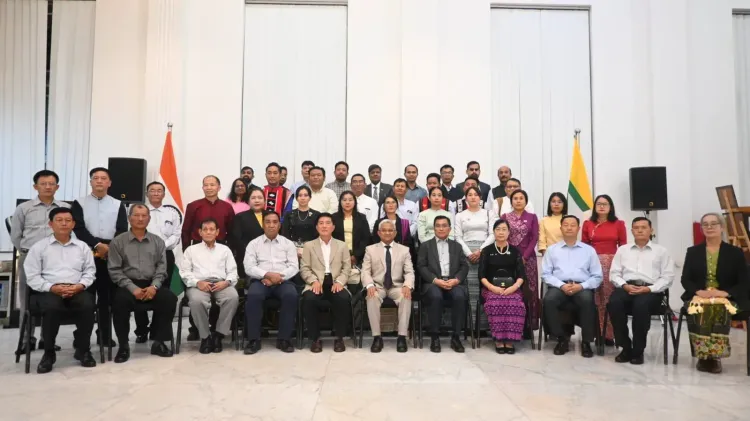
A cross-party parliamentary delegation from Myanmar, comprising 30 Members of Parliament from 15 political parties — including 6 national and 9 ethnic parties — arrived in India on 1 September 2026 for a week-long capacity-building programme conducted by the Parliamentary Research and Training Institute for Democracies (PRIDE), the training and research wing of the Lok Sabha Secretariat. The visit, running through 8 September 2026, was confirmed by the Indian Embassy in Myanmar.
Composition of the Delegation
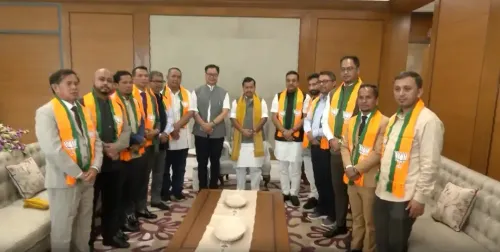
The delegation is notably diverse in its makeup. It includes representatives from national parties such as the USDP, KSPP, NUP, SNDP, PP, and PPP, alongside ethnic party representatives from Naga, Pa-O, Karen, Danu, Inn, Arakan, Zomi, Wa, and Kayah communities, as well as nominated MPs from the Myanmar Armed Forces. Several members are from ethnic areas along Myanmar's borders with India, China, and Thailand.
Indian Ambassador Abhay Thakur, who hosted a reception for the delegation before their departure, described the group as 'diverse, youthful and dynamic,' noting that it includes many young, first-time members of parliament.
Why the Visit Matters
The delegation's arrival carries particular weight as it comes in the first year of Myanmar's newly convened parliament, which was constituted following General Elections held in December 2025 and January 2026. Ambassador Thakur observed that 'the establishment of new parliamentary institutions represents an important stage in Myanmar's political evolution.'
The visit also reflects the cross-party consensus within Myanmar's parliament on maintaining close ties with India — a point Ambassador Thakur highlighted in his pre-departure briefing to the Hluttaw Delegation.
Bilateral Context: Modi-U Min Aung Hlaing Talks
The parliamentary exchange follows the official visit of Myanmar President U Min Aung Hlaing to India earlier this year — his first foreign visit after assuming office. During that trip, President U Min Aung Hlaing and Prime Minister Narendra Modi reviewed bilateral cooperation across sectors including trade, investment, defence, culture, education, and developmental assistance.
Key connectivity projects discussed included the Kaladan Multi-Modal Transit Transport Corridor and the Kalewa-Yagyi road segment of the India-Myanmar Trilateral Highway project — both flagship infrastructure initiatives that underpin India's Act East Policy.
What the Programme Involves
The PRIDE module is designed to strengthen legislative capacity among newly elected or serving parliamentarians from partner democracies. The programme includes friendly meetings alongside the formal training component. India has increasingly used such exchanges as a soft-power instrument to deepen ties with neighbouring legislatures, particularly in South and Southeast Asia.
As Myanmar's new parliament settles into its first year, the outcomes of this training visit — and the relationships built during it — could shape legislative cooperation between the two countries in the years ahead.
Point of View
Cross-party Myanmar delegation through PRIDE is a calibrated act of parliamentary diplomacy — not just a training exercise. Coming months after President U Min Aung Hlaing's New Delhi visit and in the opening year of Myanmar's new parliament, the timing is deliberate. The inclusion of ethnic party MPs from border regions adjoining China and Thailand adds a strategic dimension that goes beyond legislative capacity-building. For India, shaping the worldview of Myanmar's next generation of lawmakers — particularly from frontier constituencies — is an investment in long-term neighbourhood influence that rarely makes headlines but quietly matters.
NationPress
17 Oct 2026
Frequently Asked Questions
Why is a Myanmar parliamentary delegation visiting India in September 2026?
The delegation is visiting India from 1 to 8 September 2026 for a capacity-building programme conducted by PRIDE, the Parliamentary Research and Training Institute for Democracies under the Lok Sabha Secretariat. The visit also includes friendly meetings and comes in the first year of Myanmar's newly convened parliament.
How many MPs are part of the Myanmar delegation and which parties do they represent?
The delegation comprises 30 MPs from 15 parties — 6 national parties including USDP, KSPP, NUP, SNDP, PP, and PPP, and 9 ethnic parties representing Naga, Pa-O, Karen, Danu, Inn, Arakan, Zomi, Wa, and Kayah communities, along with nominated MPs from the Myanmar Armed Forces.
What is the PRIDE programme that Myanmar MPs are attending?
PRIDE — the Parliamentary Research and Training Institute for Democracies — is the training and research wing of India's Lok Sabha Secretariat. It conducts capacity-building modules for parliamentarians from partner countries to strengthen legislative institutions and democratic practices.
How does this visit relate to broader India-Myanmar ties?
The parliamentary visit follows the official visit of Myanmar President U Min Aung Hlaing to India — his first foreign trip after taking office — during which he and Prime Minister Narendra Modi discussed trade, defence, connectivity, and flagship projects like the Kaladan Multi-Modal Transit Transport Corridor and the India-Myanmar Trilateral Highway.
Why is the composition of the Myanmar delegation considered significant?
Indian Ambassador Abhay Thakur described the delegation as diverse, youthful, and dynamic, noting many first-time MPs. Its cross-party nature — spanning national, ethnic, and military-nominated members — signals broad consensus within Myanmar's parliament on maintaining close relations with India.