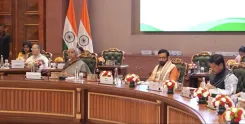
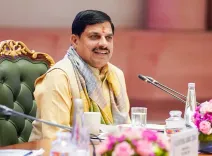
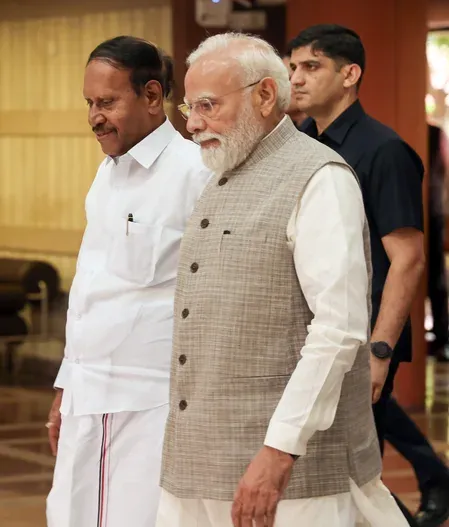
Modi hosts 37 BJP MPs for breakfast at his residence amid Monsoon Session
Synopsis
Prime Minister Modi's rotating breakfast meetings with BJP MPs are more than informal chats — they are a disciplined party-management tool. With former AAP leaders and NCPI alliance MPs now in the BJP fold, these small-group sessions serve as cohesion exercises inside a parliamentary group that is wider and more varied than at any previous point in the party's history.
Key Takeaways
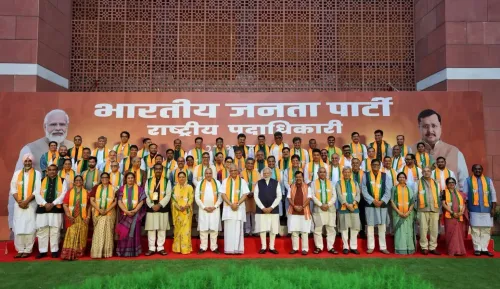
Prime Minister Narendra Modi hosted 37 BJP MPs for breakfast at his official residence on 5 August .
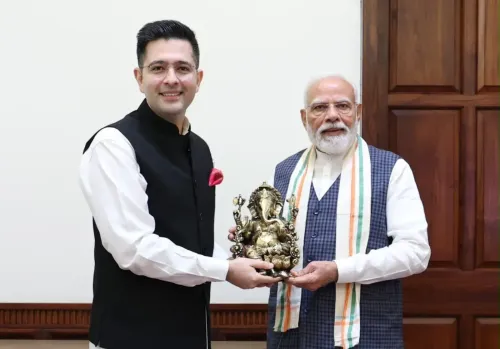
Attendees included NCPI alliance MPs, former AAP leaders who joined BJP, and senior leaders Tarun Chugh , Vinod Tawde , and BJP chief Nitin Nabin .
Discussions covered governance, parliamentary affairs, constituency feedback, and party coordination, according to sources.
The Monsoon Session runs from 20 July to 13 August across 19 sittings .
Modi has held similar rotating breakfast meetings with BJP parliamentarians during successive Parliament sessions.
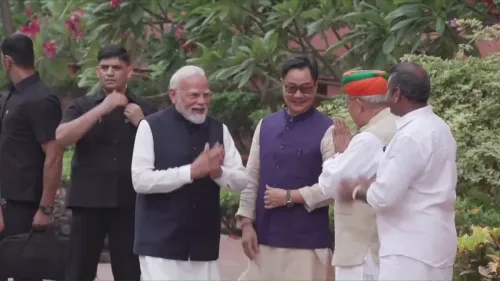
Prime Minister Narendra Modi on Wednesday, 5 August hosted a breakfast meeting with 37 Bharatiya Janata Party (BJP) Members of Parliament at his official New Delhi residence, continuing his practice of small-group outreach to parliamentarians during the ongoing Monsoon Session. The informal gathering is part of a structured engagement initiative the Prime Minister has maintained across successive Parliament sessions.
Who Attended
The gathering brought together a cross-section of the BJP's parliamentary strength. Among those present were MPs affiliated with the NCPI alliance, former Aam Aadmi Party (AAP) leaders who subsequently joined the BJP, and senior party figures including Tarun Chugh, Vinod Tawde, and BJP chief Nitin Nabin. The mix of attendees reflects the party's effort to integrate newer entrants alongside established leadership.
What Was Discussed
According to sources, Prime Minister Modi shared personal experiences with the assembled MPs and held wide-ranging informal discussions covering governance, parliamentary affairs, and party coordination. The format — deliberately informal — is designed to encourage candid feedback that more structured settings may not allow. MPs also used the occasion to relay constituency-level concerns directly to the Prime Minister.
The Monsoon Session Context
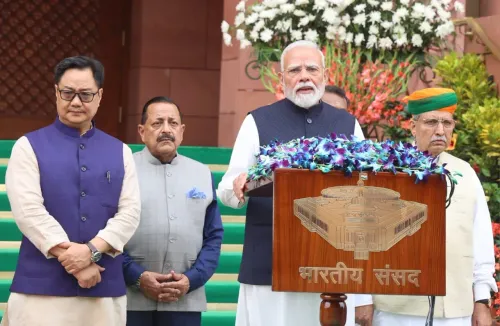
The Monsoon Session, which commenced on 20 July, is scheduled to run until 13 August across 19 sittings. The session has seen debates on government bills spanning economic policy, public examinations, and national security. Opposition protests have, however, led to repeated disruptions in both Houses on several occasions. Ahead of the session, Prime Minister Modi had called for constructive debates and smooth parliamentary functioning, stressing that meaningful discussions were essential to advancing the country's development agenda.
A Recurring Outreach Pattern
Wednesday's breakfast is not an isolated event. Modi has consistently held similar meetings with different groups of BJP parliamentarians during each Parliament session, rotating the groups to ensure broader reach. The format gives legislators in smaller cohorts direct access to the Prime Minister — an opportunity to surface feedback on governance and the party's outreach initiatives that might otherwise get lost in larger forums. This is the BJP leadership's broader effort to maintain cohesion within a parliamentary group that now spans diverse political backgrounds, including recent inductees from rival parties.
The next round of such meetings is expected before the session concludes on 13 August.
Point of View
Not a ceremonial gesture. With the BJP's parliamentary group now absorbing former AAP cadres and NCPI alliance members alongside its own veterans, maintaining ideological and operational cohesion requires sustained personal attention from the top. What is notable is the deliberate informality — structured enough to be systematic, loose enough to surface real feedback. The Monsoon Session's repeated opposition disruptions add urgency: the government needs its own MPs aligned and vocal, not passive. Whether these sessions translate into sharper floor strategy is the question mainstream coverage rarely asks.
NationPress
19 Sept 2026
Frequently Asked Questions
Why did PM Modi hold a breakfast meeting with BJP MPs?
Prime Minister Modi held the breakfast meeting as part of his ongoing outreach to BJP parliamentarians during the Monsoon Session. The informal format allows MPs to share constituency feedback and discuss governance and parliamentary strategy directly with the Prime Minister in smaller groups.
Who attended Modi's breakfast meeting on 5 August?
The meeting was attended by 37 BJP MPs, including those affiliated with the NCPI alliance, former AAP leaders who joined the BJP, and senior party figures Tarun Chugh, Vinod Tawde, and BJP chief Nitin Nabin.
What is the BJP's Monsoon Session outreach initiative?
It is a practice where Prime Minister Modi meets different groups of BJP MPs in rotation during Parliament sessions for informal discussions on governance, party coordination, and constituency issues. The initiative has been maintained across successive Parliament sessions.
When does the Monsoon Session 2025 end?
The Monsoon Session began on 20 July and is scheduled to conclude on 13 August, covering 19 sittings in total.
What has the Monsoon Session covered so far?
The session has seen debates on government bills related to economic policy, public examinations, and national security. Opposition protests have led to repeated disruptions in both Houses on several occasions during the session.