Neo-JMB resurfaces in Bangladesh: Bomb recoveries, arrests signal fresh IS-linked threat
Synopsis
Neo-JMB is back — and its recruits now include a 16-year-old and a former army soldier. With TATP-laden bombs recovered in Dhaka's suburbs, encrypted apps used for coordination, and 311 militants still absconding across Bangladesh, the IS-inspired group's resurgence is not a fringe concern. It is a structured, expanding threat at the heart of South Asia.
Key Takeaways
Neo-JMB , an Islamic State -inspired offshoot of the banned JMB , has re-emerged in Bangladesh in 2026 with fresh bomb recoveries and arrests.
At least five suspected Neo-JMB operatives have been arrested this year, including a former army soldier and a 16-year-old minor .
Operative Mohammad Arif was arrested on 11 August in Savar, Dhaka , with five GI-pipe bombs and TATP -based devices; a pressure-cooker bomb was recovered nearby the following day.
The group reportedly used the Protected Text (PT) website for communication and the Element app for financial transactions.
As of 1 July 2026 , at least 311 operatives from various banned militant outfits — including 16 Neo-JMB cadres — remained absconding, according to Bangladesh's Anti-Terrorism Unit (ATU) .
The South Asia Terrorism Portal (SATP) warned that sustained counter-radicalisation efforts are urgently needed to contain the threat.
Neo-JMB, an Islamic State-inspired offshoot of the banned Jama'atul Mujahideen Bangladesh (JMB), has re-emerged as a credible security threat in Bangladesh, with law enforcement agencies recovering multiple pressure-cooker bombs and arresting at least five suspected operatives this year, according to data compiled by the South Asia Terrorism Portal (SATP) and the New Delhi-based Institute for Conflict Management (ICM). The arrests — spanning a former army soldier and a 16-year-old minor — point to an alarming widening of the group's recruitment base.
Key Arrests and Bomb Recoveries
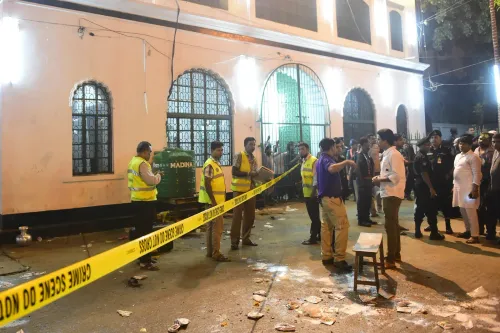
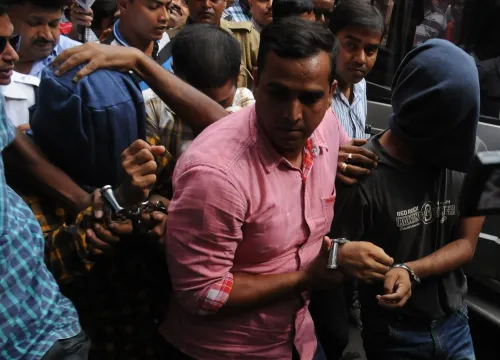
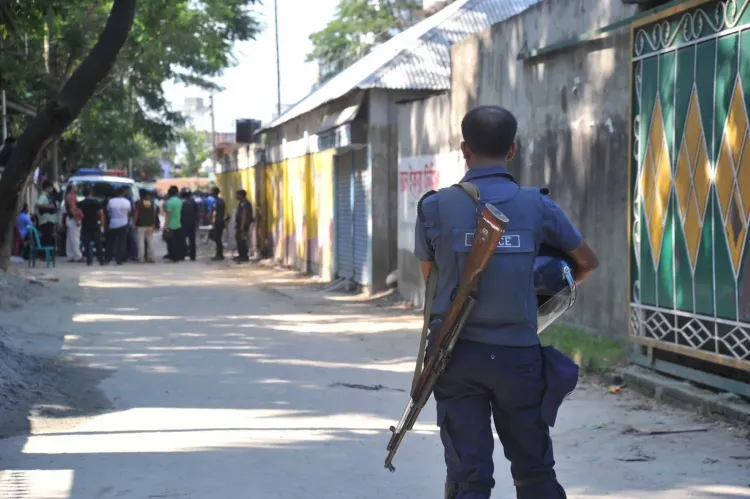
On 11 August, Neo-JMB operative Mohammad Arif was arrested in the Savar area of Dhaka. The following day, a pressure-cooker bomb wrapped in black tape was recovered from an open field beside a mosque in the same area. According to the SATP report, Arif was found in possession of five GI-pipe bombs, three knife-like bombs, and bomb-making materials when detained at Hemayetpur in Savar.
Investigators established that the devices used tri-acetone triperoxide (TATP) — a highly sensitive explosive capable of detonating through heat, friction, impact, or movement. Arif reportedly told investigators that the group used the Protected Text (PT) website for communication and the Element app for financial transactions.
Disturbing Demographic Spread Among Recruits
A source from the Bangladesh Counter Terrorism and Transnational Crime (CTTC) unit, cited in the SATP report, noted that Arif and other suspects linked to recent incidents shared common movement patterns — often carrying backpacks containing bombs, weapons, knives, and machetes, and attacking security personnel when stopped for searches before fleeing.
On 2 April 2026, a 16-year-old boy from Habiganj Sadar Upazila was arrested. Court documents described him as 'an IS-ideology follower/Neo-JMB member.' He had reportedly been in regular contact with two dismissed army personnel, and a CTTC phone seizure revealed evidence of his ties to Neo-JMB and his presence at a clandestine meeting at Zia Udyan. The minor's identity has been withheld.
Scale of the Absconding Militant Network
The threat extends well beyond Neo-JMB. According to a 1 July 2026 report cited by the SATP, Bangladesh's Police Anti-Terrorism Unit (ATU) confirmed that at least 311 operatives of various banned militant organisations remained at large. The breakdown includes 185 JMB cadres, 83 cadres of Ansar Al Islam, 16 Neo-JMB cadres, 16 cadres of Hizb-ul-Jihad-al-Islami Bangladesh (HuJI-B), nine cadres of Allahar Dal, and one cadre each from Jama'atul Ansar Fil Hindal Sharqiya (JAFHS) and Imam Mahmuder Kafela.
The convergence of multiple extremist networks, combined with the increasingly diverse age and background of recruits, adds what the SATP report describes as 'multiple layers to the deepening threat confronting Bangladesh.'
Why This Matters for Regional Security
Bangladesh's counter-terrorism apparatus has made notable arrests, but the persistence of Neo-JMB — and the involvement of former military personnel and minors in its ranks — signals that radicalisation pipelines remain active. This comes amid broader concerns about the resurgence of militant outfits across South Asia, and at a time when Bangladesh's internal political landscape is in flux.
The SATP report warned that 'sustained prevention and counter-radicalisation efforts will be crucial to prevent the terrorist network from emerging as a major renewed threat.' How Dhaka responds in the coming months will be closely watched by regional security agencies, including those in neighbouring India.
Point of View
And each resurgence has found the group more operationally adaptive. The use of encrypted apps like Element for financial transactions and Protected Text for communication signals a group that has absorbed counter-terrorism lessons. More troubling is the demographic data: when a 16-year-old from Habiganj and a dismissed army soldier end up in the same militant network, it suggests radicalisation is not a fringe pipeline — it is multi-channel and structurally embedded. With 311 militants absconding and political uncertainty in Dhaka, the conditions for a serious escalation are present. Regional partners, including India, cannot treat this as Bangladesh's problem alone.
NationPress
29 Aug 2026
Frequently Asked Questions
What is Neo-JMB and why is it considered dangerous?
Neo-JMB is an Islamic State-inspired offshoot of the banned Jama'atul Mujahideen Bangladesh (JMB), designated a terrorist organisation by Bangladesh. It is considered dangerous because of its IS ideology, use of sophisticated explosives such as TATP, encrypted communication tools, and its ability to recruit across a wide demographic — from minors to former military personnel.
What bomb recoveries and arrests have taken place in Bangladesh in 2026?
At least five Neo-JMB operatives have been arrested in Bangladesh in 2026. Notably, operative Mohammad Arif was arrested on 11 August in Savar, Dhaka, with five GI-pipe bombs and TATP-based devices. A pressure-cooker bomb wrapped in black tape was recovered from an open field near a mosque in Savar the following day. A 16-year-old was also arrested on 2 April 2026 in Habiganj.
How many militants are still at large in Bangladesh?
According to Bangladesh's Anti-Terrorism Unit (ATU), as of 1 July 2026, at least 311 operatives from various banned militant organisations remained absconding. This includes 185 JMB cadres, 83 Ansar Al Islam cadres, 16 Neo-JMB cadres, and 16 HuJI-B cadres, among others.
How is Neo-JMB communicating and funding its operations?
According to investigators, arrested operative Mohammad Arif revealed that Neo-JMB used the Protected Text (PT) website for internal communication and the Element app for financial transactions — indicating a deliberate use of encrypted, harder-to-monitor digital tools.
What does the resurgence of Neo-JMB mean for regional security?
The resurgence of Neo-JMB raises concerns beyond Bangladesh's borders, particularly for India and other South Asian neighbours. The South Asia Terrorism Portal has warned that the convergence of multiple extremist networks, combined with diverse and younger recruits, adds multiple layers to an already deepening threat. Sustained counter-radicalisation and regional intelligence cooperation are seen as critical responses.