Nepal Elections: Entrepreneur's Cost-Effective Campaign Strategy

Synopsis
As Nepal navigates its electoral process, an independent candidate, Asheem Man Singh Basnyat, showcases how a budget-friendly campaign can effectively engage voters. His unique methods, including social media strategies and creative public engagements, challenge conventional political funding norms.
Key Takeaways
Innovative Campaigning: Basnyat employs unique strategies to engage voters without hefty expenditures.
Social Media Focus: He emphasizes the importance of social media in modern political campaigns.
Cost Efficiency: His campaign budget stands at just Rs 5 lakh, a fraction of the allowable spending.
Grassroots Movements: Basnyat represents a shift towards grassroots political participation.
Community Engagement: Creative public displays, like the Squid Game costumes, effectively draw voter attention.
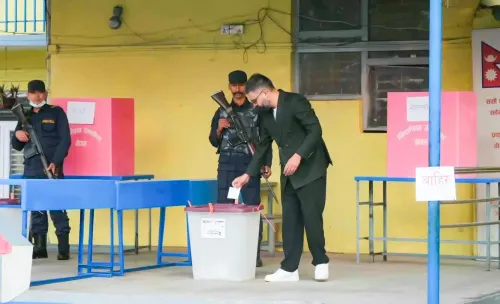
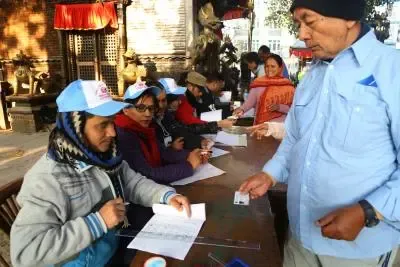
Kathmandu, March 5 (NationPress) – In a pivotal election held on Thursday, Nepal took to the polls to select its representatives. Among the candidates was an entrepreneur and social media aficionado who embarked on a distinctive journey to demonstrate that campaigning for elections does not have to be costly to secure a favorable mandate.
"Election campaigns can be conducted affordably; I have demonstrated this by limiting my total expenditures to approximately Rs 5 lakh Nepalese (around 3.1 lakh Indian rupees)," stated Asheem Man Singh Basnyat, an independent contender from Kathmandu 1.
This amount is roughly one-fifth of the maximum campaign expenditure allowed for candidates, which ranges from Rs 25 lakh to Rs 33 lakh for various constituencies, with Basnyat's area falling under the lowest cap.
The urban profile of his constituency may have aided the 35-year-old tech entrepreneur in executing a unique election campaign on his first attempt.
Basnyat notes that it is the only parliamentary constituency in Nepal that lies completely within the Kathmandu Metropolitan area. In contrast, other constituencies are either metropolitan, municipal, or even rural-municipal, thereby making his area a core urban zone.
This constituency is also the smallest in terms of land area, comprising 48,489 registered voters, where the last two elections saw the winning candidates receive just over 6,000 votes—a figure that is expected to remain consistent this time around.
With a Master's degree in conflict, peace, and development studies, Basnyat serves as the regional director at Pathao, a ride-hailing application that he and his colleagues launched in Nepal in 2018. The app has since become a prominent platform for ride-sharing and on-demand deliveries.
"I have consistently advocated for youth empowerment, job creation, and digitalization, especially in the aftermath of the Covid pandemic that struck about six to seven years ago," he remarked.
Prior to his formal entry into politics, Basnyat sought legal avenues to establish e-commerce operations in Nepal during the lockdown imposed by the pandemic.
"My activism began with pursuing legal options to enable e-commerce during that challenging time," he recounted.
"Traditionally, political parties allocate significant resources to print media and manpower, which constitutes a substantial portion of their overall costs. However, I opted to focus on social media, which has proven to be pivotal over the past five to seven years—an area where I have been actively engaged, as have my businesses," he elaborated.
"My approach was not merely about placing advertisements, but about creating content that would organically resonate with hundreds of thousands. It all initiated with a video in which I announced my candidacy, which was quickly picked up by numerous media outlets, including social media channels," Basnyat added.
"A turning point was when I procured Squid Game masks from India, dressed ten individuals in costumes from the show, and had them roam the streets of Kathmandu as part of my campaign, without prior notice," he shared.
The idea stemmed from a door-to-door campaign, where upon knocking, he often encountered the response, "Oh! Another one has just come!"
It was then that he decided to make the voters come to him, and the Squid Game characters encouraged people to step outside their homes to discover what was unfolding.
Interestingly, the masks bore a triangle symbol, which also represents Basnyat's election emblem. He even had the characters travel around in a pickup truck, which piqued people's curiosity about the event.
Recreating the characters from the popular Korean game series, which gained fame via streaming services, cost him a total of Rs 18,000 Nepalese.
"I sourced the masks from India at Rs 199 each, and the costumes were approximately Rs 1,500 each," he noted, adding, "This strategy resulted in numerous media outlets covering my campaign extensively."
With an expenditure of Rs 5 lakh aimed at garnering about 6,000 votes, the ultimate question remains: will this innovative approach yield results? The answer lies sealed within the ballot boxes.
Point of View
The emergence of candidates like Asheem Man Singh Basnyat reflects a significant shift in Nepal's political landscape. His innovative approach to campaigning raises important questions about the role of traditional funding methods and the potential for grassroots movements to reshape electoral outcomes.
NationPress
7 Oct 2026
Frequently Asked Questions
Who is Asheem Man Singh Basnyat?
Asheem Man Singh Basnyat is an independent candidate from Kathmandu 1, known for his innovative and budget-friendly approach to election campaigning.
What is the budget for Basnyat's campaign?
Basnyat's campaign budget is approximately Rs 5 lakh Nepalese, significantly lower than the maximum allowed for candidates.
How did Basnyat promote his campaign?
He utilized social media and creative public engagements, such as dressing individuals in Squid Game costumes to attract attention.
What is the significance of Kathmandu 1 constituency?
Kathmandu 1 is unique as it is entirely within the Kathmandu Metropolitan area and has the smallest landmass among constituencies.
What is Basnyat's professional background?
He holds a Master's degree in conflict, peace, and development studies and is the regional director at Pathao, a ride-hailing app.