Nepal Launches Investigation into Political Leaders' Assets Amid Corruption Claims
Synopsis
In a significant move, the Nepal government has launched an investigation into the assets of political leaders and bureaucrats amid rising corruption allegations. This commission aims to bring transparency and accountability to public office holders over the past two decades, marking a pivotal step in governance reform.
Key Takeaways
Nepal's government has formed a commission to investigate political leaders' assets.
The inquiry targets leaders in power since 2006 amid corruption allegations.
Former Prime Ministers Deuba, Oli, and Prachanda are under investigation.
The commission will be led by Rajendra Kumar Bhandari , a former Supreme Court justice.
Public pressure and protests have driven this move towards accountability.
Kathmandu, April 15 (NationPress) — The government of Nepal has officially declared the establishment of a commission to scrutinize the assets of prominent political figures and high-ranking bureaucrats who have served in public office over the last two decades, amid serious allegations of widespread corruption involving these individuals.
A Cabinet meeting convened on Wednesday resolved to create a panel tasked with investigating the assets of those who have governed since 2006, the year marking the end of the 'autocratic' reign of King Gyanendra Shah following the second people's movement.
During this timeframe, the Nepali Congress, the Communist Party of Nepal (Unified Marxist Leninist) or CPN-UML, and the former CPN (Maoist Centre) have held power, with their leaders now facing charges related to illegally accumulating wealth through misuse of state authority.
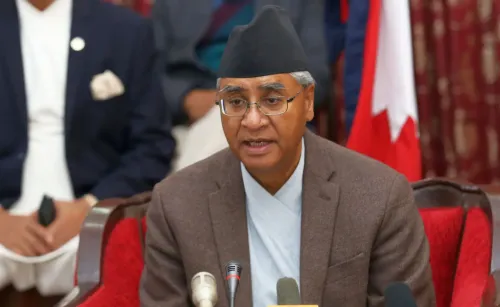
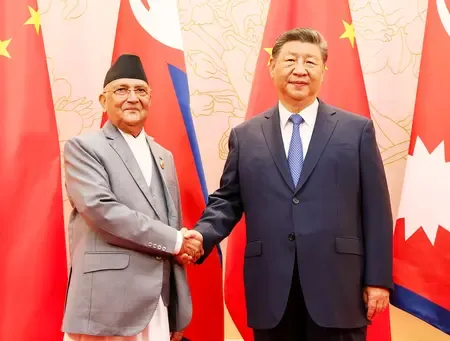
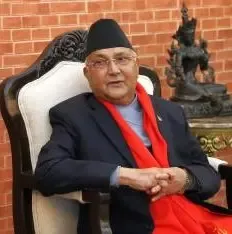
Former Prime Ministers — Sher Bahadur Deuba, K P Sharma Oli, and Pushpa Kamal Dahal 'Prachanda' — who represent these parties, are currently under investigation for money laundering.
Minister for Education, Science and Technology, and government spokesperson Sasmit Pokharel informed reporters that the Cabinet has decided to form a five-member commission, led by former Supreme Court justice Rajendra Kumar Bhandari, to gather, verify, and investigate the asset information of political and bureaucratic leaders in power between 2006 and 2026.
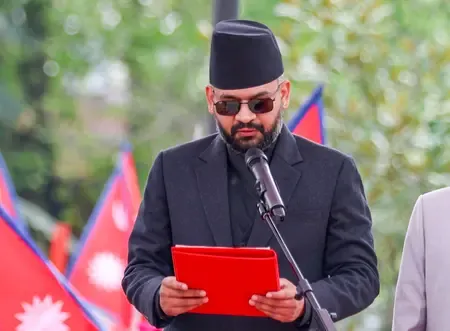
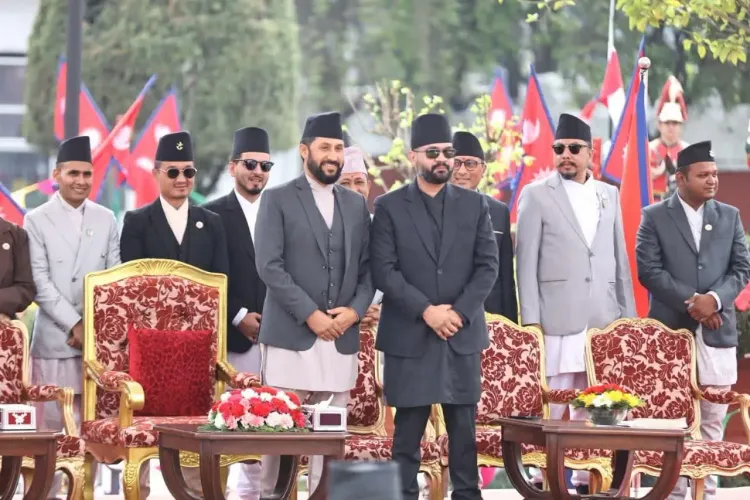
This initiative aligns with the 100-point governance reform agenda unveiled shortly after the new government was established under Prime Minister Balendra Shah. According to the government's announcement on March 27, the commission will first examine the assets of those in office from 2006 to 2026 and subsequently investigate those who held office from 1992 to 2006.
Pokharel emphasized that the inquiry will be carried out fairly, based on concrete evidence, with plans to implement the commission’s findings and recommendations through the appropriate authorities.
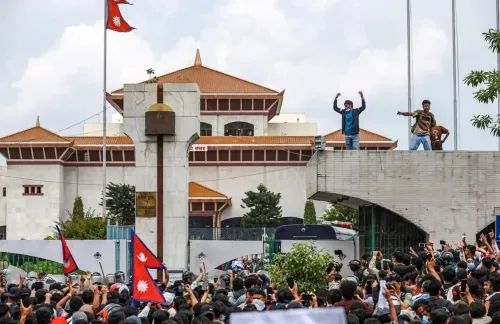
The Gen-Z protests in September last year, which resulted in the ousting of the government led by former Prime Minister K P Sharma Oli, were driven by public discontent over perceived systemic corruption among top political leaders. Following these protests, a new government headed by Sushila Karki was formed, leading to parliamentary elections held on March 5.
In the wake of the elections, the Rastriya Swatantra Party, a relatively new political entity, emerged as the largest party, securing nearly a two-thirds majority. Its senior leader, Balendra Shah, has now assumed the role of Prime Minister, and his administration has begun implementing various measures to combat corruption.
Point of View
This investigation represents a crucial step towards restoring public trust in governance. It reflects a proactive approach to accountability among the highest echelons of power, aligning with the citizens' demands for ethical leadership.
NationPress
19 Sept 2026
Frequently Asked Questions
What prompted the investigation into Nepal's political leaders?
The investigation was prompted by widespread allegations of corruption among political leaders and bureaucrats who have held power over the last two decades.
Who will lead the newly formed commission?
The commission will be led by former Supreme Court justice Rajendra Kumar Bhandari.
What time period will the commission's investigation cover?
The investigation will first cover the period from 2006 to 2026 and then extend to 1992 to 2006 in the second phase.
What are some outcomes expected from this investigation?
The investigation aims to collect and verify asset details, ensuring implementation of the commission's findings through relevant authorities.
How has public sentiment influenced this investigation?
Public discontent over perceived corruption, highlighted by protests, has significantly influenced the government’s decision to pursue this investigation.