Nepal expands flood warning systems, targets 4 glacial lakes after August disaster
Synopsis
After the deadliest floods in recent memory — around 1,500 dead, 5,000 missing, $1.81 billion in damage — Nepal is rolling out a $49.9 million glacial lake intervention project and a $7.54 million early warning network across six river basins. It is the most comprehensive climate-disaster response the Himalayan nation has announced, and its success may serve as a regional template for countries facing accelerating glacial melt.
Key Takeaways
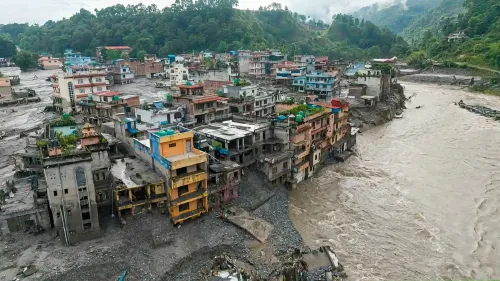
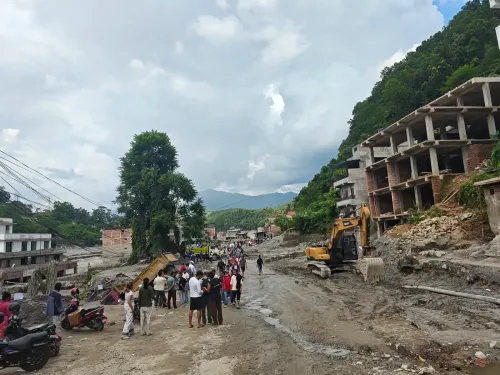
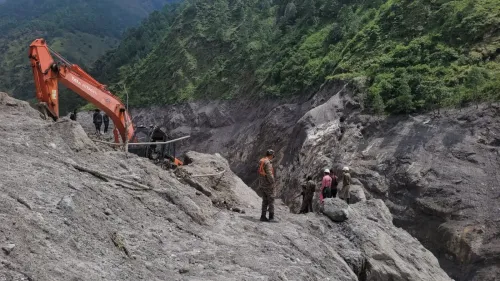
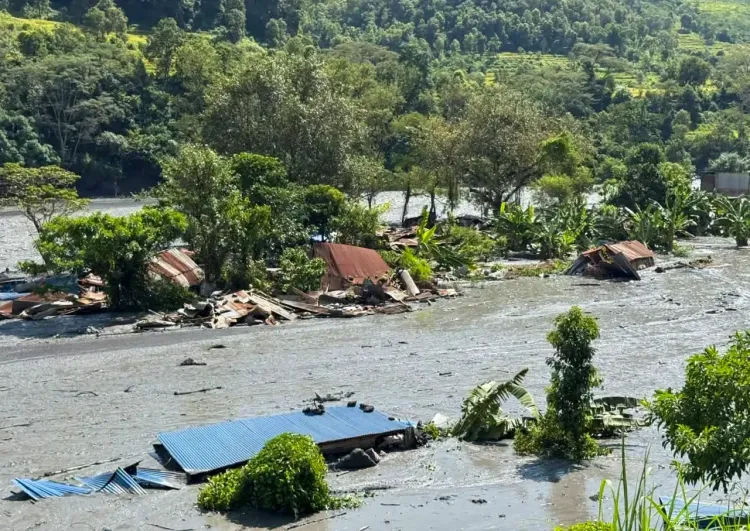
Nepal's 26 August floods killed around 1,500 people , left more than 5,000 missing , and caused $1.81 billion in asset damage.
The government will install flood early warning systems across six river basins under a $7.54 million project running from 2022 to 2028 .
The GLOF Sanjeevani Project (2026–2033, budget $49.9 million ) will lower water levels in four high-risk glacial lakes in Manang, Sankhuwasabha, and Solukhumbu districts.
The Bhotekoshi and Trishuli river basins saw the heaviest damage, particularly to hydropower and energy infrastructure.
The Department of Hydrology and Meteorology plans to deploy AI and machine learning to improve forecast accuracy.
Nepal previously lowered water levels at Tsho Rolpa and Imja Lake , providing a proven model for the new interventions.
The Nepali government has announced plans to expand flood early warning systems across six major river basins and reduce water levels in four high-risk glacial lakes, following the devastating floods of 26 August that killed around 1,500 people and left more than 5,000 missing. The measures form part of a broader push to strengthen disaster preparedness in a Himalayan nation increasingly battered by climate-driven extreme weather.
Scale of the August Disaster
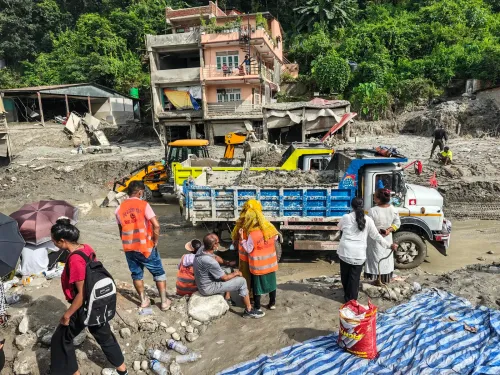
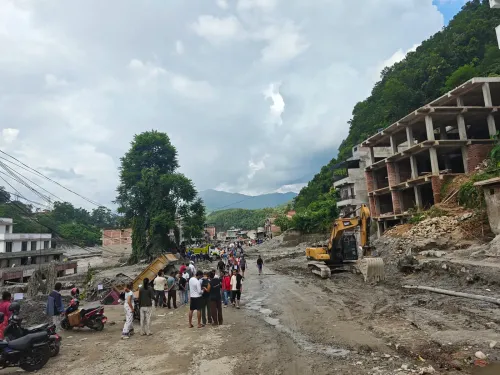
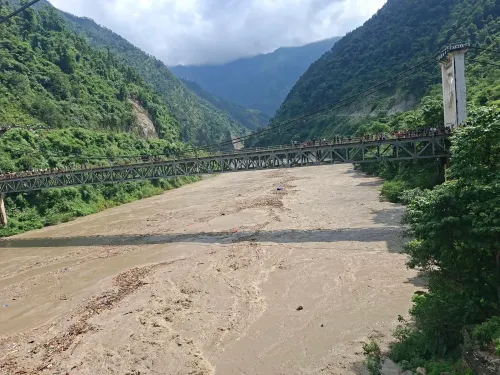
The 26 August floods caused physical asset damage worth $1.81 billion, according to the Nepali government's preliminary Rapid Damage and Needs Assessment (RDNA). The Bhotekoshi and Trishuli river basins were among the worst affected, with hydropower projects, solar energy facilities, electricity transmission infrastructure, and transport networks all sustaining significant losses. The energy sector — particularly hydropower — bore a disproportionate share of the damage.
Six River Basins to Get Early Warning Systems
According to a government white paper, the Centre will install flood early warning systems across six river basins under the Priority River Basin Flood Risk Management Project, a programme running from 2022 to 2028 with an investment of $7.54 million. The basins covered are Mawa-Ratuwa, Bakraha, Lakhandehi, East Rapti, West Rapti, and Mohana-Khutiya. Round-the-clock flood forecasting and early warning services will also be provided from mid-May to mid-October, spanning the country's main monsoon season.
Glacial Lake Mitigation: The GLOF Sanjeevani Project
Rising temperatures have accelerated glacier melting across the Himalayas, heightening concerns about glacial lake instability, avalanches, and destructive downstream floods. To address this, the government plans to implement the Glacial Lake Outburst Flood (GLOF) Sanjeevani Project, which will lower water levels in four high-risk glacial lakes: Thulagi in Manang district, Lower Barun in Sankhuwasabha district, and Lumding Tsho and Hongu-2 in Solukhumbu district. The project is scheduled to run from 2026 to 2033, with an estimated budget of $49.9 million. Nepal has previously carried out similar interventions at Tsho Rolpa in Dolakha district and Imja Lake in Solukhumbu district, demonstrating that such engineering solutions are operationally feasible.
Technology Upgrade: AI and High-Performance Computing
The Department of Hydrology and Meteorology separately plans to prioritise artificial intelligence, machine learning, and high-performance computing systems to improve the accuracy and reliability of weather and flood forecasts. This comes amid growing recognition that traditional forecasting models are insufficient to capture the speed and intensity of Himalayan flash flood events. Notably, the integration of AI-driven forecasting reflects a broader global shift in disaster risk reduction strategy, particularly for high-altitude riverine systems.
What Comes Next
With the GLOF Sanjeevani Project scheduled to begin in 2026 and early warning infrastructure already under deployment through 2028, Nepal's disaster response architecture is set for a significant upgrade. How effectively these systems are implemented — and whether funding commitments hold — will determine the country's resilience ahead of future monsoon seasons.
Point of View
Already in progress since 2022, will be fully operational before the 2027 monsoon. With hydropower — the backbone of Nepal's energy export economy — repeatedly devastated by floods, the cost of delay is not abstract. International climate finance, not domestic budgets alone, must close the gap.
NationPress
26 Oct 2026
Frequently Asked Questions
What triggered Nepal's new flood preparedness plans?
The devastating floods of 26 August prompted Nepal's latest disaster preparedness push. The floods killed around 1,500 people, left more than 5,000 missing, and caused $1.81 billion in physical asset damage, according to the government's preliminary Rapid Damage and Needs Assessment.
Which river basins will receive early warning systems in Nepal?
Six river basins will be covered: Mawa-Ratuwa, Bakraha, Lakhandehi, East Rapti, West Rapti, and Mohana-Khutiya. The systems are being installed under the Priority River Basin Flood Risk Management Project, funded at $7.54 million and running from 2022 to 2028.
What is the GLOF Sanjeevani Project?
The Glacial Lake Outburst Flood (GLOF) Sanjeevani Project is a Nepal government initiative to lower water levels in four high-risk glacial lakes — Thulagi, Lower Barun, Lumding Tsho, and Hongu-2. It is budgeted at $49.9 million and is scheduled to run from 2026 to 2033.
Has Nepal intervened in glacial lakes before?
Yes. Nepal has previously lowered water levels in Tsho Rolpa in Dolakha district and Imja Lake in Solukhumbu district to reduce the risk of glacial lake outburst floods, demonstrating that such engineering interventions are feasible.
How will technology improve Nepal's flood forecasting?
The Department of Hydrology and Meteorology plans to adopt artificial intelligence, machine learning, and high-performance computing to improve the accuracy and reliability of flood and weather forecasts, addressing limitations of traditional forecasting models in high-altitude Himalayan river systems.