Nepal PM recommends Nishchal Nath Pandey as next Ambassador to India
Synopsis
Nepal has ended a five-month vacancy at its New Delhi mission by nominating Nishchal Nath Pandey — a foreign-policy academic with links to Indian and Singaporean institutions — as its next Ambassador to India. The pick is part of a sweeping 13-country reshuffle and reflects PM Balendra Shah's push to professionalise Nepal's diplomatic corps through open, merit-based selection.
Key Takeaways
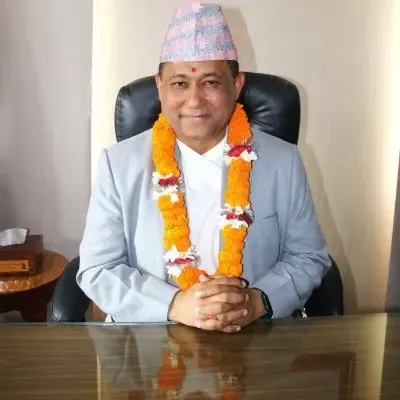
Nepal's cabinet , chaired by PM Balendra Shah , recommended Nishchal Nath Pandey as the country's next Ambassador to India on 18 September 2026 .
Pandey is Director of the Centre for South Asian Studies (CSAS) and a former head of Nepal's Institute of Foreign Affairs (1998–2006) .
He holds a Ph.D. in political science from Tribhuvan University and has affiliations with institutions in India, Singapore, Germany, and the UK .
Ambassadors were also recommended for China, the US, and 10 other countries in the same cabinet round.
The appointment follows Nepal's shift to a competitive, open selection process after recalling political appointees in April 2026 .
Pandey's formal appointment requires parliamentary hearing clearance and agreement from India before President Ram Chandra Paudel can formalise it.
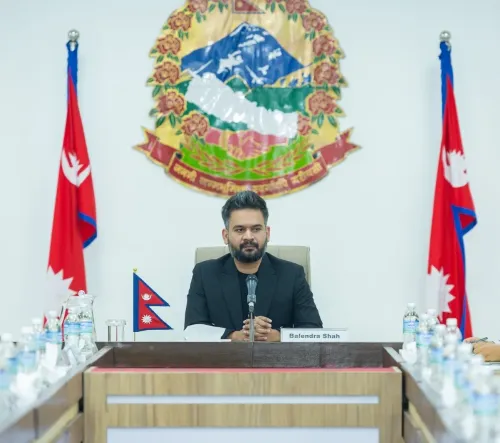
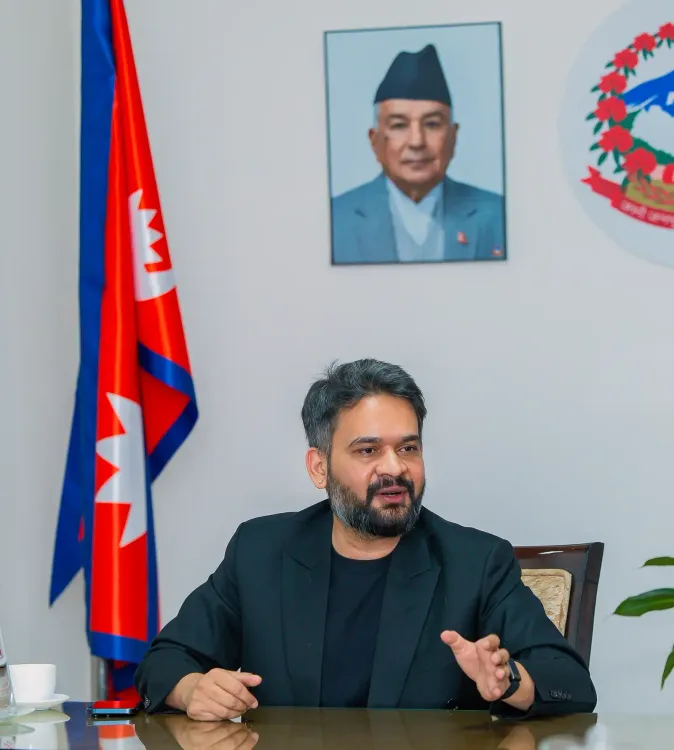
The Nepali government on Friday, 18 September 2026, recommended senior foreign-policy expert Nishchal Nath Pandey as its next Ambassador to India, filling a post that has been vacant since the recall of former envoy Dr. Shankar Prasad Sharma in April. The nomination was cleared at a cabinet meeting in Kathmandu chaired by Prime Minister Balendra Shah, the Ministry of Foreign Affairs confirmed in a statement.
Who Is Nishchal Nath Pandey
Pandey is widely regarded as one of Nepal's most credentialled foreign-policy academics. He currently serves as Director of the Centre for South Asian Studies (CSAS) and previously headed the Institute of Foreign Affairs under Nepal's Ministry of Foreign Affairs from 1998 to 2006. Earlier, he advised the National Planning Commission on tourism and civil aviation in 1996–97.
He holds a Ph.D. in political science and a bachelor's degree in law from Tribhuvan University, Nepal. His international credentials are notable: he is an honorary adjunct professor at the National Institute of Advanced Studies in Bengaluru and a non-resident senior fellow at the Institute of South Asian Studies at the National University of Singapore, where he previously held a visiting research fellowship.
Additional visiting fellowships include Germany's Stiftung Wissenschaft und Politik (SWP) — the German Institute for International and Security Affairs — in Berlin, and the University of Hull in the United Kingdom. He served on the board of the Regional Centre for Strategic Studies in Colombo from 2011 to 2019, was an expert with Nepal's Truth and Reconciliation Commission in 2016, and joined a government-appointed high-level task force on foreign policy in 2017. Pandey is also the son of former Nepali Foreign Minister Ramesh Nath Pandey.
The Appointment Process Ahead
Under Nepal's Constitution, ambassadorial nominees must clear a parliamentary hearing process before formal appointment. Once hearings conclude, the government will seek agreement from the host country — in this case, India. After New Delhi's clearance is received, President Ram Chandra Paudel will formally appoint Pandey as ambassador.
Wider Diplomatic Reshuffle
The cabinet's recommendation was not limited to the New Delhi posting. Ambassadors were simultaneously recommended for China, the United States, and 10 other countries, covering a total of 13 ambassadorial positions. The move follows a government decision earlier this year to shift from politically driven appointments to a competitive, merit-based selection process. Applications were invited openly from individuals who considered themselves eligible, a marked departure from the patronage norms of previous administrations.
Foreign Minister Shisir Khanal said the government had recommended 'highly qualified individuals with expertise and experience in various fields' for the positions.
Context: The New Delhi Post
The India ambassadorship is among the most strategically sensitive diplomatic postings for Nepal, given the two countries' deep economic, cultural, and geopolitical ties. Former envoy Dr. Shankar Prasad Sharma was recalled in April along with several other political appointees after the current government, formed in late March, opted to reset the diplomatic corps. The vacancy in New Delhi has persisted for roughly five months, a gap that diplomatic observers had noted as significant given the volume of bilateral engagement.
Pandey's academic and institutional links with South Asian studies — including his Bengaluru affiliation — could add a research-backed dimension to bilateral diplomacy. All the same, his formal appointment remains contingent on parliamentary clearance and Indian agreement.
Point of View
Power, and border matters, and an absent ambassador leaves space for misreads. Pandey will also have to navigate the India relationship at a moment when China's influence in Kathmandu is a live variable, making his South Asia expertise an asset but his lack of prior diplomatic service a question mark.
NationPress
18 Sept 2026
Frequently Asked Questions
Who is Nishchal Nath Pandey, Nepal's recommended Ambassador to India?
Nishchal Nath Pandey is a senior Nepali foreign-policy academic and Director of the Centre for South Asian Studies (CSAS). He previously led Nepal's Institute of Foreign Affairs from 1998 to 2006, holds a Ph.D. from Tribhuvan University, and has fellowships at institutions in India, Singapore, Germany, and the UK.
Why is Nepal appointing a new Ambassador to India now?
Nepal's previous Ambassador to India, Dr. Shankar Prasad Sharma, was recalled in April 2026 along with several other political appointees after the current government under PM Balendra Shah took office in late March. The post has been vacant since, and the new government opted for a competitive, merit-based selection process to fill it.
What happens before Pandey can formally take charge in New Delhi?
Under Nepal's Constitution, the nominee must go through a parliamentary hearing process. After that, the government will seek agreement from India, and only once New Delhi's agreement is received will President Ram Chandra Paudel formally appoint Pandey as Ambassador.
How many ambassadors did Nepal's cabinet recommend in this round?
Nepal's cabinet recommended ambassadors for a total of 13 countries in the same sitting, including India, China, and the United States, among others.
What is Nepal's new policy on appointing ambassadors?
Following the formation of the current government in late March 2026, Nepal moved away from politically driven ambassadorial appointments. The government invited open applications and adopted a competitive selection process to appoint qualified candidates based on expertise and experience rather than political affiliation.