Nepal's Political Landscape Faces Historic Electoral Challenge
Synopsis
As Nepal prepares for its parliamentary elections, traditional parties like the Nepali Congress and CPN-UML confront unprecedented public dissatisfaction and emerging rivals like the Rastriya Swatantra Party. Can they withstand this crucial test of leadership?
Key Takeaways
Public Discontent: Growing dissatisfaction with traditional leaders.
Emerging Rivals: New political forces like the RSP present serious challenges.
Electoral Shift: This election represents a potential turning point in Nepal's politics.
Protests Impact: Gen Z protests have significantly affected the political landscape.
Leadership Changes: Traditional parties face pressure to evolve or risk decline.
Kathmandu, March 4 (NationPress) Over the past two decades, the Nepali Congress, the Communist Party of Nepal (Unified Marxist–Leninist) (CPN-UML), and the former CPN (Maoist Centre) have alternated in governance.
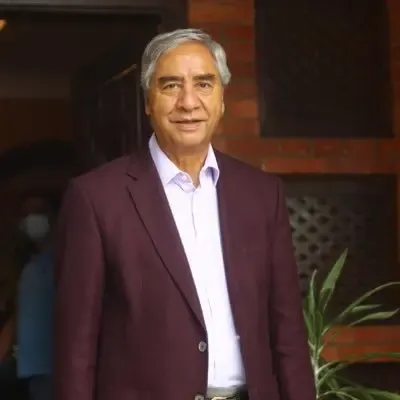
For the last ten years, their leaders — Sher Bahadur Deuba, KP Sharma Oli, and Pushpa Kamal Dahal — have maintained significant power.
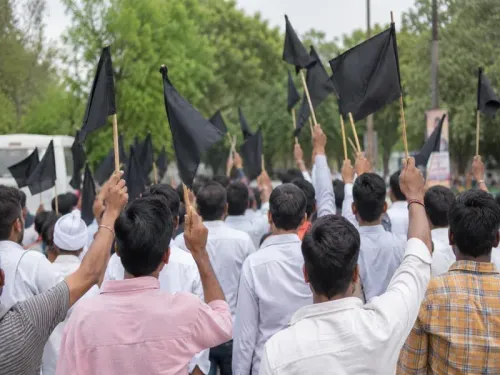
A growing sentiment among the Nepali populace suggests that the nation is stagnating under their leadership and that corruption is pervasive. This dissatisfaction sparked substantial protests from Gen Z last September, leading to the collapse of the coalition government headed by Prime Minister Oli.
During these protests, furious crowds attacked the residences of the three leaders, resulting in 77 fatalities and damages worth billions of rupees.
Now, as the country approaches parliamentary elections on Thursday, these established political parties and their leaders are confronted with what could be the most significant challenge in Nepal's electoral history, driven by escalating public discontent.
Emerging political entities, particularly the Rastriya Swatantra Party (RSP) led by former media figure Rabi Lamichhane and popular youth leader, former Mayor of Kathmandu Metropolitan City Balen Shah, who is also the RSP's candidate for Prime Minister, seem poised to pose a formidable challenge to the traditional parties.
Journalists who have traveled across various regions to assess public sentiment report a noticeable push for change, though the extent of this shift remains uncertain.
“Given the current electoral context, established political parties and their leaders are undergoing a significant test in these elections,” stated former Chief Election Commissioner Neel Kantha Uprety in an interview with IANS. “Their track record while in power has been less than satisfactory, fueling public dissatisfaction.”
He noted that the constant turnover of governments has also hampered the performance of these traditional parties. “Facing elections amid allegations of inadequate performance and corruption, they are clearly up against a massive challenge,” he remarked.
In contrast, the RSP is competing with notable personalities like Lamichhane and Shah. The former Kathmandu mayor is challenging former Prime Minister Oli in his stronghold of Jhapa-5 in eastern Nepal.
Oli seems to recognize Shah as a genuine contender this time, concentrating on his own constituency during the campaign, unlike previous elections where he campaigned nationwide for party candidates.
Gagan Thapa, the newly elected president of the Nepali Congress, is also vying for a seat from Sarlahi-4 in southern Nepal, where local leader Ameresh Kumar Singh of the RSP is competing.
Singh, a former NC lawmaker, previously represented this constituency in the dissolved House of Representatives.
As a well-regarded leader within the Nepali Congress, Thapa's presence raises hopes for a strong performance from his party in these elections.
Former Prime Minister Deuba has stepped back from leadership following a special general convention that elected Thapa as the new president without his consent.
Analysts indicate that leftist parties in Nepal could face significant obstacles in the elections due to their inability to rejuvenate their leadership, unlike the Nepali Congress.
Oli remains influential in the CPN (UML), while Prachanda continues to head the newly established Nepali Communist Party formed from the merger of the former CPN (Maoist Centre) and CPN (Unified Socialist), among others.
“The Gen Z movement's removal of the Oli-led government could drastically affect UML's electoral chances,” observed political analyst Lok Raj Baral, a former Nepali ambassador to India. “Oli’s sometimes controversial remarks could also impact UML's prospects.”
Conversely, the NCP has been losing influence since the Maoists became the predominant party in the 2008 Constituent Assembly elections.
“In the last two elections, Prachanda’s party secured a considerable number of seats in the House of Representatives due to electoral alliances,” Baral added.
“With political parties steering clear of alliances this time, the NCP might struggle to garner enough votes, especially under the First-Past-the-Post system.”
Historical data under the proportional representation system indicates that the former CPN (Maoist Centre) received enough votes to win under the FPTP system, yet its share in the same constituencies was significantly lower under proportional representation, suggesting that the party benefited from electoral alliances previously.
Point of View
The upcoming elections in Nepal represent a significant turning point. With rising public dissatisfaction towards established political parties and the emergence of new political forces, the electoral landscape is shifting dramatically. This could redefine governance in Nepal and influence future political dynamics.
NationPress
20 Sept 2026
Frequently Asked Questions
What are the key political parties in Nepal?
The primary political parties include the Nepali Congress, the Communist Party of Nepal (Unified Marxist–Leninist) (CPN-UML), and the Rastriya Swatantra Party (RSP).
Why are the upcoming elections significant?
These elections are crucial due to rising public dissatisfaction with traditional political leaders and the emergence of new political challengers.
Who are the prominent leaders contesting in the elections?
Prominent leaders include Sher Bahadur Deuba of Nepali Congress, KP Sharma Oli of CPN-UML, and Rabi Lamichhane and Balen Shah from the Rastriya Swatantra Party.
What impact did the Gen Z protests have?
The Gen Z protests led to the collapse of the coalition government under Prime Minister Oli and highlighted widespread public discontent with political leadership.
How might the election results affect Nepal's future?
The election results could lead to significant changes in governance and political dynamics, potentially reshaping Nepal's future direction.