South Korea-US alliance under strain as NIS excluded from trilateral spy meet
Synopsis
South Korea's spy agency was quietly frozen out of a US-Japan intelligence meeting on North Korean cyber threats — and the fallout is piling up. From the Kusong uranium disclosure that cost Seoul classified intelligence access, to a delayed US visa for a senior lawmaker, the Seoul-Washington alliance is showing cracks that neither side is fully ready to address publicly.
Key Takeaways
South Korea's National Intelligence Service (NIS) was excluded from a June 2026 trilateral meeting with the US and Japan on North Korean cyber threats, reportedly at Washington's request.
The NIS publicly acknowledged the exclusion on 10 October 2026 , following a news report on the incident.
The strain reportedly began after Unification Minister Chung Dong-yang disclosed a North Korean uranium enrichment facility in Kusong in March , prompting Washington to restrict Seoul's access to some North Korea intelligence.
A senior ruling bloc insider admitted 'various issues' have impacted overall South Korea-US bilateral ties.
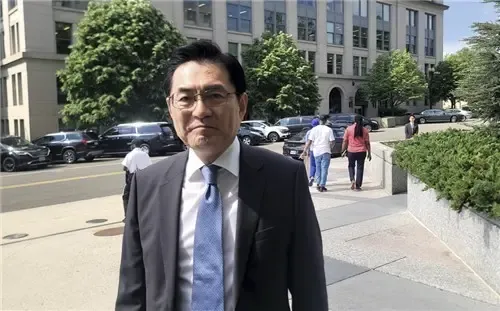
The Democratic Party (DP) flagged a delayed US visa for former party leader Rep.
Jung Chung-rae , who had planned a US visit for a parliamentary audit of South Korean diplomatic missions.
Calls for National Security Adviser Wi Sung-lac to travel to Washington for talks have emerged, but no such visit is currently planned, according to ruling bloc officials.
South Korea's National Intelligence Service (NIS) was excluded from a June 2026 trilateral intelligence meeting involving Washington and Tokyo on North Korean cyber threats — an unprecedented snub that has deepened concerns over friction in the Seoul-Washington alliance, according to sources familiar with the matter. The NIS acknowledged the exclusion on Thursday, 10 October, following a news report that said Washington had specifically requested the South Korean agency be left out.
The NIS Exclusion: What Happened
The trilateral meeting, held in June, brought together intelligence officials from the United States and Japan to discuss North Korean cyber operations — a domain in which Seoul's NIS would ordinarily be considered an indispensable partner. While the NIS moved to downplay the incident publicly, the fact that it felt compelled to acknowledge the exclusion at all signals the sensitivity of the episode.
Adding to the unease, South Korea's industry ministry on Friday dismissed a separate local report alleging that US Commerce Secretary Howard Lutnick had voiced distrust of the NIS during bilateral negotiations on strategic investment projects. The back-to-back denials have done little to quiet speculation about the state of intelligence-sharing between the two allies.
Root Causes: The Kusong Disclosure Row
The current strain traces back to a disclosure by Unification Minister Chung Dong-young, who revealed a North Korean uranium enrichment facility in Kusong in March. Washington's reaction was swift: it reportedly restricted Seoul's access to certain North Korea-related intelligence in what analysts described as a pointed protest.
Chung has maintained that he only shared information already in the public domain. Critics, however, argue the episode damaged operational trust at a moment when the alliance depends on seamless intelligence coordination to monitor Pyongyang's nuclear programme. This is not the first time an intelligence-sharing dispute has complicated the bilateral relationship, but the scale and timing — against a backdrop of ongoing nuclear and cyber threats from North Korea — have made it particularly consequential.
Political Fallout in Seoul
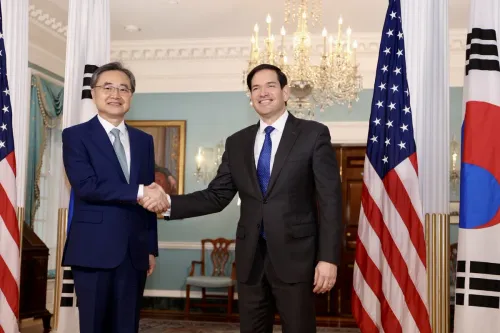
A senior insider from South Korea's ruling bloc acknowledged that 'various issues' between the two sides have weighed on overall bilateral ties. 'It is not good for bilateral relations to be shaky like this,' the official said by phone. 'It is never desirable for problems to arise in the intelligence sector.'
Some voices within the political establishment have urged the presidential office to dispatch National Security Adviser Wi Sung-lac to Washington to defuse the tension. A ruling bloc official, however, indicated there are no current plans for such a visit, while suggesting that various options were being explored.
Visa Row Adds Another Layer
The ruling Democratic Party (DP) on Friday voiced regret over the apparent delay in the issuance of a US visa for former party leader Rep. Jung Chung-rae. DP senior spokesperson Park Sung-joon confirmed that Jung's visa application remained under review without a final decision. Jung had planned to travel to the United States for a parliamentary audit of Seoul's diplomatic missions abroad.
'(We) hope the diplomatic authorities of South Korea and the United States swiftly and actively resolve the issue,' Park said in a written briefing.
The main opposition People Power Party (PPP) raised the possibility that broader alliance friction may have influenced the visa delay. Choi Eun-seok, the PPP's senior floor spokesperson, warned that 'if such warning signs across the diplomatic, intelligence and security sectors continue, the government must thoroughly inspect whether there are problems in communication and trust between South Korea and the US.'
Jung himself addressed the matter in a Facebook post, confirming his visa was under review and urging others to refrain from remarks that could harm the alliance. Notably, Jung was previously denied a US visa as a lawmaker in 2013 — linked to his role in the 1989 occupation of the US ambassador's residence in Seoul by student activists.
A foreign ministry official pushed back against attempts to connect the visa case to broader relations: 'South Korean and US authorities are closely communicating and cooperating on various issues, and it is inappropriate to connect an individual visa issue with overall South Korea-US relations,' the official said.
What Comes Next
The cumulative weight of the NIS exclusion, the Kusong disclosure fallout, and the visa row has placed the Seoul-Washington alliance under a degree of public scrutiny not seen in recent years. Whether the two sides can reset intelligence cooperation — and on what terms — will be closely watched in the weeks ahead, particularly as North Korea's cyber and nuclear activities continue to demand a coordinated allied response.
Point of View
And South Korea's unilateral disclosure of the Kusong facility — whatever its justification — handed Washington a justification to pull back. What is striking is the sequencing: the visa delay, the Lutnick distrust report, and the trilateral exclusion together constitute a pattern, not a series of isolated incidents. Seoul's political establishment is treating each episode separately, when the more urgent question is whether there is a systemic credibility deficit to address. Without a back-channel reset — the Wi Sung-lac mission some are calling for — the risk is that each new friction point compounds the last.
NationPress
10 Oct 2026
Frequently Asked Questions
Why was South Korea's NIS excluded from the trilateral intelligence meeting?
South Korea's National Intelligence Service was excluded from a June 2026 meeting with US and Japanese counterparts on North Korean cyber threats reportedly at Washington's request. The exclusion is widely linked to fallout from Unification Minister Chung Dong-young's disclosure of a North Korean uranium enrichment facility in Kusong in March, which prompted Washington to restrict Seoul's access to certain North Korea-related intelligence.
What is the Kusong uranium enrichment disclosure and why does it matter?
In March 2026, South Korean Unification Minister Chung Dong-young revealed the existence of a North Korean uranium enrichment facility in Kusong. Washington reacted by restricting Seoul's access to some North Korea intelligence, apparently viewing the disclosure as a breach of protocol. Chung has maintained he only shared publicly available information, but the incident strained intelligence-sharing between the two allies.
What is the issue with Rep. Jung Chung-rae's US visa?
Former Democratic Party leader Rep. Jung Chung-rae applied for a US visa to conduct a parliamentary audit of South Korean diplomatic missions in the United States, but his application remained under review without a final decision as of Friday, 10 October. The DP has called on both governments to resolve the issue swiftly, while opposition party PPP suggested alliance friction may have played a role in the delay.
Is South Korea planning to send its national security adviser to Washington to ease tensions?
Some voices within South Korea's political establishment have urged the presidential office to dispatch National Security Adviser Wi Sung-lac to Washington to defuse the reported intelligence friction. However, a ruling bloc official indicated there are currently no concrete plans for such a visit, adding that various options were under consideration.
How serious is the current strain in the South Korea-US alliance?
While official statements from both Seoul and Washington have sought to downplay individual incidents, a senior ruling bloc insider acknowledged that 'various issues' have had a cumulative impact on overall bilateral ties. The NIS exclusion, the Kusong disclosure fallout, and the visa delay have collectively raised questions about the depth of intelligence and diplomatic trust between the two long-standing allies.