North Korea drops unification goal, cements Kim Jong-un's sole rule in party charter
Synopsis
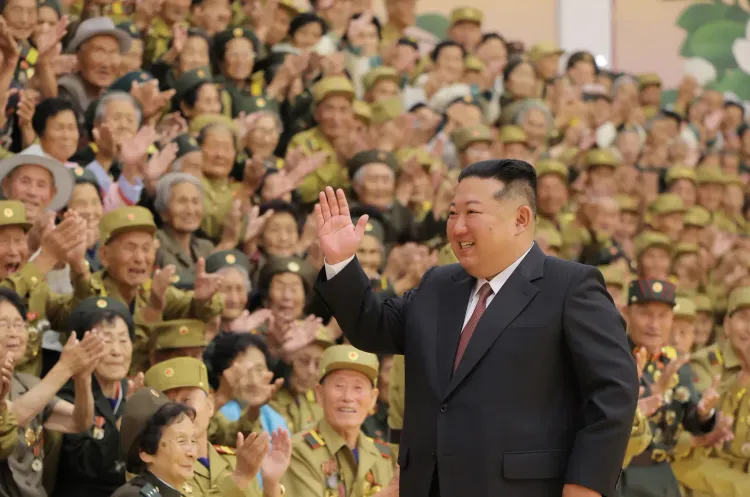
North Korea has quietly but decisively buried the idea of Korean reunification — not just in rhetoric, but in the foundational document of its ruling party. The revised WPK charter strips unification language, erases Kim Il-sung and Kim Jong-il's legacies, and hands Kim Jong-un unchecked institutional authority. It is the most comprehensive ideological consolidation of his nearly 15-year rule.
Key Takeaways
North Korea removed all references to 'peaceful unification' from the Workers' Party of Korea (WPK) charter, first revised in June 2024 .
The full charter text was publicly disclosed for the first time by Seoul 's Institute for National Security Strategy (INSS) on 3 September .
Kim Jong-un 's authority as WPK General Secretary has been formally expanded; references to predecessors Kim Il-sung and Kim Jong-il have been removed.
A new clause allows the party to skip internal elections during wartime ; minimum membership age raised from 18 to 20 .
References to the US military presence in South Korea and 'outside forces' were also deleted, reinforcing the two-states doctrine.
The INSS believes Jo Yong-won likely holds the first secretary post, though this remains unconfirmed.
North Korea has formally removed all references to 'peaceful unification' with South Korea from the charter of its ruling Workers' Party of Korea (WPK), according to the full text of the document disclosed on Thursday, 3 September. The revision, first made in June 2024, entrenches Pyongyang's redefinition of inter-Korean relations as those between 'two hostile states' — a fundamental break from decades of official reunification rhetoric.
Key Developments in the Revised Charter
The full charter text was released by Seoul's Institute for National Security Strategy (INSS), marking the first public disclosure of the document in its entirety. South Korea's intelligence authorities had previously confirmed the June 2024 revision, but the precise language remained undisclosed until now. The released text also incorporates updates adopted at the WPK's ninth congress in February 2025.
Beyond stripping unification language, the charter also removes references to the US military presence in South Korea and to 'outside forces' — a move widely interpreted as reinforcing Pyongyang's position that the two Koreas are entirely separate nations with no shared national identity.
Kim Jong-un's Authority Strengthened
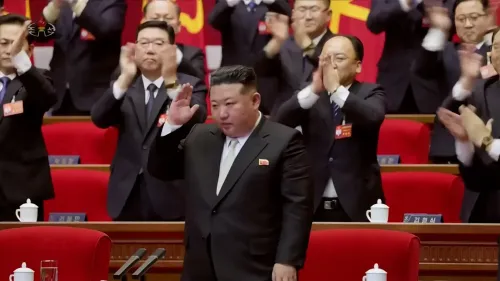
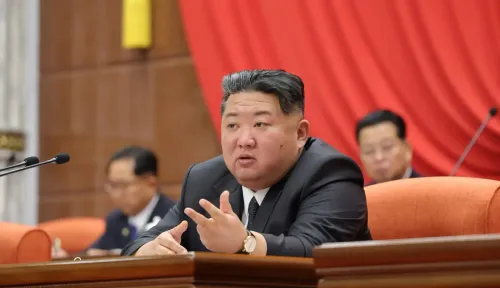
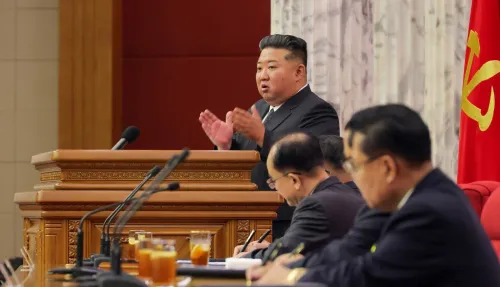
The revised rules significantly expand the formal authority of WPK General Secretary Kim Jong-un, spelling out in greater detail his powers to convene party meetings, appoint and dismiss officials, and dissolve party departments. Crucially, references to the achievements of his predecessors — state founder Kim Il-sung and his father Kim Jong-il — have been stripped from the document. Analysts broadly interpret this as a deliberate effort to establish the third-generation leader as the party's sole and unchallenged authority, untethered from the legacies of those who came before him.
According to the INSS, these changes collectively reflect Pyongyang's drive to transition into what it describes as the 'Kim Jong-un Era 2.0', marking nearly 15 years of his rule.
Structural Changes to Party Rules
Among the more notable procedural revisions, a newly added clause permits the party to skip internal elections during wartime — a provision with no precedent in the charter's known history. The minimum age for party membership has also been raised from 18 to 20.
One element remains unresolved: the identity of the holder of the first secretary post, a position created at the eighth party congress in 2021 to serve as Kim's official proxy. The INSS said it believes Jo Yong-won, secretary of the party's Central Committee, is likely filling that role, though this has not been officially confirmed.
Background: How North Korea Got Here
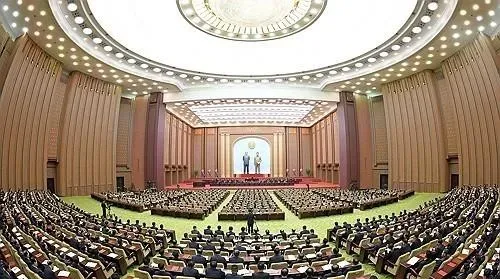
The constitutional and ideological shift has been building since at least January 2024, when Kim addressed the Supreme People's Assembly and declared that 'peaceful unification' with the South was no longer viable. He directed that the concept of a single Korean nation be removed from state documents. By October 2024, Pyongyang had confirmed the corresponding constitutional revisions. The WPK charter revision follows that trajectory, now giving the ideological shift full institutional weight within the party's foundational document.
This is not merely a semantic adjustment — it represents a generational repudiation of the post-Korean War framework that, however fitfully, had kept the door open to eventual reconciliation. With the charter now aligned with the constitution, North Korea has locked in its two-states doctrine at every level of its governing architecture.
Point of View
Deleting your predecessors' achievements is a radical act of self-coronation. The wartime election-suspension clause is equally telling — it is not a contingency measure but a pre-authorisation of unchecked rule. South Korea and its allies now face a Pyongyang that has legally and doctrinally severed the last thread of shared nationhood, making any future engagement framework far harder to construct.
NationPress
19 Oct 2026
Frequently Asked Questions
What changes did North Korea make to the Workers' Party of Korea charter?
North Korea removed all references to 'peaceful unification' with South Korea and to a shared Korean national identity, while significantly expanding the formal powers of General Secretary Kim Jong-un. The revised charter also deletes mentions of the US military presence in South Korea and strips references to the achievements of former leaders Kim Il-sung and Kim Jong-il.
When was the WPK charter revised, and when was it made public?
South Korea's intelligence authorities confirmed the charter was revised in June 2024, but the full text was not made public until 3 September, when Seoul's Institute for National Security Strategy (INSS) released it. Additional updates from the WPK's ninth congress in February 2025 were also included.
Why did North Korea remove unification references from its party charter?
The move aligns with a broader ideological shift declared by Kim Jong-un at the Supreme People's Assembly in January 2024, when he stated that 'peaceful unification' was no longer possible and ordered the concept of a single Korean nation removed from state documents. Pyongyang confirmed constitutional revisions along these lines by October 2024.
How does the revised charter strengthen Kim Jong-un's position?
The revised charter details Kim's powers to convene meetings, appoint and dismiss officials, and dissolve party departments. By removing references to his predecessors' achievements, it positions him as the party's sole historical and ideological authority — what the INSS describes as the 'Kim Jong-un Era 2.0' after nearly 15 years in power.
What is the significance of the wartime election-suspension clause?
A newly added clause in the charter allows the WPK to bypass internal elections during wartime, a provision with no known precedent in the charter's history. Critics and analysts view it as a pre-emptive authorisation for unchecked party rule under crisis conditions, further concentrating power in Kim's hands.