OPEC+ holds oil output steady for November as Brent stays above $100
Synopsis
OPEC+ has frozen output for a second straight month, but the real story is that higher quotas are not delivering more oil — Hormuz is choked, Houthis have disrupted the Suez route, Russia is pumping well below its target, and the UAE has walked out. With Brent above $100, the cartel's decisions are being overtaken by geography and war.
Key Takeaways
OPEC+ 's seven core members agreed on Sunday to keep oil production targets flat for November 2026 .
Brent crude is trading above $100 per barrel , up from $73 before the Middle East conflict began in February 2026 .
The Strait of Hormuz , through which 20% of global oil and gas exports transit, remains disrupted by the ongoing conflict.
Russia is producing around 9 million barrels per day , below its OPEC+ quota of 9.8 million barrels per day , partly due to Ukrainian drone strikes on energy infrastructure.
The UAE exited OPEC+ in May 2026 , raising questions about the cartel's long-term cohesion.
OPEC+ members are drafting a new quota-allocation framework before deciding on the next output cycle.
The OPEC+ cartel agreed on Sunday to keep oil production targets unchanged for November, maintaining the status quo as an ongoing Middle East conflict continues to cloud global energy markets. The decision was taken by the group's seven core members — Saudi Arabia, Russia, Iraq, Kuwait, Algeria, Kazakhstan, and Oman.
Where Oil Prices Stand
Global benchmark Brent crude has surged past the $100 per barrel mark, a sharp climb from roughly $73 per barrel before the Middle East conflict erupted at the end of February this year. Prices did dip on Friday after the Group of 7 (G7) nations agreed to US President Donald Trump's request to release diesel reserves, but that relief proved short-lived.
The Production Quota Picture
This is the second consecutive month the cartel has held output steady, having kept targets flat for October as well. The seven core OPEC+ producers are now working on a fresh quota-allocation framework to determine each member's share before committing to the next output target cycle. The group had previously announced additional voluntary production adjustments in April 2023 and November 2023.
On 2 August, OPEC+ had approved an increase in its collective crude output quota of approximately 188,000 barrels per day effective September — a move that partially reversed the 2023 production cuts. That incremental rise, however, has delivered limited real-world impact.
Why Higher Quotas Are Not Moving the Needle
Even where quotas exist on paper, structural disruptions are preventing crude from reaching global buyers. The Strait of Hormuz — through which roughly 20 per cent of the world's oil and gas exports transit — remains severely congested owing to the Middle East conflict. Iran-backed Houthi rebels have seized territory along Yemen's Red Sea coast, further snarling tanker traffic through the Suez Canal route and compounding supply-chain strain.
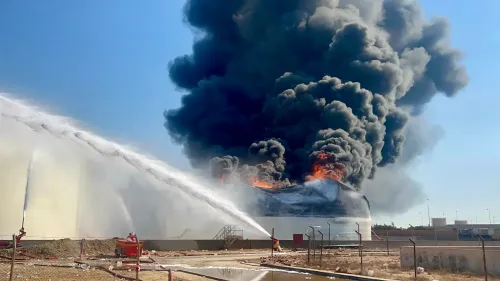
Russia's actual output adds another complication. Repeated Ukrainian drone strikes targeting energy infrastructure deep inside Russian territory have pushed Moscow's production to around 9 million barrels per day — well short of its OPEC+ target of approximately 9.8 million barrels per day.
UAE Exit Adds Uncertainty
The United Arab Emirates (UAE) withdrew from the OPEC+ grouping in May, citing long-standing frustration over production limits. The departure has raised questions about how long remaining members will continue to accept coordinated output caps, particularly as divergent national interests pull at the cartel's internal cohesion. Analysts note that such defections, if they multiply, could undermine OPEC+'s ability to manage global supply.
What to Watch
The cartel's next key milestone is the finalization of a revised quota framework, which will determine the contours of production policy for early 2027. Until Middle East tensions ease and transit routes stabilize, even a formal output increase is unlikely to translate meaningfully into additional barrels for global consumers.
Point of View
Houthi interdiction of the Red Sea route, and Russia's drone-hit energy infrastructure mean the supply side is being dictated by conflict, not committee decisions in Riyadh. The UAE's exit is a structural warning sign that tends to get buried in the noise of price headlines; if other members with spare capacity conclude that coordinated limits serve Saudi and Russian interests more than their own, the cartel's ability to manage a supply shock may prove far weaker than markets currently assume.
NationPress
4 Oct 2026
Frequently Asked Questions
Why did OPEC+ decide to keep oil production unchanged for November?
OPEC+ held output steady for November 2026 due to uncertainty stemming from the ongoing Middle East conflict, which has already disrupted major transit routes. The seven core members — Saudi Arabia, Russia, Iraq, Kuwait, Algeria, Kazakhstan, and Oman — opted for continuity while working on a new quota-allocation framework.
Why is Brent crude above $100 a barrel?
Brent crude has risen from around $73 per barrel to above $100 since the Middle East conflict broke out in late February 2026, primarily because key shipping lanes — including the Strait of Hormuz and the Suez Canal route — have been severely disrupted. Iran-backed Houthi rebels seizing Yemen's Red Sea coast has further constrained tanker movement.
How is the Middle East conflict affecting global oil supplies?
The Strait of Hormuz, which handles roughly 20% of the world's oil and gas exports, remains choked by conflict-related disruptions. Houthi activity near Yemen's Red Sea coast has also impacted tanker traffic through the Suez Canal, meaning higher OPEC+ quotas are not translating into more crude reaching global buyers.
Why is Russia producing less oil than its OPEC+ quota?
Russia is currently producing around 9 million barrels per day, short of its OPEC+ target of approximately 9.8 million barrels per day. Repeated Ukrainian drone strikes on energy infrastructure deep inside Russian territory have damaged production capacity and constrained output.
What does the UAE's exit from OPEC+ mean for the cartel?
The UAE withdrew from OPEC+ in May 2026 after years of frustration over production limits. The departure raises questions about the group's cohesion, as it signals that members with significant spare capacity may be unwilling to keep accepting coordinated output caps indefinitely.