CM Sai marks one year of rural bus scheme in Chhattisgarh
Synopsis
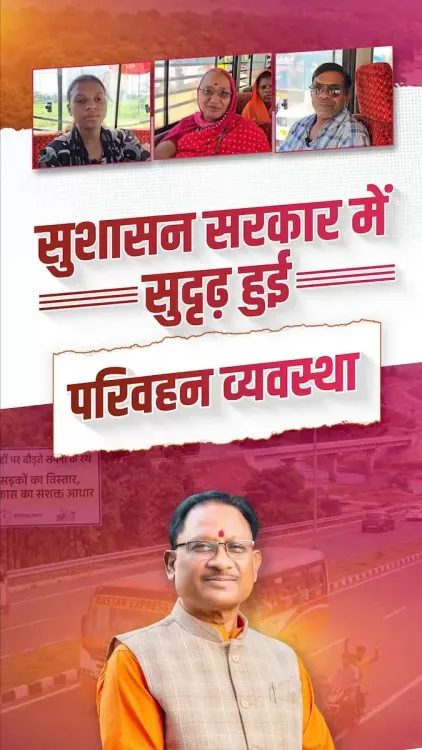
Chhattisgarh CM Vishnu Deo Sai marks the first anniversary of the Mukhyamantri Grameen Bus Yojana, crediting the scheme with connecting students, patients, and residents in remote Surajpur to schools, hospitals, and markets.
Key Takeaways
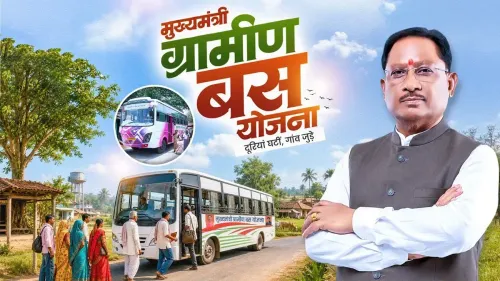
CM Vishnu Deo Sai celebrated one year of the Mukhyamantri Grameen Bus Yojana (MMGBY) on October 4, 2026 .
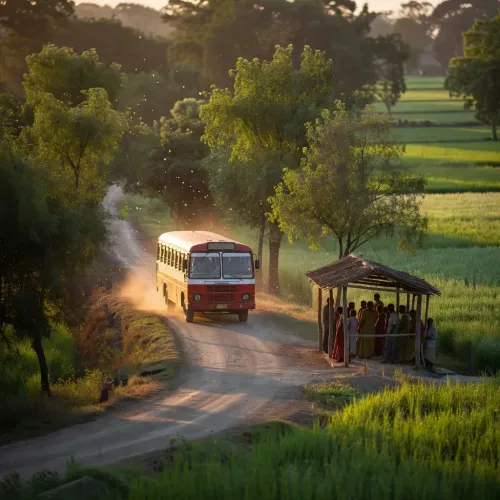
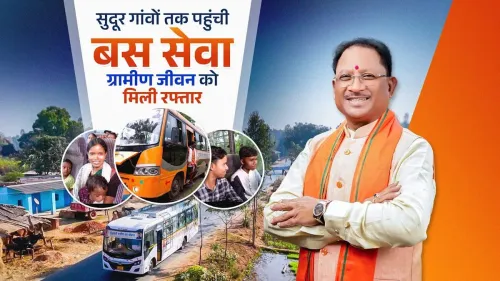
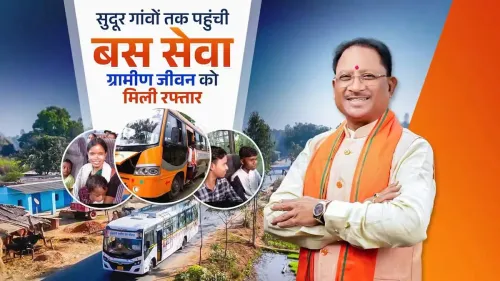
The scheme provides regular bus services in Surajpur district's rural and remote areas.
Students are reaching educational institutions, patients are accessing hospitals, and residents are connecting to tehsil offices and markets more easily.
The scheme is designed to bridge the last-mile connectivity gap in tribal and forested regions of Chhattisgarh.
The government is framing the anniversary as a governance milestone under the #OneYearOfMMGBY campaign.
For villages in Chhattisgarh's Surajpur district, the distance to a school, a hospital, or a government office was once more than kilometres — it was a wall. Chhattisgarh Chief Minister Vishnu Deo Sai on Sunday, October 4, 2026, marked the first anniversary of the Mukhyamantri Grameen Bus Yojana (MMGBY), celebrating how a regular rural bus service has begun dismantling that wall — one route at a time.
What the scheme set out to solve in Surajpur
CM Sai's post, written in Hindi, captures the scheme's promise in a single line: 'Doori hui kam, vikas har kadam' — 'Distance reduced, development at every step.' The framing is deliberate. In tribal and remote districts like Surajpur, the absence of reliable public transport has historically meant that students dropped out rather than walk several kilometres to the nearest school, and patients delayed treatment until conditions worsened. The Mukhyamantri Grameen Bus Yojana targets precisely that gap — not urban commuters, but the last-mile rural resident.
According to CM Sai, regular bus services in Surajpur's rural belts are now connecting students to educational institutions, patients to hospitals, and residents to tehsil offices and local markets with far greater ease. The scheme, he emphasised, is 'not merely a mode of transit, but a medium of access to services and opportunities.'
Connecting villages to towns — the broader logic
The core design of MMGBY is integration: rural routes that plug remote habitations into the nearest urban service hub. In a state where a significant share of the population lives in forested, hilly, or remote terrain, road connectivity alone is insufficient if buses do not run. The scheme attempts to close that second gap — ensuring that built roads are actually used by scheduled services reaching villages that previously had none.
The #OneYearOfMMGBY hashtag signals that the Chhattisgarh government is framing this anniversary as a political and governance milestone — a year of measurable delivery, not just a policy promise on paper.
Surajpur as the face of the initiative
The specific mention of Surajpur — a district carved out of the older Surguja region, with large stretches of tribal and forested geography — is telling. It is precisely the kind of district where public transport access gaps are sharpest and where the scheme's impact, if sustained, would be most visible. By anchoring the anniversary communication in Surajpur, the Chief Minister's office is putting a concrete, nameable face on what could otherwise be an abstract policy claim.
One year in, the government's own narrative is of transformation through connectivity. Whether that claim holds up to independent measurement will be the next test — but for now, the buses are running, and the routes are real.
Point of View
Bridges) with functional connectivity (actual transport services) in states with large tribal and rural populations. Marking the anniversary with a district-specific focus on Surajpur signals an attempt to move the narrative from scheme launch to demonstrated impact. For CM Sai, who leads a state where tribal welfare and rural development are politically central, public transport access doubles as both a governance deliverable and an electoral signal ahead of future cycles. The scheme's durability will ultimately depend on route sustainability and ridership data — metrics the government has yet to place in the public domain.
NationPress
4 Oct 2026
Frequently Asked Questions
What is Mukhyamantri Grameen Bus Yojana in Chhattisgarh?
Mukhyamantri Grameen Bus Yojana (MMGBY) is a Chhattisgarh government scheme that provides regular bus services to rural and remote areas, connecting villages to schools, hospitals, tehsil offices, and markets.
Which district did CM Vishnu Deo Sai highlight for the MMGBY anniversary?
CM Vishnu Deo Sai specifically highlighted Surajpur district , a remote and partly tribal area in northern Chhattisgarh, as a beneficiary of the scheme.
How long has Mukhyamantri Grameen Bus Yojana been running?
As of October 4, 2026 , the scheme has completed one year of operations, which CM Sai marked with a post on X under the hashtag #OneYearOfMMGBY.
Who benefits from the rural bus scheme in Chhattisgarh?
The scheme primarily benefits students needing access to educational institutions, patients seeking hospital care, and residents who need to reach government tehsil offices and local markets from remote villages.
What is Surajpur district known for in Chhattisgarh?
Surajpur is a district in northern Chhattisgarh, carved out of the older Surguja region, known for its largely rural, forested, and tribal geography — making it one of the areas most dependent on state-provided public transport.