Pakistan election validity crisis: 128 petitions pending two years on
Synopsis
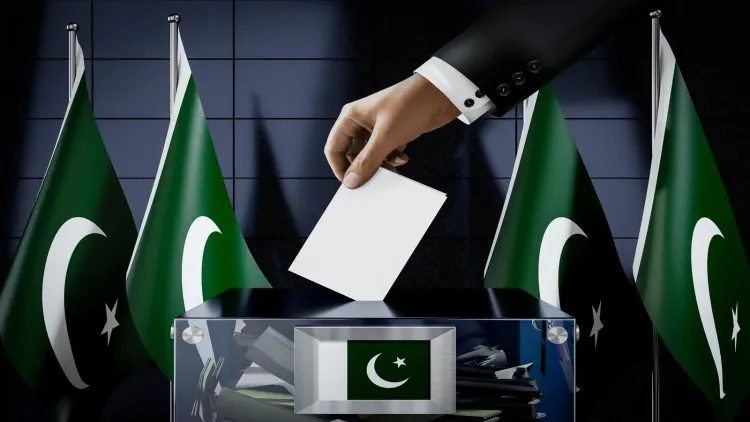
More than two years after Pakistan's general elections, 128 electoral petitions remain unresolved — meaning dozens of sitting lawmakers hold seats whose validity is still legally contested. With major constitutional amendments already passed by this parliament, the backlog is no longer just a procedural failure; it is a legitimacy crisis.
Key Takeaways
128 of 374 electoral petitions filed after Pakistan's general elections remain unresolved as of April 2026 .
The Elections Act mandates petition resolution within 180 days — a deadline that has been widely missed.
No assembly membership suspensions have been ordered despite legal provisions allowing them, according to FAFEN .
Tribunals in Punjab have withheld petition memos and judgments from public access, raising transparency concerns.
Major constitutional amendments passed by the disputed parliament have come under scrutiny over questions of legislative legitimacy.
Two years after Pakistan's general elections, 128 of the 374 electoral petitions originally filed remain unresolved as of April 2026, leaving dozens of sitting lawmakers in the National Assembly and provincial assemblies under a cloud of legal uncertainty. The prolonged deadlock, flagged in a report by Business Recorder, is being cited as a deepening threat to the credibility of Pakistan's democratic institutions.
The Scale of the Backlog
Pakistan's election tribunals were constituted specifically to deliver impartial and time-bound resolution of electoral disputes. The Elections Act mandates that petitions be decided within 180 days. Yet more than two years after the polls, over a third of all filed petitions remain pending — a failure that critics argue is not merely procedural but constitutionally consequential.
According to the Business Recorder report, the delay 'undermines confidence in democratic institutions as well as casts a shadow over the legitimacy of constitutional and legislative processes carried out.'
Constitutional Stakes
The unresolved disputes carry particular weight given the major constitutional amendments that have passed through parliament in the intervening period. As the report noted, 'constitutional amendments derive their legitimacy from the unquestioned authority of elected representatives.' With the legal status of numerous legislators still in dispute, the moral and political authority of those parliamentary decisions is being questioned.
This is not a hypothetical concern — legislation passed by a parliament whose composition is legally contested faces challenges on grounds of legitimacy, regardless of procedural correctness.
Penalties on Paper, Unenforced in Practice
The Elections Act does provide tools to prevent precisely this kind of delay. Tribunals are empowered to impose mandatory costs for adjournments and can even suspend the assembly membership of returned candidates found responsible for prolonging proceedings. However, according to the Free and Fair Election Network (FAFEN), no such suspensions have been ordered — suggesting that existing legal safeguards are not being enforced.
Transparency Failures in Punjab
The situation is reportedly compounded by a lack of transparency, particularly in Punjab, where tribunals have withheld petition memos and judgments from public access. According to the report, this 'deprives citizens, political parties, and independent observers of the opportunity to scrutinise tribunal decisions.' The opacity, critics argue, only fuels speculation and deepens suspicion about the neutrality of both electoral and judicial institutions.
A Recurring Pattern
Pakistan's political landscape has seen this pattern repeat across consecutive general election cycles, with delayed dispute resolution keeping post-election tensions alive well beyond polling day. The political polarisation that follows each election is thus sustained — and arguably worsened — by institutional inaction. The Business Recorder report stressed that 'Pakistan's democratic future depends on ensuring that electoral disputes are resolved fairly, transparently, and within the timeframe prescribed by law.' Whether the tribunals, or the authorities overseeing them, act on that imperative before the next electoral cycle remains an open question.
Point of View
And constitutional amendments are passed in the interim, the legitimacy deficit compounds with every sitting day. The law has the tools: adjournment costs, membership suspension, enforceable deadlines. That none of these have been applied points less to a gap in legislation and more to a failure of institutional will. Pakistan's democratic credibility cannot be rebuilt by the next election if the disputes from the last one are still unresolved when polling day arrives.
NationPress
16 Sept 2026
Frequently Asked Questions
How many election petitions are still pending in Pakistan?
As of April 2026, 128 of the 374 electoral petitions originally filed after Pakistan's general elections remain unresolved. This means over a third of all disputes have not been decided, despite a legal requirement to do so within 180 days.
What does the Elections Act say about resolving petitions?
The Elections Act clearly requires election tribunals to decide petitions within 180 days of filing. This deadline has not been met in a large number of cases, with disputes stretching well beyond two years after the elections.
Why does the petition backlog matter for Pakistan's parliament?
Dozens of sitting lawmakers in the National Assembly and provincial assemblies hold seats whose validity is still legally contested. Constitutional amendments and legislation passed by this parliament are therefore open to questions about their moral and political legitimacy.
Has any lawmaker been suspended over the delays?
No. Although the law permits suspension of assembly membership if a returned candidate is found responsible for prolonging proceedings, the Free and Fair Election Network (FAFEN) reports that no such suspensions have been ordered.
What transparency concerns have been raised about the tribunals?
Tribunals in Punjab have reportedly withheld petition memos and judgments from public access, preventing citizens, political parties, and observers from scrutinising decisions. Critics say this opacity deepens suspicion about the neutrality of electoral and judicial institutions.