Pakistan army masking Balochistan setbacks with extrajudicial killings: Analysis
Synopsis
A retired Indian Army officer's analysis in Eurasia Review raises a damning question: are Pakistan's claimed kills in Balochistan real battlefield victories or cover for extrajudicial executions? With over 100 Baloch fighters reportedly killed since July 5 — 64 in 'Operation Shaban' alone — and a 2019 ISPR admission on record about 'unpleasant things' done in war, the accountability gap in Balochistan looks wider than ever.
Key Takeaways
Baloch armed groups launched a wave of attacks on Pakistani security forces beginning 5 July , killing dozens of personnel.
Pakistani security forces claim to have killed over 100 Baloch fighters in retaliation; 64 deaths are attributed to Operation Shaban .
Retired Indian Army officer Nilesh Kunwar , writing for Eurasia Review , questioned the credibility of these casualty figures and accused the Pakistan army of extrajudicial killings to mask setbacks.
The then ISPR Director General acknowledged in April 2019 that security forces had carried out 'unpleasant things' in Balochistan amid the conflict.
Army Chief Asim Munir's April 2025 pledge to 'soon beat hell out of' Baloch fighters remains unfulfilled, with armed groups continuing to operate, according to the report.
Analysts cite a complete lack of external accountability as enabling unchecked military conduct in the region.
Pakistan's security forces are allegedly conducting extrajudicial killings in Balochistan to conceal military setbacks, according to an analysis published in Eurasia Review by retired Indian Army officer Nilesh Kunwar. The report comes amid what observers describe as one of the bloodiest periods in the region, following a wave of attacks by Baloch armed groups that began on 5 July.
Surge in Violence Since July 5
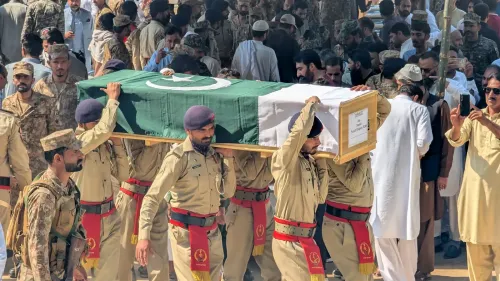
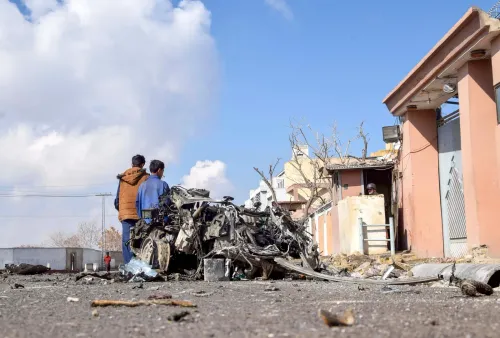
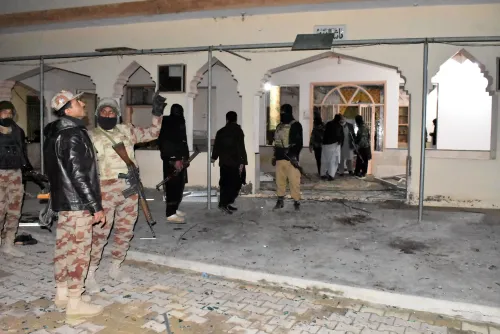
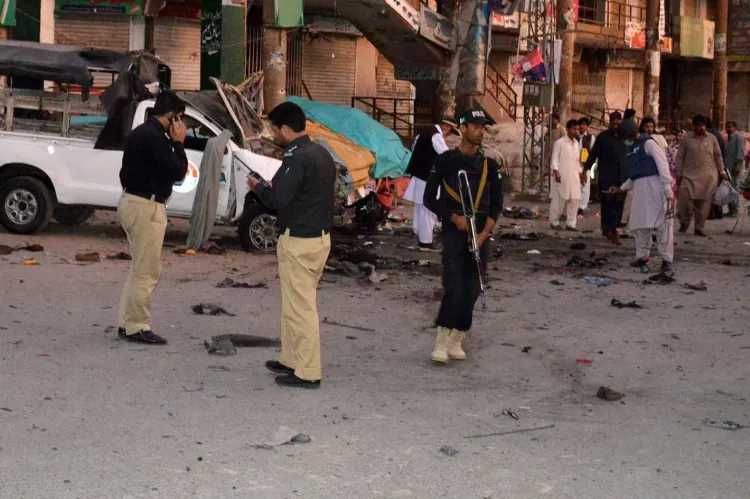
Dozens of Pakistani army and security personnel have been killed in a series of coordinated strikes by Baloch armed groups since 5 July, according to the report. Local media, citing security force statements, has reported the killing of over 100 Baloch fighters in the same period — with 64 of those deaths attributed to 'Operation Shaban', launched specifically against Baloch freedom fighters.
Questions Over Pakistan Army's Surveillance Claims
Kunwar raised pointed questions about the credibility of the Pakistani military's claimed kill count. He argued that if the Baloch Liberation Army (BLA) had taken standard precautionary measures after 5 July — relocating from bases, dispersing into smaller units, and concealing positions from aerial and ground surveillance — then the army's claim of precisely locating and eliminating 64 fighters within days would imply extraordinary intelligence capabilities.
'As such, if the Pakistan army could still accurately identify the latest locations where Baloch fighters had taken refuge and eliminate 64 of them in just a matter of days as it claims, then it's evident that they possess extraordinary surveillance capabilities,' Kunwar wrote. He then asked why, if those capabilities existed, the army had not launched Operation Shaban earlier to prevent loss of life rather than acting only after a major incident.
Field Marshal Munir's 'Soon' Under Scrutiny
The analysis also revisited a remark by Pakistani Army Chief Asim Munir, who stated in April 2025 that 'we will soon beat hell out of them' — referring to Baloch sarmachars (fighters). Kunwar noted that more than a year has since passed, yet armed Baloch groups continue to block highways, temporarily seize locations, and strike security forces with reported impunity. 'How long will the Field Marshal's 'soon' take?' he asked.
A 'Dubious Record' of Extrajudicial Killings
Kunwar described the Pakistan army as having a 'dubious record' of carrying out extrajudicial killings and labelling those killed as terrorists in order to mask operational failures — and cited an on-record admission to support the claim. He referenced remarks made by the then Director General of Inter Services Public Relations (ISPR), the army's media wing, during a media interaction in April 2019. The official had acknowledged the issue of enforced disappearances in Balochistan, saying: 'We don't wish that anyone should be missing. But when it is war, you have to do a lot of [unpleasant] things — as they say, all is fair in love and war; war is very ruthless.'
Kunwar cited this as evidence that the practice is not an unsubstantiated allegation but one that has been tacitly acknowledged by Pakistani military officials themselves.
Accountability Vacuum and the Baloch People
The analysis concluded with a sharp assessment of accountability — or the lack thereof. 'As dead men don't talk and ISPR is adept in spinning yarns, it's impossible to say for sure as to how many of the more-than-one-hundred killed by the Pakistani security forces in Balochistan are actually BLA fighters,' Kunwar wrote. He described the Baloch people as 'a forsaken lot,' arguing that a complete absence of external accountability has given the Pakistan army unchecked latitude in the region. The situation in Balochistan remains volatile, with no sign of a negotiated resolution on the horizon.
Point of View
And it gives Kunwar's extrajudicial-killing thesis a factual anchor that most coverage ignores. The deeper problem is structural: with no independent journalists embedded, no UN access, and no domestic judicial oversight, Pakistan's casualty figures from Balochistan are essentially unverifiable. The pattern — a major militant attack followed by a disproportionate and rapid kill count — has repeated itself enough times to warrant systematic scrutiny, not just episodic analysis.
NationPress
14 Oct 2026
Frequently Asked Questions
What is Operation Shaban in Balochistan?
Operation Shaban is a Pakistani military operation launched against Baloch freedom fighters following the wave of attacks on security forces that began on 5 July. Pakistani security forces claim to have killed 64 Baloch fighters specifically under this operation, a figure that independent analysts have questioned.
Why are Pakistan army's casualty claims in Balochistan being questioned?
Retired Indian Army officer Nilesh Kunwar argues that if the Baloch Liberation Army had dispersed and concealed itself after 5 July — standard procedure ahead of expected retaliation — the army's claim of locating and eliminating 64 fighters within days would require extraordinary surveillance capabilities. He questions why those same capabilities were not used proactively to prevent earlier attacks.
What did Pakistan's ISPR admit about Balochistan in 2019?
The then Director General of ISPR, the Pakistani army's media wing, acknowledged during a media interaction in April 2019 that security forces had done 'unpleasant things' in Balochistan, invoking the phrase 'all is fair in love and war.' The remark was made in the context of questions about enforced disappearances in the region.
Who is Nilesh Kunwar and what is his assessment?
Nilesh Kunwar is a retired Indian Army officer who wrote an analysis for Eurasia Review examining the surge in Balochistan violence since July 5. He argues that the Pakistan army has a 'dubious record' of conducting extrajudicial killings and labelling victims as militants to conceal military setbacks, citing the 2019 ISPR admission as supporting evidence.
What is the current situation in Balochistan?
Balochistan is experiencing one of its bloodiest periods in recent memory, with dozens of Pakistani security personnel killed in Baloch armed group attacks since 5 July 2025. Over 100 Baloch fighters have reportedly been killed by security forces in the same period, though independent verification remains impossible due to restricted access to the region.