Pakistani police arrest Afghan journalist Seyed Qasim Hashemi on Islamabad highway
Synopsis
Pakistani police have arrested Afghan journalist Seyed Qasim Hashemi on the Abbottabad-Islamabad highway with no charges disclosed and his location unknown — the latest in a mounting pattern of detentions targeting Afghan nationals, including journalists, as Pakistan's crackdown on undocumented migrants intensifies. An AMSO report documents over 3.4 million deportations and widespread abuse since 2023.
Key Takeaways
Afghan journalist Seyed Qasim Hashemi was arrested on the Abbottabad-Islamabad highway on 29 May 2025 at approximately 12:19 pm .
Pakistani authorities have not disclosed the reason for his arrest or his current location.
Afghan journalist Parwiz Aminzada was similarly arrested in Islamabad's Faisal Town on 20 May 2025 .
The AMSO reported that more than 3.4 million Afghan migrants have been deported from Pakistan and Iran since 2023 .
According to the AMSO report, 96.4% of detainees reported abuse, and 72.4% were held over 48 hours without judicial review.
None of the deported individuals reportedly received an individual risk assessment before expulsion, according to the AMSO.
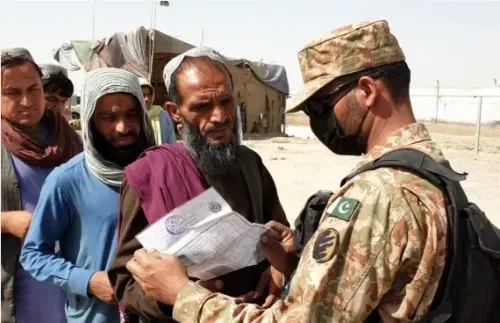
Pakistani police arrested Afghan journalist Seyed Qasim Hashemi on the Abbottabad-Islamabad highway on Thursday, 29 May 2025, at approximately 12:19 pm, according to sources familiar with the incident. Authorities have not issued any statement explaining the grounds for his arrest or disclosing his current whereabouts.
What Is Known About the Arrest
Hashemi was detained by Pakistani authorities while travelling on the Abbottabad-Islamabad highway, according to reports citing sources close to the matter. His exact place of detention remains unknown. Colleagues and acquaintances attempting to establish contact or obtain information about his condition have so far been unsuccessful.
Pattern of Arrests Targeting Afghan Journalists
The arrest is not an isolated incident. On 20 May 2025, Pakistani police detained Afghan journalist Parwiz Aminzada in the Faisal Town area of Islamabad during ongoing enforcement operations against Afghan nationals. In recent months, Pakistani authorities have sharply escalated arrests and deportations of Afghan refugees — including journalists — as part of a broader crackdown on undocumented immigrants, drawing sustained criticism from human rights organisations.
The Broader Crisis Facing Afghan Refugees in Pakistan
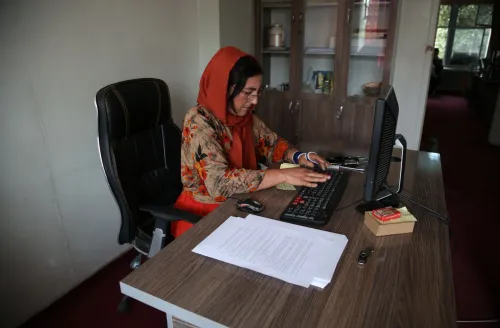
After the Taliban seized power in Afghanistan in 2021, hundreds of Afghan journalists fled the country, fearing retaliation, censorship, and restrictions on independent media. Many relocated to neighbouring countries, including Pakistan and Iran, while awaiting resettlement in Western nations.
On 8 May 2025, the Afghanistan Media Support Organisation (AMSO) reported that Afghan refugees in Pakistan have been subjected to arbitrary arrests, mistreatment, extortion, and the threat of forced deportation. According to the AMSO report, more than 3.4 million Afghan migrants have been deported from Pakistan and Iran combined since 2023.
Key Findings From the AMSO Report
The AMSO report, prepared jointly with the World Organisation Against Torture and presented to the United Nations Committee Against Torture, documented severe conditions. Among surveyed Afghan nationals, 68.3% said they had been arrested or imprisoned, while 96.4% of detainees reported facing abuse during arrest or detention. Additionally, 85.7% said they were forced to pay money to avoid arrest or secure release, and 72.4% were held for more than 48 hours without judicial review. The findings were drawn from a survey of 41 Afghan nationals, six in-depth interviews, and documentation from organisations including the United Nations High Commissioner for Refugees (UNHCR), the International Organisation for Migration (IOM), Amnesty International, and the Human Rights Commission of Pakistan. Critically, the AMSO noted that none of the deported individuals received an individual risk assessment before being expelled from Pakistan.
Rights Groups Sound the Alarm
Human rights organisations have repeatedly raised concerns over Pakistan's treatment of Afghan asylum seekers and journalists. Critics argue that the mass deportations and detentions violate international refugee protection norms, particularly given the well-documented dangers facing those returned to Taliban-controlled Afghanistan. With Hashemi's case unresolved and no official explanation forthcoming, press freedom advocates are expected to intensify pressure on Pakistani authorities for transparency.
Point of View
The humanitarian cost is no longer deniable. What is missing from mainstream coverage is the compounding effect: Afghan journalists who fled Taliban censorship now face stateless limbo, caught between a country they cannot return to and a host state that treats them as an enforcement target. The UN's involvement through the Committee Against Torture gives this story legal weight that goes beyond bilateral diplomacy.
NationPress
24 Sept 2026
Frequently Asked Questions
Who is Seyed Qasim Hashemi and why was he arrested?
Seyed Qasim Hashemi is an Afghan journalist arrested by Pakistani police on the Abbottabad-Islamabad highway on 29 May 2025. Pakistani authorities have not released any statement explaining the charges or reason for his detention.
Where is Seyed Qasim Hashemi being held?
His exact place of detention is not known. Colleagues and acquaintances attempting to locate him have so far been unsuccessful, and no official statement has been issued.
Is this the first arrest of an Afghan journalist in Pakistan recently?
No. On 20 May 2025, Pakistani police also arrested Afghan journalist Parwiz Aminzada in the Faisal Town area of Islamabad. Both arrests are part of a broader crackdown on Afghan nationals in Pakistan.
What does the AMSO report say about Afghan migrants in Pakistan?
The Afghanistan Media Support Organisation reported on 8 May 2025 that more than 3.4 million Afghan migrants have been deported from Pakistan and Iran since 2023. The report found that 96.4% of detainees faced abuse, 72.4% were held over 48 hours without judicial review, and none received an individual risk assessment before deportation.
Why did Afghan journalists flee to Pakistan after 2021?
After the Taliban seized power in Afghanistan in 2021, hundreds of journalists left fearing retaliation, censorship, and restrictions on independent media. Many moved to Pakistan and Iran while awaiting resettlement opportunities in Western nations.