Pakistan's Military Regime Heightens Aggression Against Afghanistan Following International Validation
Synopsis
In a concerning trend, Pakistan's military establishment exploits international validation to assert aggressive actions against Afghanistan, undermining its sovereignty and causing civilian casualties. This article explores the implications of this military strategy and its geopolitical consequences.
Key Takeaways
Pakistan operates as a proxy force using civilian governments for diplomatic purposes.
International validation translates into increased military aggression.
The military regime has a long-standing strategy to disrupt Afghan sovereignty.
Recent actions have resulted in significant civilian casualties.
U.S. political dynamics play a crucial role in shaping Pakistan's military behavior.
Islamabad, March 7 (NationPress) The military establishment of Pakistan operates not merely as a “State sponsor of proxies”, but effectively functions as a proxy entity supported by the state itself — leveraging civilian administrations as a diplomatic façade while the military retains strategic dominance.
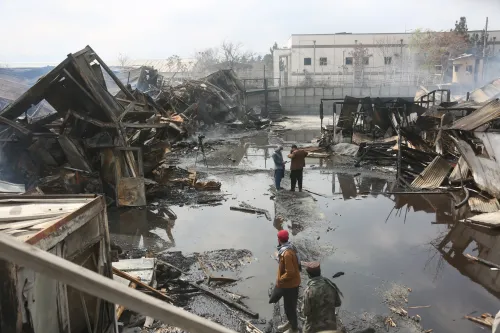
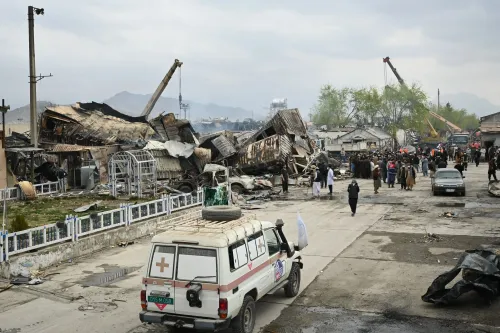
Upon receiving international endorsement, the military regime capitalizes on this legitimacy to gain operational latitude — escalating coercive measures against Afghanistan, infringing upon its sovereignty, and resulting in ongoing civilian casualties, as reported by international media and organizations, including the United Nations.
According to a report from 'Eurasia Review', “Pakistan’s military apparatus has spent years transforming Afghanistan into a controlled battleground — a space to infiltrate, exert pressure, and intermittently punish, ensuring that no Afghan administration can genuinely assert its sovereignty or pursue an autonomous regional policy. This strategy is often disguised under terms like ‘strategic depth,’ ‘counterterrorism’, or ‘Line of Control (LOC)/Durand Line security’.”
The report elaborates that this strategy manifests in a repeatable cycle: developing proxies, weaponizing disorder, offering ‘solutions’ to external powers, and resetting the crisis whenever Afghanistan begins to escape Pakistan’s grasp.
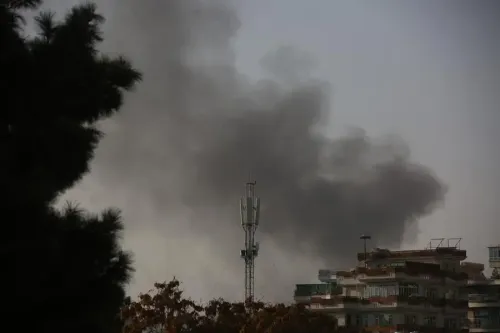
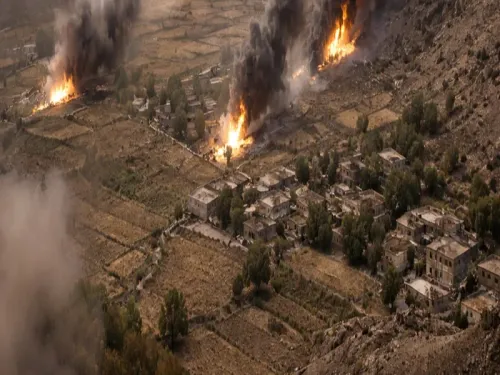
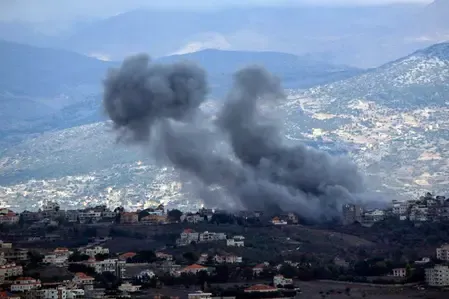
Recent developments — including marked airstrikes, drone assaults, and cross-border clashes — exemplify this recurring trend.
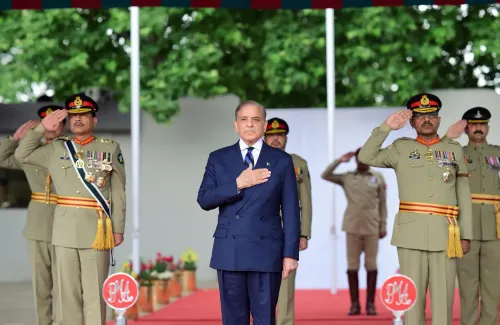
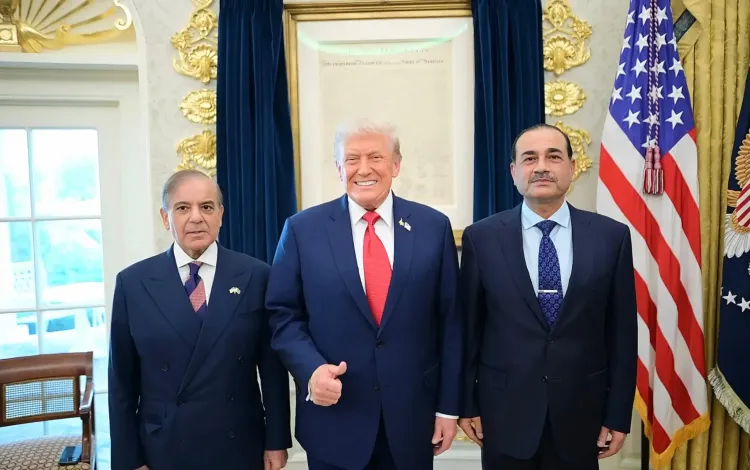
“What distinguishes this latest phase,” it notes, “is the persistent pattern of validation from Washington followed by bloodshed in Afghanistan” — instances where Pakistani Prime Minister Shehbaz Sharif and “self-declared” Field Marshal Syed Asim Munir receive public accolades from President Donald Trump, only to be followed swiftly by Pakistani military incursions into Afghanistan resulting in civilian casualties as reported by Afghans and UN-affiliated sources.
“While the timing alone does not imply causation, when the timing recurs in a similar political cadence — praise, photo opportunities, diplomatic boosts; followed by bombings over Afghan territory — it forms a pattern worthy of documentation, not dismissal,” the report underscores.
The military leadership in Pakistan does not need a formal written “green light” to take action, as global politics often operates through subtle cues such as “who receives praise, who is regarded as essential, and who is publicly labeled as a ‘partner’.”
When the high military command in Pakistan perceives strong validation from Washington, especially amid escalating regional tensions, Rawalpindi may interpret it as diplomatic cover to act more forcefully against Afghanistan while still presenting itself as a cooperative ally.
Moreover, the report states, “Trump’s public commendation of Sharif and Munir is more than mere symbolism; it shapes the narrative landscape. It positions Pakistan as a valued ally while portraying Afghanistan primarily as a source of militancy and chaos. This asymmetry — favorable treatment for Islamabad, suspicion towards Kabul — facilitates Pakistan's violations of Afghan sovereignty, resulting in civilian casualties while still maintaining a façade of legitimacy as a counter-terrorism actor.”
Point of View
It's vital to acknowledge the complexities of international relations and military strategies at play. The ongoing situation emphasizes the need for accountability and a balanced approach to ensure not only regional stability but also the protection of civilian lives.
NationPress
24 Sept 2026
Frequently Asked Questions
What actions has Pakistan taken against Afghanistan recently?
Pakistan has increased airstrikes, drone attacks, and cross-border violence against Afghanistan, raising concerns over sovereignty and civilian casualties.
How does international validation influence Pakistan's military actions?
International validation provides Pakistan's military regime with perceived legitimacy, allowing for more aggressive actions against Afghanistan under the guise of diplomatic support.
What is the impact of U.S. politics on Pakistan-Afghanistan relations?
U.S. political endorsements of Pakistani leaders often coincide with escalated military actions in Afghanistan, creating a troubling pattern that affects diplomatic relations.