Pakistan's Violations of International Law in Afghanistan Conflict Exposed
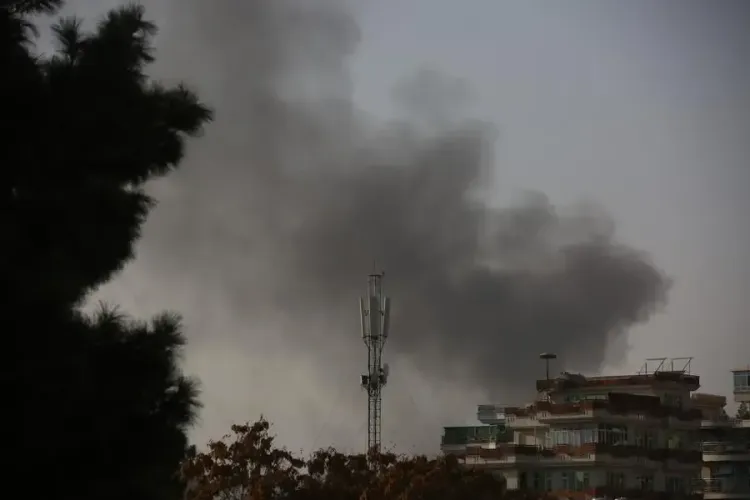
Synopsis
A recent report reveals that Pakistan's airstrikes in Afghanistan, framed as self-defense, violate international law. With civilians suffering, the report highlights the dire need for accountability amidst escalating violence.
Key Takeaways
Pakistan claims self-defense while escalating airstrikes in Afghanistan .
International law mandates distinction between military and civilian targets.
UN reports significant civilian casualties and displacement due to Pakistani strikes.
Silence from the international community fosters a culture of impunity .
Continued violence poses risks to global peace and security.
Islamabad/Kabul, March 29 (NationPress) Despite its assertions of self-defense in the ongoing conflict with Afghanistan, Pakistan cannot sidestep the stringent stipulations of international law concerning the use of force, especially when operating within another nation's borders. These guidelines demand a proportional response and a clear differentiation between military and civilian targets, as emphasized in a recent report.
As outlined by an article in the international publication 'The Diplomat', no tenet of international law permits a nation to address a perceived security threat by launching attacks on another country's territory, thereby endangering civilian areas and subsequently reframing the narrative into a security justification. Accepting such reasoning would lead us into a realm where any nation could claim, “We have evidence,” using it as a pretext to bombard neighboring states.
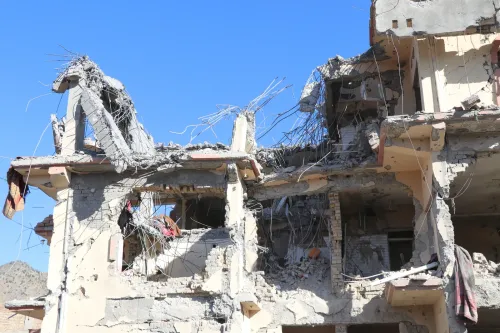
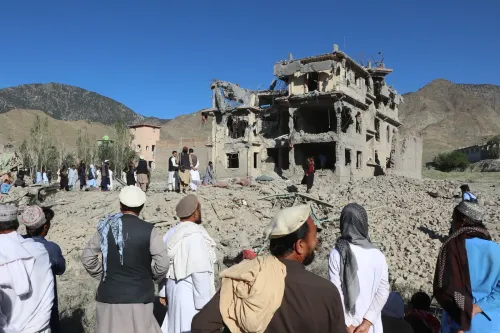
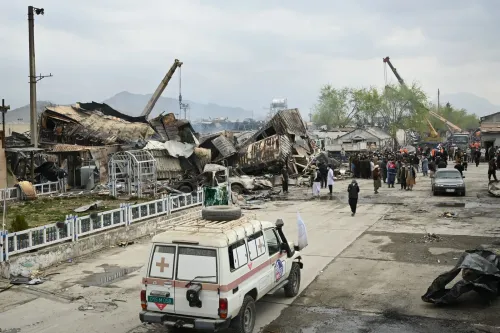
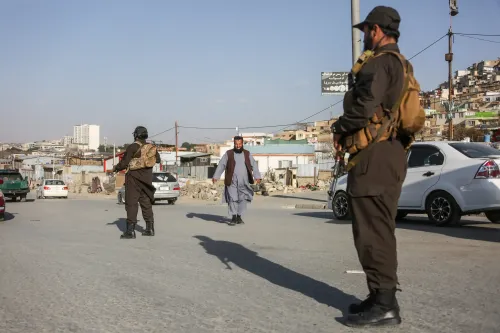
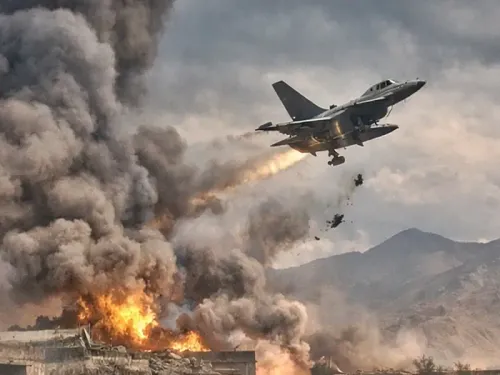
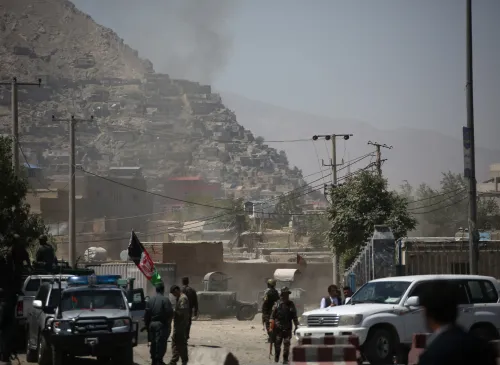
In recent weeks, Pakistan has escalated its airstrikes against Afghanistan, with civilians—including children—bearing the brunt of this escalating conflict between the two nations. The attack on a drug rehabilitation center in Kabul stands out as particularly egregious. The United Nations reported that 143 individuals lost their lives in that strike, with many more sustaining injuries; this statistic reflects an undeniable humanitarian catastrophe.
Citing findings from the United Nations Assistance Mission in Afghanistan (UNAMA), the report indicated that during the three weeks leading up to the airstrike on the Kabul rehabilitation center, Pakistani incursions had resulted in the deaths of at least 70 people, injuries to 478 others, and the displacement of roughly 115,000 individuals within Afghanistan.
“The silence enveloping this intensifying conflict is both striking and alarming. Today, Afghanistan finds itself caught in a dual crisis: suffering under the oppressive regime of the Taliban while concurrently facing cross-border hostilities. Its populace is ensnared in a complex siege, stripped of freedom and security from within, while their safety is under constant external threat,” the report elaborated.
The report also pointed out that Pakistan's current actions are not mere coincidences but the outcome of prolonged inaction and selective accountability from the global community.
“Simultaneously, from February 28 to the present, global attention has been consumed by the conflict involving the United States, Israel, and Iran. This conflict, now in its fourth week, has seen Iran retaliate against US bases and Gulf energy infrastructure, further relegating Afghanistan to the periphery of international concern,” it stated.
The report cautioned that the ongoing silence from the international community is not just a failure to respond to Afghanistan’s plight but is fostering a climate of impunity.
“This is normalizing a perilous precedent: that attacks on medical facilities and civilian zones can proceed unchecked, as the victims reside in an isolated and neglected country, leading to a lack of serious accountability for the perpetrators. This situation poses not only a threat to Afghanistan but also jeopardizes the integrity of the international order itself. Once consequences are removed, the law begins to lose its significance,” it warned.
Point of View
It is clear that the ongoing conflict between Pakistan and Afghanistan demands immediate attention. The evident violations of international law must be addressed to prevent further humanitarian crises and uphold global norms.
NationPress
20 Sept 2026
Frequently Asked Questions
What does the report say about Pakistan's airstrikes?
The report indicates that Pakistan's airstrikes, framed as self-defense, violate international law by risking civilian lives and failing to distinguish between military and civilian targets.
How many civilians were affected by the airstrikes?
The recent airstrikes have resulted in numerous civilian casualties, including 143 deaths in a single attack on a drug rehabilitation center in Kabul.
What is the international community's response?
The report criticizes the international community for its silence and inaction regarding the escalating violence and humanitarian crisis in Afghanistan.
What are the implications of the ongoing conflict?
The ongoing conflict threatens not only the safety and security of Afghanistan but also undermines the principles of international law and order.
What actions have been taken against Pakistan?
Currently, there has been little accountability or action taken against Pakistan for its military actions in Afghanistan, raising concerns about impunity.