Pakistani strikes kill 57, injure 342 in Afghanistan: UNAMA report
Synopsis
A UN report has formally attributed 57 deaths and 342 injuries in Afghanistan — including 112 children — entirely to Pakistani security forces in a single quarter. With Human Rights Watch now calling for a war crimes investigation, the Pakistan-Afghanistan border crisis has crossed a threshold that neither Islamabad nor the international community can easily ignore.
Key Takeaways
57 people killed and 342 injured in Pakistani cross-border attacks in Afghanistan between 1 April and 30 June 2025 , per UNAMA .
Casualties include 112 children (26 killed, 86 injured) and 40 women (6 killed, 34 injured).
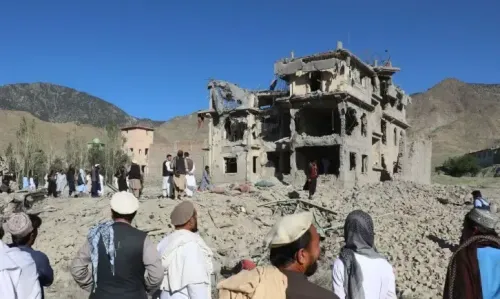
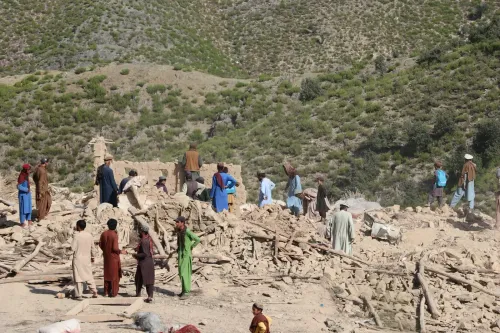
The deadliest incident was a Pakistani airstrike on Paktia, Paktika, and Kunar provinces on 28 June .
Human Rights Watch called on 15 July for an independent investigation into possible war crimes.
All cross-border civilian casualties in the period were attributed by UNAMA solely to Pakistani security forces .
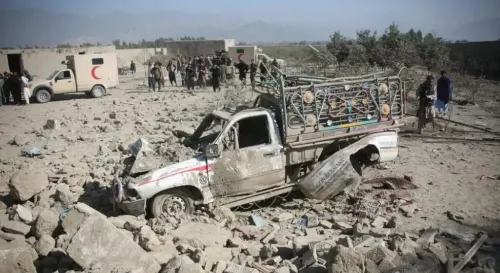
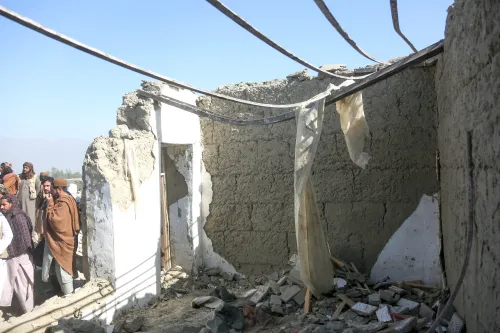
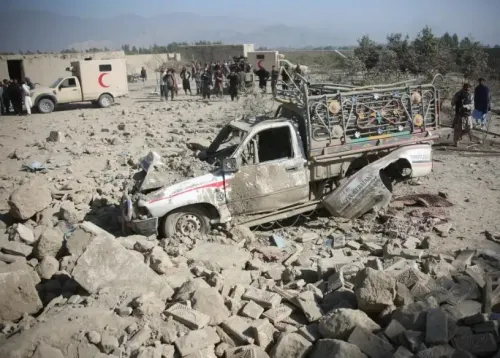
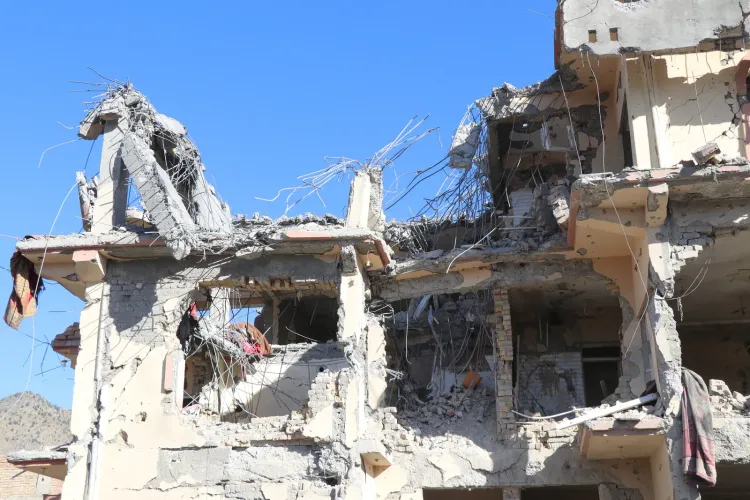
Pakistani security forces killed 57 people and injured 342 others in cross-border attacks inside Afghanistan between 1 April and 30 June 2025, according to a report released on Tuesday, 28 July by the United Nations Assistance Mission in Afghanistan (UNAMA). The agency attributed all cross-border civilian casualties recorded during this period exclusively to Pakistani security forces, with airstrikes and ground engagements identified as the primary causes of harm.
Scale of Civilian Casualties
Among those affected, the toll on the most vulnerable was stark. UNAMA's quarterly update documented 112 children as casualties — 26 killed and 86 injured — alongside 40 women, of whom six were killed and 34 injured. These figures underscore the disproportionate impact of the cross-border violence on non-combatants.
According to UNAMA, 'The largest number of civilian casualties were caused by airstrikes carried out by Pakistani security forces in Paktia, Paktika and Kunar provinces on 28 June, followed by shelling in Kunar province between 27 and 29 April.'
Escalating Pakistan-Afghanistan Tensions
The casualty data arrives against a backdrop of sharply deteriorating relations between Islamabad and Kabul. Tensions have mounted over recent months, marked by repeated exchanges of fire and growing international alarm over civilian harm. This is not an isolated episode — cross-border skirmishes between the two neighbours have persisted since the Taliban's return to power in 2021, but the frequency and lethality of incidents appear to have intensified through the second quarter of 2025.
Human Rights Watch Calls for War Crimes Probe
On 15 July, US-based advocacy group Human Rights Watch (HRW) called for an impartial investigation into possible war crimes following Pakistan's recent strikes inside Afghanistan. The organisation expressed grave concern over the civilian death toll, noting that while civilian casualties alone are not conclusive proof of laws-of-war violations, such reports heighten the urgent need for independent scrutiny.
HRW stated: 'International humanitarian law requires warring parties to take all feasible precautions to minimise civilian harm. Attacking forces must at all times distinguish between civilians and civilian objects on the one hand, and combatants and military objectives on the other, and only target the latter.'
The group added: 'Defending forces must, to the extent feasible, protect civilians under their control from the effects of attack, including by avoiding locating military objectives near densely populated areas. However, violations by one side do not relieve the other of its own obligations.'
What Happens Next
UNAMA's report is expected to intensify pressure on both Pakistan and the Taliban administration to engage with international monitoring mechanisms. With HRW's call for a war crimes investigation now on record, the question of accountability — and whether any independent probe can be mounted given the Taliban's limited international recognition — will define the next phase of this crisis.
Point of View
But HRW's invocation of 'possible war crimes' shifts the frame from security policy to international humanitarian law. The deeper problem is structural: with the Taliban unrecognised internationally and Pakistan under its own internal pressure, there is no obvious forum to enforce accountability, and UNAMA's reports risk becoming a paper trail without consequence.
NationPress
27 Oct 2026
Frequently Asked Questions
How many people were killed in Pakistani strikes in Afghanistan between April and June 2025?
According to UNAMA, 57 people were killed and 342 were injured in cross-border attacks attributed to Pakistani security forces between 1 April and 30 June 2025. The toll included 112 children and 40 women.
Which Afghan provinces were worst affected by Pakistani airstrikes?
UNAMA identified Paktia, Paktika, and Kunar provinces as the sites of the deadliest airstrikes, carried out on 28 June . Kunar province also witnessed shelling between 27 and 29 April .
Why is Human Rights Watch calling for a war crimes investigation?
Human Rights Watch stated on 15 July that reports of civilian casualties — particularly among children — heighten the urgent need for an independent probe into possible violations of international humanitarian law by either attacking or defending forces. The group noted that civilian deaths alone are not conclusive evidence of war crimes but warrant scrutiny.
What does international humanitarian law require in such conflicts?
International humanitarian law obligates all warring parties to distinguish between civilians and combatants, target only military objectives, and take all feasible precautions to minimise civilian harm. As HRW noted, violations by one side do not exempt the other from its own legal obligations.
What is the broader context of Pakistan-Afghanistan tensions?
Relations between Pakistan and Afghanistan have deteriorated significantly since the Taliban's return to power in 2021. Cross-border incidents have increased in frequency and lethality, with Pakistan citing TTP militant sanctuaries inside Afghanistan as justification for its military operations.