Pakistan minority rights protest: 11-point charter demands end to forced conversions
Synopsis
On Pakistan's National Minorities Day, activists gathered at Karachi's Mazar-e-Quaid with an 11-point charter demanding criminalisation of forced conversions, a 10% job quota for minorities, and an end to blasphemy law misuse — underscoring how far the country remains from Jinnah's founding promise of equal citizenship.
Key Takeaways
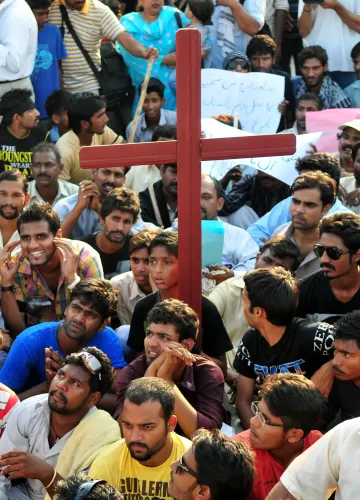
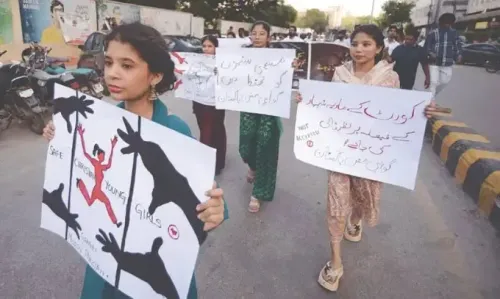
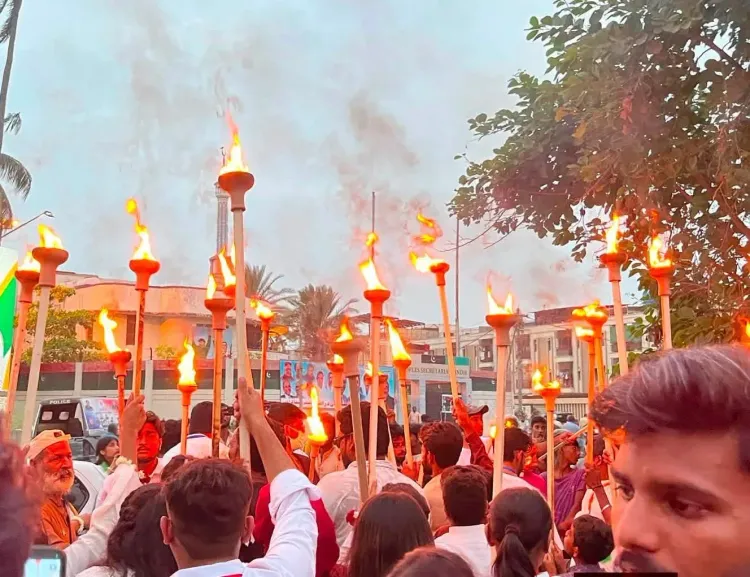
The Minority Rights March staged a protest outside Mazar-e-Quaid , Karachi, on 11 August 2025 — Pakistan's National Minorities Day .
Prominent activists including Sheema Kermani , Pastor Ghazala Shafiq , and Nathan Daniyal participated.
Protesters presented an 11-point charter demanding criminalisation of forced conversions and reform of blasphemy laws.
The charter calls for a 10 per cent job quota for minorities in public and private sector roles at all levels.
Activists demanded implementation of the Supreme Court's 2014 judgment on minority rights through dedicated national and provincial commissions.
Protesters also called for removal of hate-based content from school curricula and replacement of the term 'non-Muslim' in law with specific religious identities.
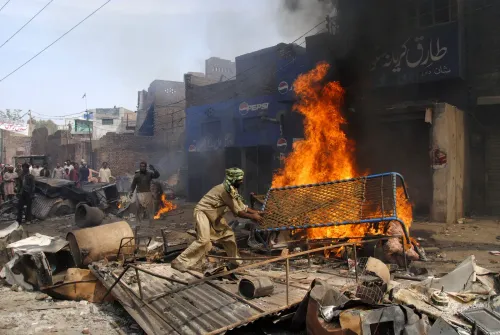
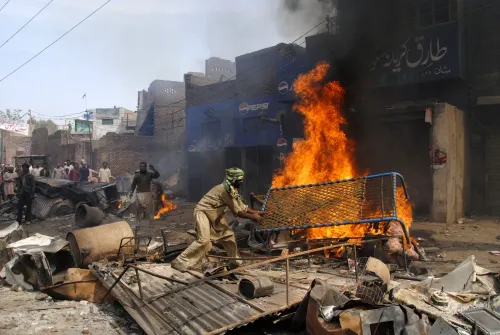
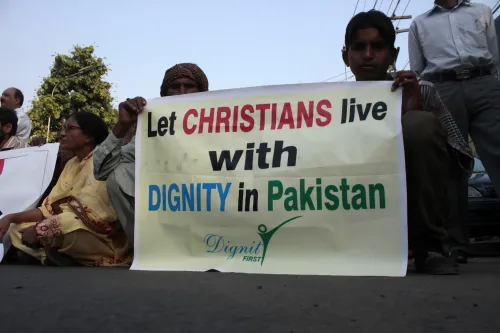
Rights activists and civil society groups staged a public protest outside Mazar-e-Quaid in Karachi on 11 August 2025 — Pakistan's National Minorities Day — demanding an end to forced conversions, blasphemy law misuse, and systemic discrimination against religious minorities. The demonstration, organised by the Minority Rights March, came as violence against minority communities continues to be reported across the country, according to local media.
Who Took Part and What They Demanded
The protest drew prominent Pakistani rights activists and community leaders, including Sheema Kermani, Pastor Ghazala Shafiq, Vinesh Arya, Sajjal Shafiq, Nathan Daniyal, and Anwar Sheikh. Participants urged the government to criminalise forced conversions and amend personal laws governing interfaith marriages to protect minority spouses and children, according to Pakistani daily The Express Tribune.
The demonstrators presented an 11-point charter of demands, which included stronger safeguards against forced conversions, protection from the misuse of blasphemy laws, and a 10 per cent job quota for minorities across public and private sector positions at all levels.
Key Demands from the 11-Point Charter
Beyond employment quotas, the charter called for an end to the practice of confining minorities to sanitation and other low-paying jobs. Protesters demanded the protection and restoration of minority places of worship and properties, the digitisation of community records, and implementation of the Supreme Court's 2014 judgment through the establishment of national and provincial minority rights commissions.
Activists also demanded the removal of discriminatory and hate-based content from school curricula and textbooks, urging greater emphasis on tolerance and religious diversity. They further called for replacing the term 'non-Muslim' in the Constitution and other laws with specific religious identities.
The Gap Between Jinnah's Vision and Present Reality
Pakistan observes National Minorities Day annually on 11 August to mark Mohammad Ali Jinnah's address to the Constituent Assembly in 1947, in which he declared that religion, caste, or creed would not determine a citizen's standing before the state. Activists at the protest argued that this founding principle remains largely unfulfilled.
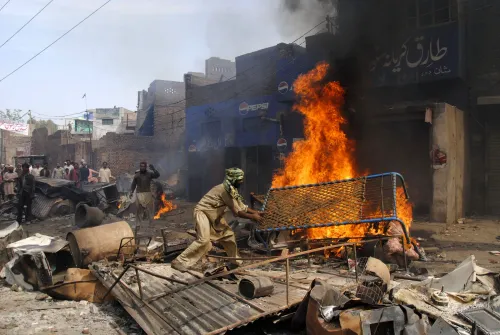
'The gap between Jinnah's principle of equal citizenship and present realities cannot be ignored. It is especially troubling because these protections were articulated at the birth of Pakistan itself. Religious minorities continue to face mob violence, attacks on their places of worship, forced conversions and social and economic exclusion,' Pakistani daily Dawn noted in its coverage of the event.
Dawn further observed that 'laws intended to protect religion have at times been weaponised through false accusations, with consequences extending far beyond the courtroom. Even where the state guarantees equality, social prejudice and institutional barriers make that guarantee fragile in practice.'
Broader Context and What Comes Next
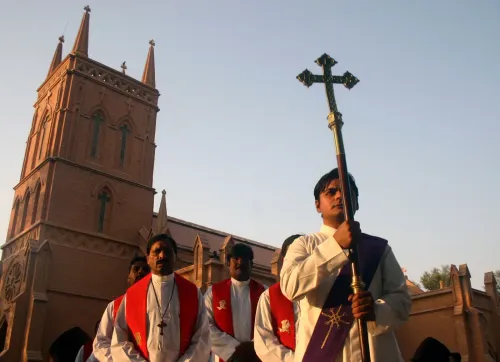
This comes amid sustained international scrutiny of Pakistan's treatment of its minority communities, including Hindus, Christians, Ahmadis, and Sikhs. The protest reflects growing frustration among civil society groups that annual observances like National Minorities Day have remained largely ceremonial rather than catalysing legislative change.
Whether the government will formally acknowledge the 11-point charter — let alone act on it — remains to be seen. Rights groups say they will continue to press for legislative reform, particularly on forced conversions and blasphemy law amendments, in the weeks ahead.
Point of View
Or whether, as in previous years, the day passes as ceremony while the conditions that prompted the protest remain unchanged.
NationPress
27 Sept 2026
Frequently Asked Questions
What is Pakistan's National Minorities Day and why is it observed?
Pakistan observes National Minorities Day on 11 August each year to commemorate Mohammad Ali Jinnah's 1947 address to the Constituent Assembly, in which he declared that religion, caste, or creed would not determine a citizen's standing before the state. The day is meant to reaffirm constitutional commitments to minority rights.
What are the key demands in the 11-point charter presented at the Karachi protest?
The charter calls for criminalisation of forced conversions, reform of blasphemy laws to prevent misuse, a 10 per cent job quota for minorities in public and private sectors, protection of minority places of worship, and removal of discriminatory content from school textbooks. It also demands implementation of the Supreme Court's 2014 minority rights judgment.
Who organised the protest outside Mazar-e-Quaid in Karachi?
The protest was organised by the Minority Rights March and joined by civil society representatives. Prominent participants included rights activist Sheema Kermani, Pastor Ghazala Shafiq, Vinesh Arya, Sajjal Shafiq, Nathan Daniyal, and Anwar Sheikh.
Why are activists calling for blasphemy law reform in Pakistan?
Activists argue that Pakistan's blasphemy laws have at times been weaponised through false accusations, with consequences extending beyond the courtroom. They say the laws disproportionately affect minority communities and that legal safeguards have proven fragile in the face of social prejudice and institutional barriers.
What is the Supreme Court's 2014 judgment that protesters want implemented?
The Supreme Court of Pakistan issued a landmark judgment in 2014 directing the government to establish national and provincial minority rights commissions and take steps to protect minority communities. Activists say the judgment has not been fully implemented and are demanding its enforcement through formal institutional mechanisms.