Pakistan astronaut on Shenzhou-24 shows deep reliance on China

Synopsis
Pakistan finally has an astronaut in orbit, but almost nothing about the flight was Pakistani. China supplied the rocket, capsule, training and mission control, while Pakistan provided a pilot and four experiments. The milestone is real, yet it also exposes how far Islamabad remains from independent spaceflight.
Key Takeaways
Pakistan's first astronaut, a 40-year-old PAF pilot named Ali , launched on 25 November aboard China's Shenzhou-24 .
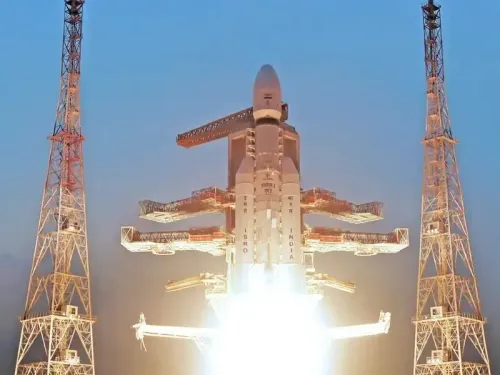
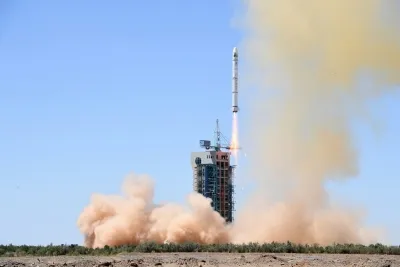
He flew with two Chinese astronauts on a Long March-2F rocket and is expected to spend about a week in orbit.
The mission follows a 2025 agreement between SUPARCO and the China Manned Space Agency .
Pakistani universities submitted 300+ proposals , of which four experiments were selected.
Pakistan's manned mission project is estimated at about PKR 2.18 billion ; the cost of Ali's flight has not been disclosed.
Pakistan, whose space agency dates to 1961 , still has no indigenous space-launch vehicle.
Pakistan has sent its first astronaut into space aboard China's Shenzhou-24 mission, a historic first for the country. However, a new report says the flight also highlights Islamabad's dependence on Beijing, because China supplied the spacecraft, launch vehicle, training infrastructure and mission operations.
The 40-year-old Pakistan Air Force pilot, identified as Ali, lifted off on 25 November alongside two Chinese astronauts aboard a Long March-2F rocket. He is expected to spend about a week aboard the orbital outpost conducting scientific experiments.
Key Details of the Mission
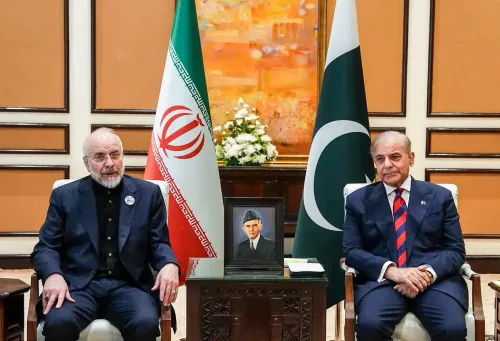
The flight stems from a cooperation agreement signed in 2025 between Pakistan's Space and Upper Atmosphere Research Commission (SUPARCO) and the China Manned Space Agency (CMSA). Under that pact, Pakistani candidates were selected and trained in China, and one was eventually chosen to fly.
Ali is flying as a payload specialist. According to a report by India Narrative, he is running a series of scientific studies, including biotechnology experiments focused on food security and climate change.
Pakistani universities submitted more than 300 proposals for the mission. Only four experiments were selected to fly.
A Milestone Built on Chinese Hardware
The flight has been hailed as a landmark achievement for Pakistan and a source of national pride at a time of economic and political strain. Analysts, however, note that it does not reflect an indigenous Pakistani human spaceflight capability.
According to the report, China provided the spacecraft, launch vehicle, astronaut training, mission operations and space station infrastructure. Pakistan's contribution was largely limited to scientific payloads and astronaut selection.
Notably, this makes Pakistan a participant in China's human spaceflight programme rather than an operator of its own.
Questions Over Cost and Sustainability
Some observers have questioned whether Pakistan can sustain future crewed missions, given its financial constraints. The country's manned space mission project reportedly carries an estimated cost of about PKR 2.18 billion.
Pakistan's overall space budget remains modest by international standards. Neither Islamabad nor Beijing has disclosed what Ali's flight, training and related services cost.
Pakistan's Space Programme in Context
Pakistan's space agency was established in 1961. It has developed capabilities in satellite communications, remote sensing and space research, and operates a fleet of Earth-observation and communication satellites.
The country still lacks an indigenous space-launch vehicle, the report notes. It continues to rely on foreign providers, predominantly China, to place its satellites in orbit.
This comes amid growing Chinese involvement in Pakistan's strategic and technological sectors. The Shenzhou-24 flight is the latest example of Beijing serving as Islamabad's primary partner in space.
Once Ali returns, attention is likely to shift to whether the SUPARCO–CMSA partnership leads to further flights. A key question is whether Pakistan can move beyond payload contributions towards building its own launch and crew capabilities.
Point of View
Much as the US and USSR once flew guest cosmonauts from allied nations. A country that founded its space agency in 1961 still cannot launch its own satellites. That gap matters more than any single flight. For India, which is pursuing Gaganyaan on indigenous hardware, the contrast is instructive. The undisclosed cost of Ali's flight also raises a fair question about whether Islamabad bought prestige rather than capability.
NationPress
29 Nov 2026
Frequently Asked Questions
Who is Pakistan's first astronaut?
Pakistan's first astronaut is Ali, a 40-year-old Pakistan Air Force pilot who flew as a payload specialist on China's Shenzhou-24 mission. He launched on 25 November alongside two Chinese astronauts.
Why is the Shenzhou-24 mission said to show Pakistan's reliance on China?
China supplied the spacecraft, launch vehicle, astronaut training, mission operations and space station infrastructure for the mission. Pakistan's role was largely limited to astronaut selection and scientific payloads, according to the report.
What experiments is the Pakistani astronaut conducting?
He is conducting scientific studies, including biotechnology experiments focused on food security and climate change. Four experiments were selected from more than 300 proposals submitted by Pakistani universities.
How much does Pakistan's manned space mission cost?
Pakistan's manned space mission project carries an estimated cost of about PKR 2.18 billion. Neither Pakistan nor China has disclosed the specific cost of Ali's flight, training and related services.
Does Pakistan have its own space-launch vehicle?
No, Pakistan does not have an indigenous space-launch vehicle. It depends on foreign providers, mainly China, to put its satellites into orbit.