Pakistan keeps EU GSP+ status despite PoK crackdown on protesters: Report
Synopsis
Pakistan continues to enjoy zero-tariff access to European markets under the EU's GSP+ scheme — a programme explicitly conditioned on human rights compliance — even as its security forces allegedly killed more than 50 protesters in PoK, imposed a communications blackout, and barred journalists. The report frames this not as an oversight but as evidence of a structural gap between the EU's stated values and its trade enforcement.
Key Takeaways
Pakistan has retained EU GSP+ beneficiary status despite an alleged crackdown on protesters in Pakistan-occupied Kashmir (PoK) .
According to a JAAC member, more than 50 people were killed and hundreds injured after Pakistani forces fired on protesters demanding political rights.
Pakistani authorities imposed an internet and mobile communications blackout and restricted media access, making independent casualty verification difficult.
The GSP+ scheme requires beneficiary countries to uphold human rights , labour rights, environmental protection, and good governance in exchange for zero tariffs.
A similar pattern of enforced disappearances and extrajudicial killings is documented in Balochistan ; 8 June has been marked as Baloch Missing Persons Day since 2017 .
The Stringer Asia report argues the EU's continued trade concession exposes a structural gap between the scheme's stated conditions and its real-world enforcement.
Pakistan has retained its beneficiary status under the European Union's GSP+ trade scheme even as its security forces allegedly fired on peaceful protesters, imposed communication blackouts, conducted mass arrests, and barred journalists from entering Pakistan-occupied Kashmir (PoK), according to a detailed report by Stringer Asia.
What the GSP+ Scheme Requires
The GSP+ — formally described by the European Commission as a 'special incentive arrangement for sustainable development and good governance' — grants zero tariffs on a wide range of exports to the European market. In return, beneficiary countries are obligated to implement international conventions covering human rights, labour rights, environmental protection, and good governance. Approved in 2026, the revised arrangement reportedly introduced increased monitoring mechanisms.
Casualties and Crackdown in PoK
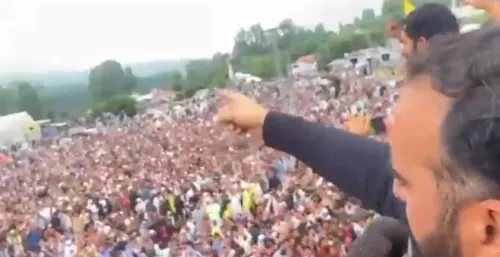
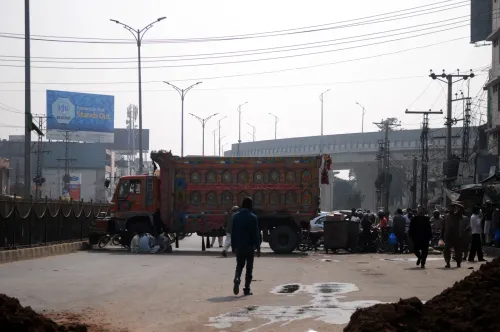
According to a member of the Joint Awami Action Committee (JAAC), more than 50 people have been killed and hundreds injured in PoK in recent days after Pakistani forces opened fire on protesters demanding political rights and electoral reform. The precise casualty count is difficult to independently verify: Pakistani authorities imposed an internet and mobile communications blackout, restricted media access, and reportedly removed bodies from hospitals, according to the report.
In a post on social media platform X on Saturday, JAAC member Sardar Umar Nazir Kashmiri stated: 'In the past 4 days, the forces have killed more than 50 of our people through brutal terrorism, and hundreds are injured…' In a separate post, the JAAC reported that late-night protests continued across the Muzaffarabad region, with residents remaining on the streets demanding protection of fundamental rights and fulfilment of commitments made by local authorities.
The EU's Contradictory Position
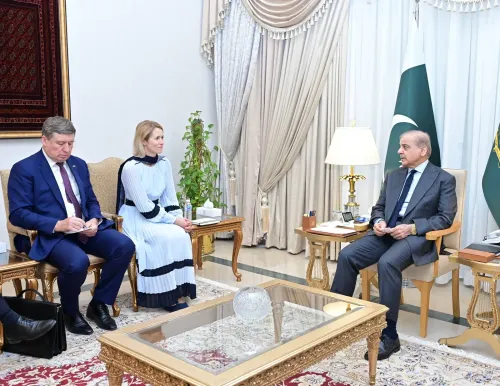
The Stringer Asia report argues that while Pakistan was allegedly carrying out these actions in PoK, the European Union was simultaneously congratulating itself on renewing a trade system premised on human rights and the rule of law. 'Pakistan remaining a beneficiary of GSP+ demonstrates the difference between what the EU's policy instruments claim to be and what they actually are in reality,' the report noted. It characterised the situation not as an isolated violation but as 'a system' — pointing to a structural gap between the scheme's stated conditions and its enforcement.
Pakistan's Record in PoK and Balochistan
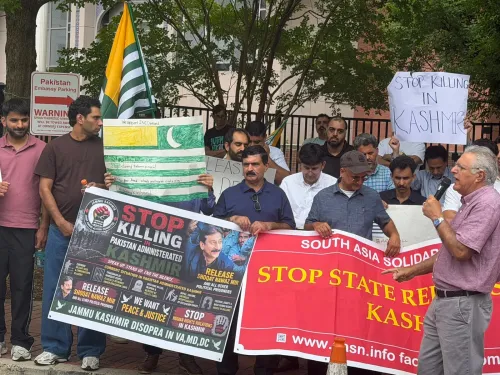
For years, Pakistan has publicly positioned itself as a defender of Kashmiri rights. Critics argue that when residents of PoK raised demands for representative government, economic rights, or an end to electoral manipulation, the response was arrests, information blackouts, anti-terrorism laws, and allegations of foreign interference rather than dialogue.
A similar pattern is documented in Balochistan, where enforced disappearances, extrajudicial killings, secret proceedings, and collective punishment have reportedly become embedded in governance. On 8 June, several human rights organisations marked Baloch Missing Persons Day — a date designated in 2017 during a central committee meeting of the Baloch Students Organisation (BSO)-Azad — to raise awareness of enforced disappearances and condemn arbitrary detentions, torture, and extrajudicial killings by Pakistani security forces.
What Comes Next
The report raises pointed questions about whether the EU's renewed GSP+ framework has any credible enforcement mechanism, or whether it functions primarily as a trade instrument with human rights conditionality as a nominal qualifier. With protests reportedly continuing in PoK and international scrutiny mounting, pressure on the EU to formally review Pakistan's GSP+ eligibility is likely to intensify.
Point of View
The scheme's human rights architecture is effectively decorative. India, which watches EU-Pakistan trade relations closely for geopolitical reasons, will note that the bloc's values-based trade rhetoric has limits when commercial and diplomatic interests intervene.
NationPress
2 Aug 2026
Frequently Asked Questions
What is the EU GSP+ scheme and why does Pakistan qualify?
The EU GSP+ is a preferential trade arrangement that grants zero tariffs on a wide range of exports to the European market. Countries qualify by committing to implement international conventions on human rights, labour rights, environmental protection, and good governance. Pakistan has been a beneficiary of the scheme, with the revised arrangement approved in 2026 reportedly including enhanced monitoring.
What happened to protesters in Pakistan-occupied Kashmir?
According to a JAAC member, more than 50 people were killed and hundreds injured in PoK after Pakistani security forces opened fire on peaceful protesters demanding political rights and electoral reform. Pakistani authorities also imposed an internet and mobile communications blackout and restricted media access, making independent verification of the casualty figures difficult.
Why is Pakistan's GSP+ status controversial given the PoK crackdown?
The GSP+ scheme is formally premised on human rights and good governance. Critics and the Stringer Asia report argue that Pakistan's continued inclusion — despite alleged killings, communication blackouts, and mass arrests in PoK — exposes a gap between the EU's stated conditions and its actual enforcement, effectively rendering the human rights conditionality nominal.
What is the situation in Balochistan and how does it relate?
In Balochistan, enforced disappearances, extrajudicial killings, and collective punishment have reportedly become systemic features of governance. Human rights organisations mark 8 June as Baloch Missing Persons Day — a designation adopted in 2017 by the Baloch Students Organisation (BSO)-Azad — to highlight the Pakistani authorities' alleged policy of arbitrary detentions and extrajudicial killings.
What are the JAAC and what are protesters in PoK demanding?
The Joint Awami Action Committee (JAAC) is a civil society grouping in Pakistan-occupied Kashmir that has been leading protests demanding representative government, economic rights, and an end to electoral manipulation. JAAC member Sardar Umar Nazir Kashmiri posted on X that forces had 'killed more than 50 of our people through brutal terrorism' in four days, with hundreds more injured.