Pakistan SC ruling on domestic homicide calls for gender-sensitive probes

Synopsis
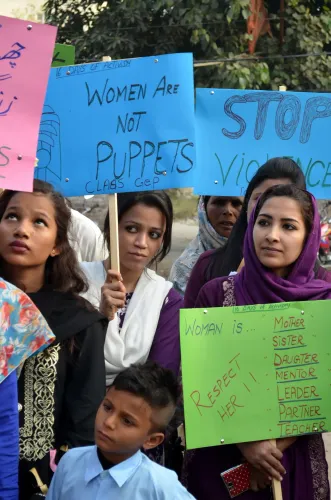
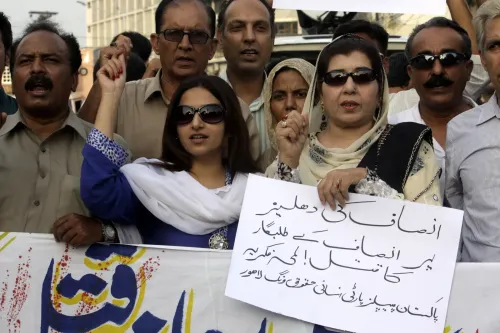
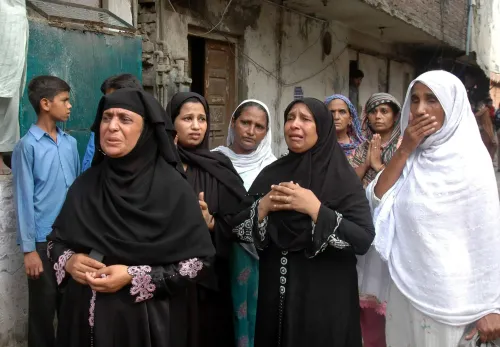
Pakistan's Supreme Court has done something rare — used a single domestic homicide verdict to indict an entire investigative culture. By ruling that gender and patriarchal bias within police probes actively distorts the search for truth, the court has placed the machinery of criminal justice itself on trial. The backdrop is stark: Punjab alone recorded nearly 196,000 gender-violence cases in five years, a figure still climbing sharply year on year.
Key Takeaways
Pakistan's Supreme Court ruled that domestic homicide investigations must be conducted through a gender-sensitive lens , warning that bias distorts justice before evidence reaches a judge.
Justice Muhammad Hashim Khan Kakar directed that police officers receive training to counter gender and patriarchal biases in violence-against-women cases.
The court held that the privacy of the matrimonial home must not become a shield for perpetrators, placing the investigation process under formal scrutiny.
Punjab province recorded 195,787 gender-violence cases between 2021 and 2025 — nearly 82% of Pakistan's national total, per the National Gender-Based Violence Crime Report 2021–25 .
Punjab reported 3,746 killings of women , 830 honour killings , and 20,560 sexual violence cases over the same period.
Annual case numbers rose from 23,032 in 2021 to 56,613 in 2025 , signalling a sharp upward trend.
Pakistan's Supreme Court has ruled that protecting women from violence demands not only a shift in societal attitudes but also criminal investigations conducted through a gender-sensitive lens — warning that investigative prejudice can distort the pursuit of justice before evidence ever reaches a judge. The landmark reasoning emerged from a domestic homicide case and carries implications far beyond a single verdict, according to a report in Sri Lanka-based Daily Mirror.
What the Court Said
Writing for a two-member bench, Justice Muhammad Hashim Khan Kakar stated that police officers must be trained to recognise and actively counter gender and patriarchal biases when handling cases of violence against women. The court observed that violence occurring within homes is routinely treated differently from violence in public spaces — a distinction that disadvantages victims precisely because the private setting makes evidence harder to secure and survivors more vulnerable.
'It confronts a longstanding problem in which violence occurring inside homes is often treated differently from violence in public spaces, even though the private setting can make evidence harder to obtain and victims more vulnerable. The Supreme Court's reasoning exposes an uncomfortable reality: when prejudice enters the investigation, it can distort the search for truth before a judge ever sees the evidence,' the Daily Mirror report quoted.
Why Domestic Homicide Poses a Unique Challenge
The court acknowledged that domestic homicide presents a distinctive challenge to the criminal justice system. There may be no independent eyewitness, physical evidence can be concealed, and family members may be unwilling to testify before police or in court. Crucially, a victim cannot present her own account when the alleged violence results in her death. The apex court stressed that the legal system bears a responsibility to expose the truth rather than allowing the privacy of the matrimonial home to shield perpetrators. Authorities were directed to prioritise identifying, protecting, and preserving all available evidence.
Scale of Gender-Based Violence in Punjab, Pakistan
The ruling arrives against a sobering statistical backdrop. A human rights organisation reported earlier this month that Pakistan's Punjab province alone recorded 195,787 cases involving women and girls between 2021 and 2025, representing nearly 82% of all gender-based violence cases reported across the country during the five-year period, according to the National Gender-Based Violence Crime Report 2021–25 by Peace and Justice Network Pakistan.
Within Punjab, 14,824 domestic violence cases were documented, including 3,746 killings of women. The province also recorded 830 honour killings and 442 cases of burning — comprising 143 acid attacks and 299 stove-burning incidents. Sexual violence accounted for 20,560 cases, including 16,827 rape cases, 2,183 gang-rape cases, 189 instances of custodial sexual violence, and 1,361 incest cases. Kidnapping and abduction formed the largest single category at 90,965 cases.
A Rising Trend, Not a Stable Problem
The data reveals a sharp upward trajectory. Punjab logged 23,032 cases in 2021, rising to 28,080 in 2022, 35,238 in 2023, 52,824 in 2024, and 56,613 in 2025. Whether this reflects increased reporting, increased incidence, or both remains a subject of debate among analysts and rights groups. What is not in dispute is that the judicial intervention now places the investigative process itself under formal scrutiny — a significant institutional signal. How Pakistan's police training machinery responds to the court's directive will determine whether the ruling reshapes ground-level practice or remains a precedent on paper.
Point of View
Acquittals and convictions alike rest on a distorted foundation. Pakistan's Punjab data, showing a near-tripling of reported cases in four years, demands an honest answer to a hard question: is the system recording more crime, or is more crime actually occurring? The court's directive on police training is the right instinct, but training without accountability mechanisms and without independent oversight of investigation quality rarely changes institutional culture. The test of this verdict will not be its citation in future judgements — it will be whether a woman in a Punjab police station in 2026 is interviewed differently than she was in 2020.
NationPress
9 Oct 2026
Frequently Asked Questions
What did Pakistan's Supreme Court rule in the domestic homicide case?
Pakistan's Supreme Court ruled that investigations into violence against women must be conducted through a gender-sensitive lens, and that police officers must be trained to recognise and overcome gender and patriarchal biases. The court warned that when prejudice enters an investigation, it can distort the search for truth before a judge ever sees the evidence.
Who authored the Supreme Court's ruling?
Justice Muhammad Hashim Khan Kakar wrote the verdict for a two-member bench of Pakistan's Supreme Court. The case involved a domestic homicide, but the court's reasoning was framed as guidance with broad application to all violence-against-women cases.
Why does domestic homicide pose a particular challenge to criminal justice?
According to the court, domestic homicide occurs behind closed doors, meaning there may be no independent eyewitness, physical evidence can be concealed, and family members may be unwilling to testify. Critically, the victim cannot give her own account when the alleged violence causes her death.
How widespread is gender-based violence in Pakistan's Punjab province?
According to the National Gender-Based Violence Crime Report 2021–25 by Peace and Justice Network Pakistan, Punjab recorded 195,787 cases involving women and girls between 2021 and 2025 — nearly 82% of all such cases nationally. This included 14,824 domestic violence cases, 3,746 killings of women, 830 honour killings, and 20,560 sexual violence cases.
Is gender-based violence in Punjab increasing over time?
Yes, reported figures rose sharply from 23,032 cases in 2021 to 56,613 in 2025 — more than doubling in four years. Whether this reflects higher incidence, improved reporting, or both is debated, but the upward trend is consistent across all years in the report.