Pakistan revokes 13 PoK school registrations over anti-govt protests
Synopsis
Pakistan has deregistered 13 private schools in PoK for their involvement in anti-government protests — a move the JAAC calls 'collective punishment.' With children already marching in Rawalakot and a communications blackout in place, Islamabad is now using access to education itself as a lever of political control in the occupied territory.
Key Takeaways
Pakistani authorities revoked registrations of 13 private schools in Pakistan-occupied Kashmir (PoK) on 29 July over staff and student participation in anti-government protests.
The Joint Awami Action Committee (JAAC) condemned the move as 'collective punishment' and an attack on the right to education.
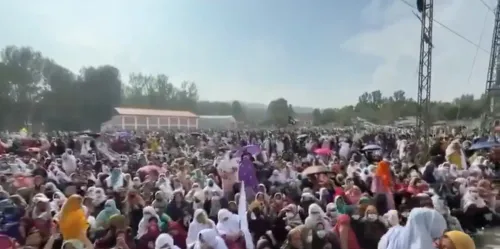
Hundreds of uniformed schoolchildren had earlier gathered at Rawalakot's Eidgah Ground , defying official warnings, with banners calling for international media coverage.
PoK remains under a strict blockade, curfew, and near-total communications blackout amid repeated crackdowns that have left dozens of civilians dead and injured, according to reports.
A Civil Services Academy review found between 25.1 million and 26 million children out of school in Pakistan, with nearly half of PoK children dropping out before completing primary education.
Diamer district in Pakistan-occupied Gilgit-Baltistan records 42 per cent out-of-school children — among the worst rates in the region.
Pakistani authorities have revoked the registrations of 13 private schools in Pakistan-occupied Kashmir (PoK) after their management, staff, and students participated in ongoing anti-government protests in the occupied territory. The move, confirmed on 29 July, marks a significant escalation in Islamabad's crackdown on dissent in the region.
The School Revocations and JAAC's Response
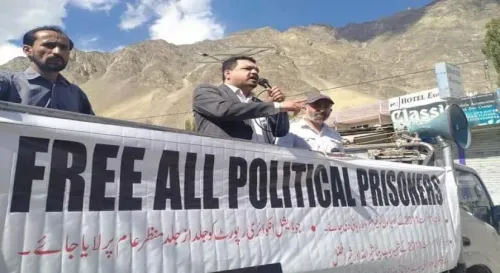
The Joint Awami Action Committee (JAAC) shared the official revocation order on social media platform X, condemning the action in unambiguous terms. 'Punishing schools and students for exercising fundamental rights is collective punishment and a grave attack on the right to education,' the committee stated. The JAAC has been a central organising force behind the protests that have swept through PoK in recent weeks.
Children on the Streets of Rawalakot
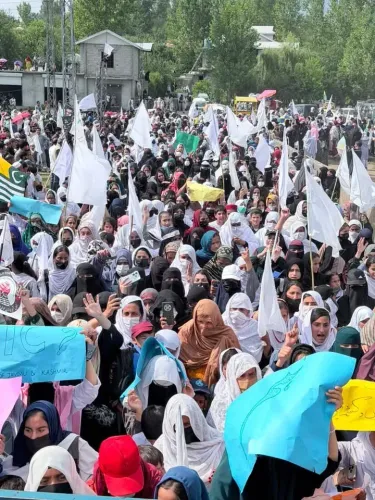
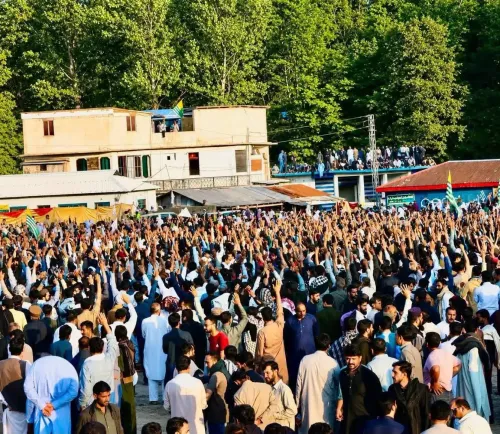
Earlier this month, hundreds of schoolchildren in uniform, accompanied by teachers and parents, assembled at Rawalakot's Eidgah Ground, waving white flags and raising slogans against the Pakistani military's actions in the region. The demonstration came one day after Pakistani authorities publicly warned that the JAAC would be held accountable for any untoward incident involving students during planned protests, according to local media reports.
Defying the warning, students turned out in large numbers carrying banners reading 'International Media Give Us Coverage' and raising slogans against the Pakistani Army. The brazenness of the demonstration underscored the depth of public anger in the territory.
Broader Crackdown Across PoK
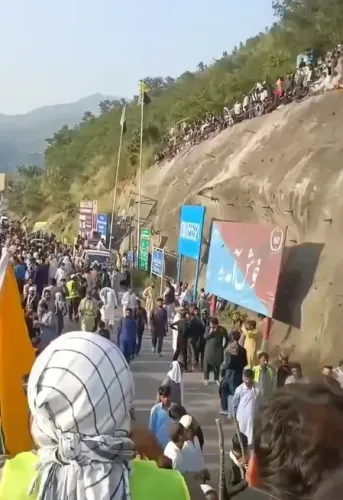
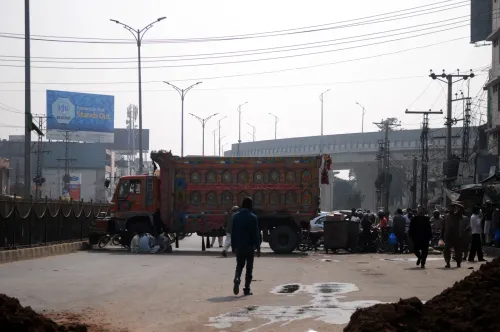
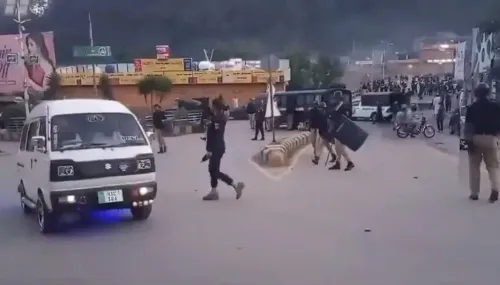
The school deregistrations are part of a wider pattern of repression. Protests across PoK have emerged as a direct challenge to Islamabad's decades-long control over the region. Pakistani forces have reportedly carried out repeated crackdowns, leaving dozens of civilians dead and injured, while the region remains under a strict blockade, curfew, and a near-total communications blackout, according to reports from the area.
Notably, the targeting of educational institutions adds a new dimension to the crackdown — one that critics argue crosses from political suppression into an assault on children's constitutional rights.
Pakistan's Deepening Education Crisis
The revocations come against the backdrop of a severe and worsening education crisis in Pakistan. A recent policy review compiled by five Policy Analysis Groups at the Civil Services Academy (CSA) — assessing education across Punjab, Sindh, Khyber-Pakhtunkhwa, Balochistan, Islamabad Capital Territory, Pakistan-occupied Gilgit-Baltistan (PoGB), and PoK — found that between 25.1 million and 26 million children of school-going age remain out of school in Pakistan, two years after the country declared a National Education Emergency.
The review, cited by Pakistani daily The News International, identified weak governance structures, fragmented administrative systems, insufficient funding, poor data integration, and provincial disparities as the primary structural barriers to progress. Diamer district in PoGB records 42 per cent out-of-school children, while nearly half of all children in PoK drop out before completing primary education. Extremely low public investment in education was flagged as a common constraint across all provinces.
What Comes Next
With the JAAC vowing to continue its campaign and Pakistani authorities showing no signs of reversing the school deregistrations, the confrontation in PoK is unlikely to ease in the near term. Rights groups and international observers are expected to scrutinise Islamabad's use of education access as a tool of political coercion — a tactic that, if sustained, could draw further international attention to the territory's humanitarian situation.
Point of View
Under which over 25 million children are already out of school. Islamabad is, in effect, adding to an education deficit it has publicly pledged to fix. The JAAC's decision to share the official order on social media suggests it is deliberately internationalising the issue — and the images of uniformed children waving white flags are precisely the kind of optics that tend to attract UN and rights-body scrutiny. Whether that pressure translates into policy reversal, or simply into a tighter communications blackout, will define the next phase of this standoff.
NationPress
28 Oct 2026
Frequently Asked Questions
Why did Pakistan revoke the registrations of 13 schools in PoK?
Pakistani authorities cancelled the registrations of 13 private schools in Pakistan-occupied Kashmir because their management, staff, and students participated in ongoing anti-government protests in the territory. The action was confirmed on 29 July and was condemned by the Joint Awami Action Committee as collective punishment.
What is the JAAC and what has it said about the school closures?
The Joint Awami Action Committee (JAAC) is the primary organising body behind the anti-government protests in PoK. It shared the official deregistration order on social media platform X, stating that 'punishing schools and students for exercising fundamental rights is collective punishment and a grave attack on the right to education.'
What happened at Rawalakot's Eidgah Ground?
Hundreds of schoolchildren in uniform, accompanied by teachers and parents, gathered at Rawalakot's Eidgah Ground earlier in July, waving white flags and raising slogans against the Pakistani military. The demonstration came one day after Pakistani authorities warned the JAAC it would be held accountable for any student involvement in protests.
How serious is Pakistan's education crisis in PoK?
A Civil Services Academy policy review found that nearly half of all children in PoK drop out before completing primary education. Nationally, between 25.1 million and 26 million children of school-going age remain out of school in Pakistan, two years after the country declared a National Education Emergency.
What is the current situation on the ground in PoK?
PoK is reportedly under a strict blockade, curfew, and near-total communications blackout. Pakistani forces have carried out repeated crackdowns on protesters, leaving dozens of civilians dead and injured according to reports, while the JAAC continues to organise demonstrations challenging Islamabad's control over the territory.