Pakistan signs Mecca defence pact, but three of its sailors die in Houthi attack

Synopsis
Pakistan signed a landmark three-nation defence pact on 7 August 2026 and spent years accumulating multinational naval command roles — yet when Houthi missiles struck the Tihamah four days later, killing three of its sailors, Islamabad sent condolences and nothing else. The episode lays bare a damaging gap: command prestige without the operational reach to protect Pakistani citizens in the waters those commands are meant to secure.
Key Takeaways
Pakistan signed the Mecca Joint Defence Agreement with Turkey and Saudi Arabia on 7 August 2026 .
On 11 August 2026 , Houthi forces struck the vessel Tihamah in the Bab el-Mandeb Strait with three ballistic missiles , killing six people in total.
Three Pakistani nationals and one Indonesian crew member were killed outright; two rescuers were killed in a second strike.
The Pakistan Navy held command of CTF-150 — covering over two million square miles — yet no Pakistani asset participated in the rescue.
Pakistan has commanded counter-piracy force CTF-151 on eleven occasions, but the report argues these billets have yielded no protective benefit for Pakistani seafarers.
Thousands of Pakistani sailors work on foreign-flagged vessels with no Pakistani shipping manifest entry, leaving them in a legal and operational protection gap.
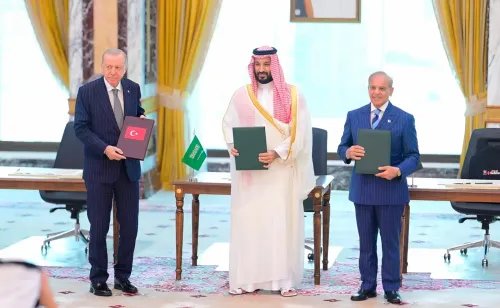
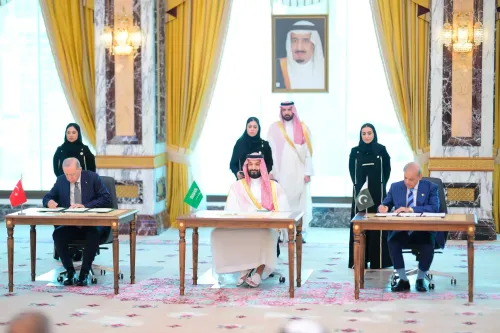
Pakistan signed the high-profile Mecca Joint Defence Agreement with Turkey and Saudi Arabia on 7 August 2026, projecting itself as an emerging regional security provider. Just four days later, three Pakistani nationals were among six people killed when Houthi forces struck the commercial vessel Tihamah in the Bab el-Mandeb Strait — exposing a stark gap between Islamabad's security ambitions and its ability to protect its own citizens at sea, according to a report by Eurasia Review.
The Attack on the Tihamah
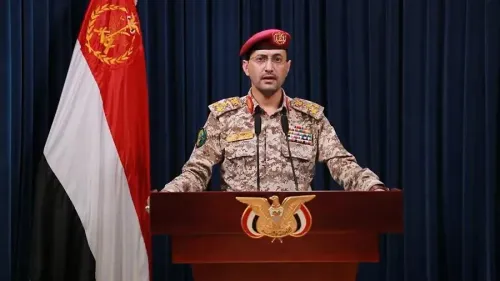
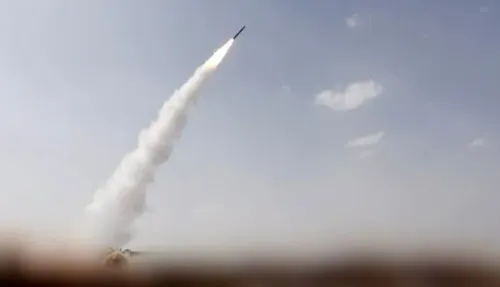
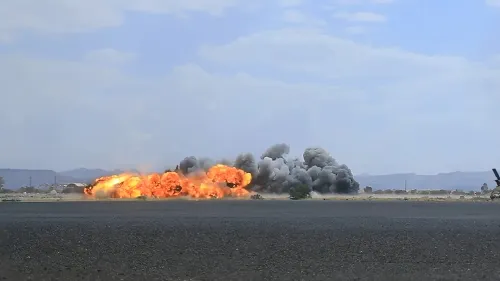
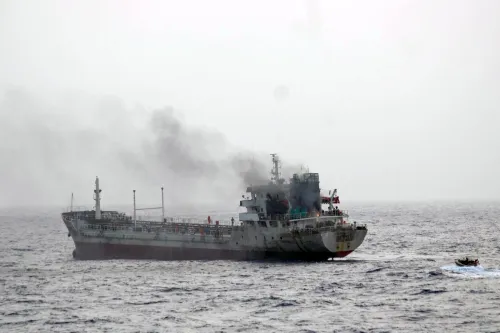
The Tihamah was an Egyptian- and Yemeni-owned, Tanzania-flagged vessel carrying eleven crew members and a cargo of food when Houthi forces struck it with three ballistic missiles on 11 August 2026. Four crew members were killed outright — three Pakistani nationals and one Indonesian — while seven others were injured. As rescue teams approached, Houthi forces struck again, killing two rescuers. In total, six people died. Yemen's coastguard reached the stricken vessel; Yemeni personnel died in the rescue effort. No Pakistani asset participated, and according to the report, no Pakistani mechanism existed to deploy one.
The Structural Gap in Maritime Protection
Thousands of Pakistani seafarers work aboard merchant vessels worldwide, sailing under the flags of Panama, Liberia, the Marshall Islands, and Tanzania. Greek, Egyptian, and Emirati shipowners employ them, and they remit earnings to families in Pakistan each month. Yet their names reportedly do not appear on any Pakistani shipping manifest. The arrangement functions smoothly in normal conditions, but when a crisis strikes, the protection gaps become acute: the flag state may lack the naval capacity to intervene, while the shipowner's obligations are largely confined to insurance. Pakistan, as the sailors' country of citizenship, has no standing claim over a foreign-flagged vessel — and therefore no legal or operational basis to act.
Command Prestige Without Operational Reach
The report highlights a deeper contradiction in Pakistan's maritime posture. The Pakistan Navy assumed command of Combined Task Force 150 (CTF-150) in January 2026, relieving the Royal Saudi Navy. CTF-150 conducts maritime security patrols across more than two million square miles beyond the Arabian Gulf, targeting non-state threats. Pakistan has also commanded the counter-piracy force CTF-151 on eleven separate occasions. Islamabad publicises these appointments as signals of competence that buy standing in Bahrain and Washington. Yet the Tihamah attack occurred at precisely the chokepoint these task forces are mandated to monitor. 'Pakistan held a command. It did not hold a capability,' the Eurasia Review report stated.
Fifteen Years of Multilateral Billets, No Protective Dividend
According to the report, Pakistan has spent fifteen years accumulating multinational command positions in the region. Ministers spoke of a 'new security architecture' following the Mecca agreement; analysts wrote of strategic autonomy; Islamabad framed the deal as confirmation of its arrival as a regional security provider. The sailors' deaths four days later reframed that narrative sharply. The report argues that these command billets have delivered no corresponding protective benefit to Pakistani citizens working at sea. 'The billet is the deliverable. Nothing else was ever on offer,' it concluded. Islamabad's response to the attack, the report noted, amounted to condolences — and little else.
What Comes Next
The episode raises pointed questions about whether Pakistan's maritime diplomacy is oriented toward institutional prestige or the welfare of its citizens. With thousands of Pakistani seafarers exposed on foreign-flagged vessels across high-risk waters, critics argue that the country needs a credible consular and naval rapid-response mechanism — not merely a seat at the command table. Whether the Mecca Joint Defence Agreement or Pakistan's CTF command roles will be restructured to address this gap remains to be seen.
Point of View
Signs agreements with regional heavyweights, and generates diplomatic capital in Bahrain and Washington. What it has not built is a rapid-response mechanism for its own citizens on foreign-flagged vessels in contested waters. The Mecca Joint Defence Agreement may eventually matter at the level of state-to-state security architecture, but it offered nothing to the three sailors on the Tihamah. Until Islamabad links its maritime diplomacy to a credible consular and naval protection framework, the gap between the press release and the body count will keep widening.
NationPress
21 Aug 2026
Frequently Asked Questions
What is the Mecca Joint Defence Agreement signed by Pakistan?
The Mecca Joint Defence Agreement is a trilateral security pact signed on 7 August 2026 by Pakistan, Turkey, and Saudi Arabia. It was framed by Islamabad as evidence of its emergence as a regional security provider and the foundation of a new security architecture in the Muslim world.
What happened to the vessel Tihamah in the Bab el-Mandeb Strait?
On 11 August 2026, Houthi forces struck the Tihamah — an Egyptian- and Yemeni-owned, Tanzania-flagged cargo vessel — with three ballistic missiles in the Bab el-Mandeb Strait, killing four crew members outright and injuring seven. A second strike killed two rescuers, bringing the total death toll to six.
Why could Pakistan not protect its sailors aboard the Tihamah?
Because the Tihamah was flagged under Tanzania and owned by Egyptian and Yemeni entities, Pakistan had no legal standing over the vessel. The flag state lacked naval capacity to intervene, and Pakistan had no operational mechanism in place to deploy assets, even though its navy held a regional command role at the time.
What is CTF-150 and what role does Pakistan play in it?
Combined Task Force 150 (CTF-150) is a multinational maritime security force conducting patrols over more than two million square miles beyond the Arabian Gulf to counter non-state threats. Pakistan assumed command of CTF-150 in January 2026, relieving the Royal Saudi Navy. It has also commanded the counter-piracy force CTF-151 on eleven separate occasions.
Who are the Pakistani seafarers at risk, and why are they vulnerable?
Thousands of Pakistani nationals work aboard merchant vessels worldwide under the flags of Panama, Liberia, the Marshall Islands, and Tanzania, employed by Greek, Egyptian, and Emirati shipowners. Their names reportedly do not appear on Pakistani shipping manifests, leaving them without a legal or operational safety net from Islamabad when crises occur in international waters.