Pakistan traders threaten protests over market closure to cut fuel use
Synopsis
Pakistan's largest traders' union has drawn a hard line: reimpose the 8 pm market closure order after 1 June and face a nationwide protest movement. With the US-Iran war cited as the original trigger now over, the government's justification for the austerity measure is being openly challenged — and 120 million consumers caught in the middle of soaring fuel and electricity costs are the real stakes.
Key Takeaways
The Central Association of Traders in Pakistan has threatened nationwide protests if market closure orders are reimposed after 1 June .
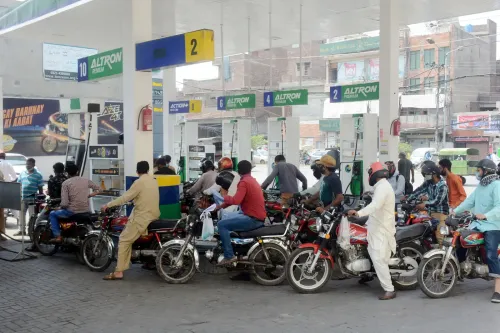
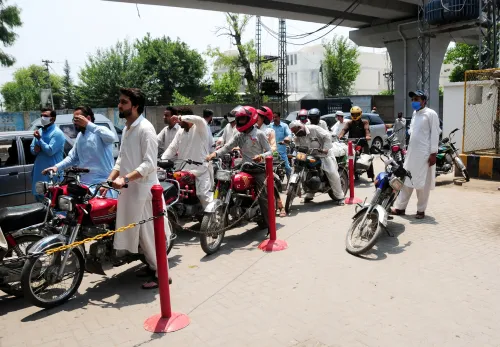
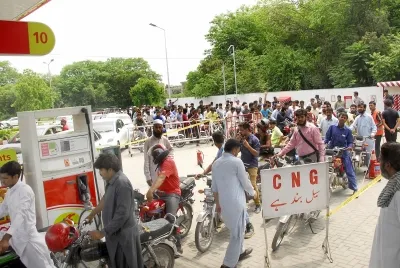
Pakistan's government had ordered shops to close by 8 pm and restaurants by 10 pm in April to conserve energy amid fuel price shocks from the US-Iran war .
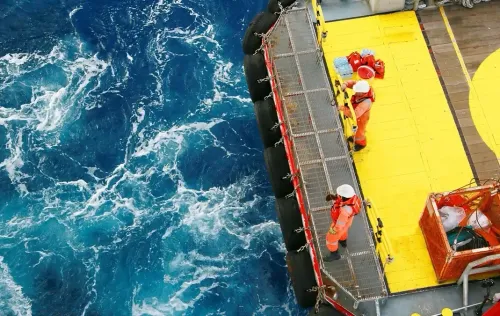
The Strait of Hormuz , through which roughly 20 per cent of global oil and gas supplies transit, has remained largely closed, causing a petroleum shortfall.
The restrictions were temporarily eased through 31 May for the Eid al-Adha festival.
Association president Kashif Chaudhry said high fuel and electricity prices have eroded the purchasing power of 120 million people .
A major Pakistani traders' union has issued a stark warning of nationwide protests if the government reinstates its order to shut markets early — a measure originally introduced to curb energy consumption amid fuel price shocks triggered by the Middle East conflict. The ultimatum, issued ahead of 1 June, underscores growing friction between Pakistan's business community and a government struggling to manage an acute energy crisis.
Background: How the Restrictions Came About
In April, the Pakistani government ordered shops, markets, and shopping malls to close by 8 pm, while restaurants, bakeries, grocery stores, and wedding halls were directed to shut by 10 pm. The directive was part of an austerity plan to reduce dependence on costly imported fuels — a crisis deepened by the US-Iran war, which drove global fuel prices sharply higher.
Central to the supply disruption is the Strait of Hormuz, a critical maritime chokepoint through which roughly 20 per cent of the world's oil and gas supplies transit. The strait has remained largely closed to shipping, creating a sustained shortfall in petroleum products for import-dependent economies like Pakistan.
The Eid Reprieve — and What Comes Next
The government temporarily eased the market restrictions through 31 May to accommodate the Eid al-Adha festival. However, with that window closing, traders fear a reimposition of the earlier curbs — prompting the pre-emptive warning from the Central Association of Traders in Pakistan.
Kashif Chaudhry, president of the association, said in a statement: 'With the end of the Iran-US war, there is no longer any justification for lockdowns. If a lockdown is imposed after June 1, we will relaunch a nationwide protest movement.'
Traders Argue Closures Are Destroying Livelihoods
Chaudhry demanded that the prime minister issue a formal notification permanently lifting the restrictions from 1 June, and urged traders across Pakistan to keep their businesses open past that date. 'During the intense summer season, business activity begins after 7 pm,' he said. 'Forcing shops to close at 8 pm is equivalent to destroying businesses.'
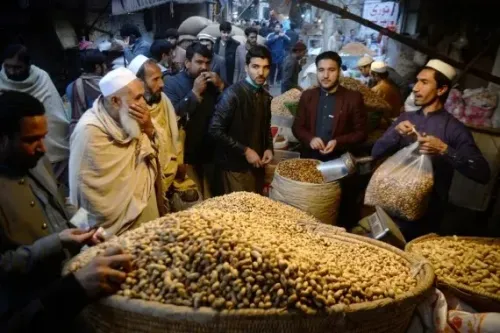
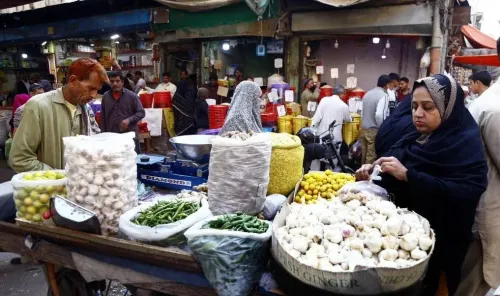
Beyond the closure orders, traders have flagged the broader economic toll of the energy crisis. 'High fuel and electricity prices, along with inflation, have eroded the purchasing power of 120 million people,' Chaudhry said, noting that both traders and ordinary consumers are bearing the weight of elevated power tariffs.
Government's Position
Pakistan's government has maintained that the restrictions were necessary to reduce overall energy consumption, control electricity production costs, and protect lower-income segments of the population from the impact of surging fuel prices. Pakistan imports the majority of its energy requirements, leaving it acutely exposed to international price volatility.
What to Watch
With the Eid relaxation period ending on 31 May, all eyes are on whether Islamabad will reimpose the 8 pm closure order from 1 June or formally lift it. A government decision either way is expected to draw an immediate response from the traders' association, which has a track record of mobilising street-level protests in major Pakistani cities.
Point of View
But built no exit framework for when that conflict wound down. Now it faces a mobilised business lobby, a public squeezed by inflation, and a Strait of Hormuz disruption that has not fully resolved. The harder question is whether lifting market hours actually saves meaningful energy, or whether the real fiscal pressure — subsidising power for lower-income households — remains entirely unaddressed regardless of what time the shops close.
NationPress
22 Sept 2026
Frequently Asked Questions
Why did Pakistan impose early market closure orders?
Pakistan introduced the early closure orders in April to reduce consumption of costly imported fuels, after the US-Iran war drove global fuel prices sharply higher and the near-closure of the Strait of Hormuz created a petroleum shortfall. Shops and markets were ordered to close by 8 pm, and restaurants by 10 pm.
Who is demanding the removal of Pakistan's market closure restrictions?
The Central Association of Traders in Pakistan, led by president Kashif Chaudhry, has demanded the permanent lifting of the restrictions from 1 June. The association has threatened a nationwide protest movement if the orders are reimposed.
What is the Strait of Hormuz and why does it matter for Pakistan?
The Strait of Hormuz is a critical maritime passage through which roughly 20 per cent of the world's oil and gas supplies transit. Its near-closure during the US-Iran conflict severely disrupted fuel supplies to import-dependent countries like Pakistan, contributing directly to the energy crisis that prompted the market restrictions.
Were the market closure orders ever relaxed?
Yes. The Pakistani government eased the restrictions through 31 May to accommodate the Eid al-Adha festival. Traders are now demanding that the relaxation be made permanent, arguing that the end of the US-Iran war removes the original justification for the curbs.
How have the closures affected Pakistani traders and consumers?
Traders say the 8 pm closure order effectively eliminates peak evening trading hours, with Kashif Chaudhry stating that 'business activity begins after 7 pm' in summer. He also said high fuel, electricity, and inflation costs have collectively eroded the purchasing power of 120 million people.