Pakistan transporters' strike from Aug 8 over daily fuel pricing, heavy fines
Synopsis
Pakistan's two largest transport associations have called a nationwide wheel-jam strike from 8 August, targeting a government policy that revises fuel prices daily — a move transporters say makes freight planning impossible. With billions in annual toll taxes and corruption in axle-load enforcement also on the table, this is a multi-front confrontation that could choke Pakistan's import-export arteries at a particularly fragile economic moment.
Key Takeaways
The Pakistan Mini Mazda Association and All Pakistan Goods Transport Owners Association announced a wheel-jam strike from 8 August .
Key demands include shifting fuel price revisions from daily to monthly , relief from toll taxes, and an end to 'unjust fines.' Following the latest revision on 7 August , petrol costs PKR 329.82 per litre and HSD PKR 382.36 per litre .
The government levies PKR 110 per litre in taxes on petrol and PKR 96 per litre on HSD.
The daily pricing mechanism was introduced on 17 July by Petroleum Minister Ali Pervaiz Malik , citing West Asia-driven oil volatility.
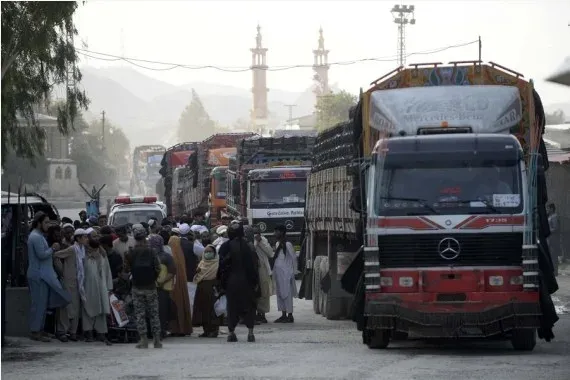
The strike threatens to severely disrupt import and export freight movement across Pakistan.
Two major Pakistani transport bodies — the Pakistan Mini Mazda Association and the All Pakistan Goods Transport Owners Association — have announced a nationwide wheel-jam strike beginning 8 August, targeting the government's daily fuel price revision mechanism, excessive fines, and a range of sector-specific grievances. The strike, if sustained, is expected to severely disrupt the movement of imports and exports across Pakistan.
What the Transporters Are Demanding
Pakistan Mini Mazda Association Central President Tanveer Jatt, speaking at a press conference, urged the government to shift fuel price revisions from a daily to a monthly basis and to provide relief from toll taxes and what he described as 'unjust fines.' He warned that freight movement across the country would grind to a halt if the government failed to address these concerns before the strike date.
All Pakistan Goods Transport Owners Association President Chaudhry Owais Gujjar raised additional concerns, calling for axle-load limits to be enforced strictly as per law and flagging what he described as rampant corruption in the enforcement process. He noted that transporters collectively paid billions of rupees annually in toll taxes while receiving little in return, and pointed to dilapidated road conditions as a leading cause of traffic accidents.
The Daily Fuel Pricing Mechanism
The strike comes in direct response to a policy shift announced on 17 July by Petroleum Minister Ali Pervaiz Malik and Information Minister Atta Tarar, who said fuel prices would henceforth be revised on a daily basis, citing volatility in global oil prices linked to renewed hostilities in West Asia. The revised rates are to be published by the Oil and Gas Regulatory Authority (OGRA) on its website. Prior to this, Pakistan had been revising fuel prices on a weekly basis since early March.
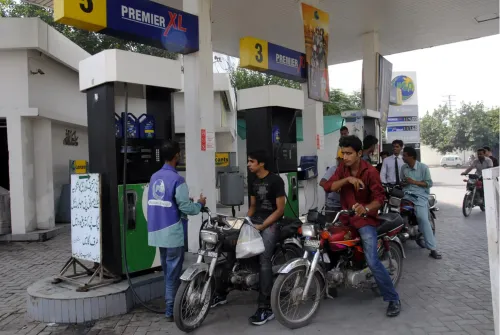
On Thursday, 7 August, the government announced a reduction — petrol prices were cut by PKR 3.19 per litre and high-speed diesel (HSD) by PKR 1.50 per litre, effective for that day only. Following the revision, petrol is priced at PKR 329.82 per litre and HSD at PKR 382.36 per litre. Notably, the Pakistan government has imposed PKR 110 per litre in taxes and duties on petrol and PKR 96 per litre on HSD, according to reports.
Impact on Trade and Freight
A prolonged wheel-jam strike by goods transporters would have cascading effects on Pakistan's already strained supply chains. The transport sector is critical to moving goods between ports, warehouses, and markets — any disruption is likely to affect perishable goods, industrial inputs, and export consignments. This comes amid an already fragile economic environment in Pakistan, where inflation and fuel costs have squeezed household and business budgets alike.
What Happens Next
As of 7 August, the government had not publicly responded to the transporters' demands. Industry observers say the daily pricing model, while intended to pass on global price fluctuations in real time, creates planning uncertainty for logistics operators who cannot fix freight rates on a day-to-day basis. Whether the government moves to negotiate before the strike deadline will determine the scale of disruption from 8 August onward.
Point of View
Which cannot reprice freight contracts every 24 hours. The transporters' grievances go beyond fuel: toll corruption and road quality are structural failures that successive governments have deferred. A wheel-jam strike, even a brief one, will expose how thin Pakistan's supply-chain resilience actually is. The government's silence ahead of the 8 August deadline suggests it is betting on the strike fizzling — a gamble that carries real economic risk.
NationPress
7 Aug 2026
Frequently Asked Questions
Why are Pakistani transporters going on strike from 8 August?
The Pakistan Mini Mazda Association and All Pakistan Goods Transport Owners Association called a wheel-jam strike from 8 August to protest the government's daily fuel price revision mechanism, excessive fines, and high toll taxes. They argue that daily price changes make it impossible to plan freight operations and rates.
What is Pakistan's daily fuel pricing mechanism?
On 17 July, Pakistan's Petroleum Minister Ali Pervaiz Malik announced that fuel prices would be revised every day based on international market trends, with rates published by OGRA on its website. This replaced a weekly revision system that had been in place since early March.
What are the current fuel prices in Pakistan after the 7 August revision?
After the latest revision on 7 August, petrol in Pakistan is priced at PKR 329.82 per litre and high-speed diesel at PKR 382.36 per litre. Petrol carries PKR 110 per litre in government taxes and duties, while HSD carries PKR 96 per litre.
How will the strike affect Pakistan's economy?
A sustained wheel-jam strike would disrupt the movement of imports, exports, and domestic freight, hitting supply chains for perishables, industrial inputs, and export consignments. The impact would be significant given Pakistan's already fragile economic conditions.
What other demands have the transporters raised beyond fuel pricing?
Chaudhry Owais Gujjar of the All Pakistan Goods Transport Owners Association demanded that axle-load limits be enforced strictly as per law, citing corruption in enforcement. He also flagged that transporters pay billions of rupees annually in toll taxes while roads remain in poor condition, contributing to traffic accidents.