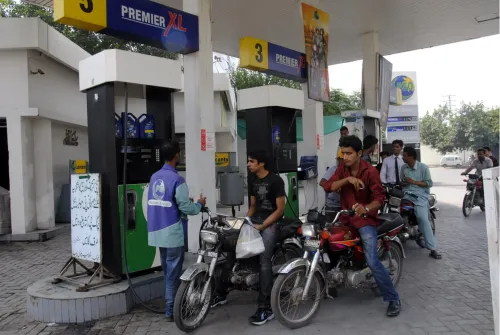
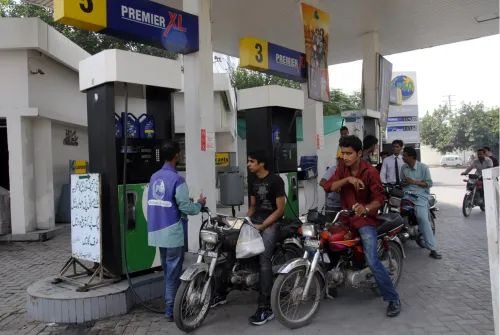
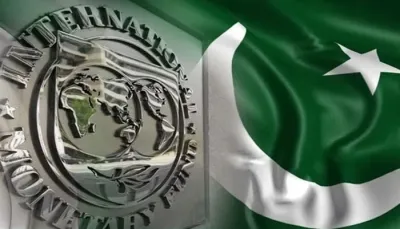
Pakistan accused of using IMF as shield for petroleum levy hikes
Synopsis
Pakistan's government stands accused of using IMF commitments as political cover for hiking the petroleum levy — which has pulled in Rs 4.4 trillion over four years, exceeding targets in 2026. With Jamaat-e-Islami's Hafiz Naeemur Rehman demanding the state curb its own privileges before asking citizens to sacrifice more, the debate has moved beyond fuel prices to a fundamental question of accountability in Pakistan's economic governance.
Key Takeaways
Pakistan's government is accused of invoking IMF commitments to justify unpopular petroleum levy hikes, according to a Directus analysis.
The government collected Rs 4.4 trillion through the levy over four fiscal years from 2022 to 2026 , per a parliamentary response reported on 30 October .
Provisional collections in 2026 reached Rs 1.567 trillion , exceeding the target of Rs 1.468 trillion .
Jamaat-e-Islami Emir Hafiz Naeemur Rehman accused the government in October of shielding itself behind IMF justifications while not cutting its own expenditure and privileges.
Analysts argue Pakistan's leadership must own the distributional consequences of its economic programme and cannot transfer political accountability to the IMF.
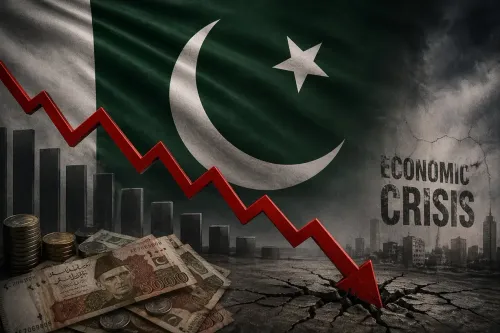
Pakistan's government is facing mounting criticism for allegedly invoking its commitments to the International Monetary Fund (IMF) as a catch-all justification for unpopular economic measures, most notably repeated hikes in the levy on petroleum products, according to an analysis published in the Directus news portal. The accusation places the fairness of Pakistan's fiscal choices at the heart of an increasingly fractious debate over the country's path to economic recovery.
The Scale of Petroleum Levy Collections
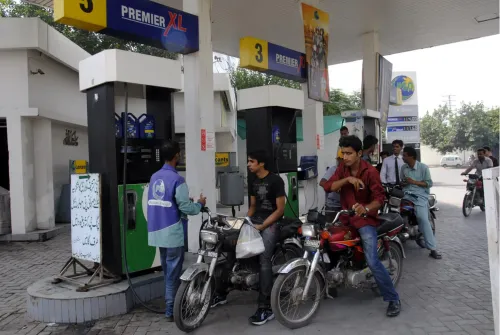
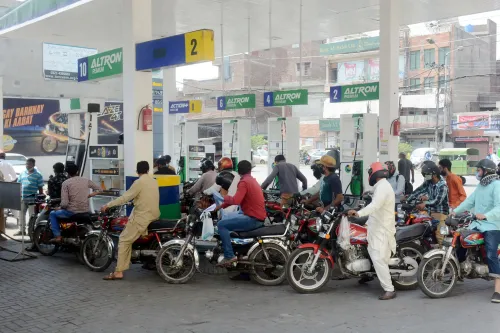
The numbers at the centre of the dispute are substantial. According to a parliamentary response reported on 30 October, Pakistan's government collected Rs 4.4 trillion (Pakistani rupees) through the petroleum levy over four fiscal years from 2022 to 2026. Provisional collections for the financial year ending in 2026 reached Rs 1.567 trillion, exceeding the stated target of Rs 1.468 trillion.
These figures, the Directus analysis argues, transform the petroleum levy from a narrow dispute over fuel prices into a broader question about the equitable distribution of fiscal burdens during an austerity cycle. The government has consistently exceeded its own revenue targets on this levy even as household budgets remain under severe strain.
Jamaat-e-Islami's Challenge to the Government
The intervention of Jamaat-e-Islami Emir Hafiz Naeemur Rehman has added political intensity to the debate. In October, Rehman publicly accused the government of hiding behind IMF conditionalities to justify petroleum charges while simultaneously failing to curb its own expenditure and official privileges. The allegation, according to the report, is a political claim that must be tested against actual expenditure records and subjected to independent scrutiny.
Notably, this is not the first time Pakistani opposition figures have argued that the IMF framework is being selectively deployed — applied stringently to ordinary citizens while discretionary state spending escapes comparable examination.
Transparency Gaps and Citizen Understanding
The Directus analysis highlights a critical information gap. While the parliamentary response did disclose collection figures and targets — a measure of transparency — citizens still lack a clear account of how the petroleum levy relates to the overall budget, debt obligations, and relief expenditure. Without that clarity, aggregate revenue numbers show how much the state collects but do not adequately explain why the burden remains necessary or how it compares to other fiscal instruments such as climate charges and customs duties.
The report argues that transparency must extend beyond raw collection data to include a comprehensible explanation of the levy's purpose within Pakistan's broader fiscal architecture.
Political Accountability Cannot Be Outsourced to the IMF
At the core of the critique is a question of accountability. The analysis states that while the IMF shapes Pakistan's fiscal framework through its programme conditions, that influence does not transfer political responsibility away from the government that negotiates the commitments, prepares the budgets, and ultimately implements the taxation. Pakistan's leadership, the article argues, must own the distributional consequences of its economic programme.
The report calls on the government to publish an accessible account of its IMF obligations, explain the policy alternatives it considered and rejected, and demonstrate measurable restraint in discretionary and administrative spending. A government asking citizens to absorb painful adjustment, it argues, loses credibility when visible restraint at the top is absent. Until such accountability is demonstrated, critics argue, invoking the IMF risks functioning less as a policy explanation and more as a shield against responsibility.
What Comes Next
The debate over Pakistan's petroleum levy is likely to intensify as the government enters the next budgetary cycle under continued IMF programme oversight. With Hafiz Naeemur Rehman and other political actors keeping pressure on the ruling establishment, calls for independent expenditure audits and greater fiscal transparency are expected to grow louder in the coming months.
Point of View
Governments are tempted to treat conditionalities as political insulation rather than a mandate for genuine reform. The fact that the levy has consistently beaten its own revenue targets while official expenditure remains largely unexamined is the contradiction that critics are right to press. Accountability for distributional consequences cannot be outsourced to the IMF; every budget is ultimately a political choice. Until Pakistan's government publishes a comprehensible account of its obligations, the alternatives it rejected, and demonstrable restraint in its own spending, the IMF shield argument will continue to erode public trust in a stabilisation programme that depends on that trust to succeed.
NationPress
10 Nov 2026
Frequently Asked Questions
Why is Pakistan's government being accused of misusing IMF justifications?
Critics, including Jamaat-e-Islami Emir Hafiz Naeemur Rehman, allege that the government routinely cites its IMF programme commitments to deflect scrutiny of unpopular economic decisions — particularly the petroleum levy — without demonstrating comparable restraint in its own expenditure. The charge is that the IMF is being used as a shield against political accountability rather than as a genuine policy rationale.
How much has Pakistan collected through the petroleum levy?
According to a parliamentary response reported on 30 October, Pakistan collected Rs 4.4 trillion through the petroleum levy over four fiscal years from 2022 to 2026. Provisional collections for 2026 alone reached Rs 1.567 trillion, exceeding the annual target of Rs 1.468 trillion.
What has Hafiz Naeemur Rehman said about the petroleum levy?
In October, Jamaat-e-Islami Emir Hafiz Naeemur Rehman accused the Pakistani government of invoking IMF commitments to justify petroleum charges while failing to reduce its own expenditure and official privileges. His remarks have intensified calls for independent scrutiny of government spending during the ongoing austerity cycle.
What information are Pakistani citizens still missing about the levy?
Despite parliamentary disclosures of collection figures, citizens lack a clear explanation of how the petroleum levy connects to the overall budget, debt obligations, and relief spending — and how it differs from other charges such as climate levies or customs duties. Analysts argue the government must publish an accessible account of its IMF obligations and the alternatives it considered.
Does the IMF bear responsibility for Pakistan's petroleum levy decisions?
No. While the IMF shapes Pakistan's fiscal framework through programme conditions, analysts and the Directus report emphasise that political accountability remains with the government that negotiates those commitments, prepares the budget, and implements taxation. The IMF's influence does not transfer responsibility for distributional consequences away from elected leadership.