Pakistan's $7 trillion mineral wealth faces militant insurgency threat
Synopsis
Pakistan is sitting on an estimated $7 trillion in mineral wealth but getting to it means defeating the TTP, BLA, and potentially AQIS — while simultaneously selling legal certainty to sceptical Western investors at the PMIF 2026 forum on 12–13 November. The political removal of PTI from KP reveals just how far Islamabad is willing to go to clear the path. Whether brute military force can secure the investment corridor is the central question no one in Islamabad can yet answer.
Key Takeaways
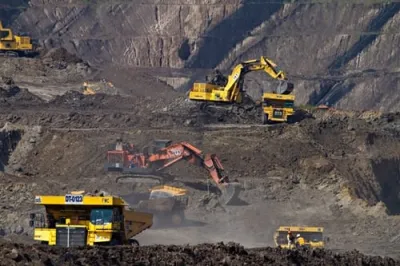
Pakistan holds an estimated $7 trillion in mineral reserves, including copper , gold , rare earth elements , tungsten , and antimony .
The imposition of Governor's rule in Khyber Pakhtunkhwa is widely attributed to Islamabad's push to remove the PTI government and open the region to foreign mining investment.
The Pakistan Minerals Investment Forum (PMIF) 2026 is scheduled for 12–13 November , targeting international mining executives and Western capital.
The TTP , BLA , and BLF pose acute security risks; an Intelligence Bureau official warned that militant offensives are expected to intensify.
Al-Qaeda in the Sub-Continent (AQIS) could exploit Western investment deals for propaganda, given Al-Qaeda's stated anti-Western ideology.
Any large-scale counter-insurgency operation could cost thousands of lives across KP and Balochistan , officials concede.
Pakistan is estimated to hold mineral reserves worth approximately $7 trillion, encompassing significant deposits of copper, gold, rare earth elements, tungsten, and antimony. With the country's economy in deepening crisis, Islamabad is positioning these vast untapped resources as its primary lever for economic revival and foreign investment — but a worsening insurgency across Khyber Pakhtunkhwa (KP) and Balochistan threatens to undercut every ambition.
The Political Calculus Behind Governor's Rule in KP
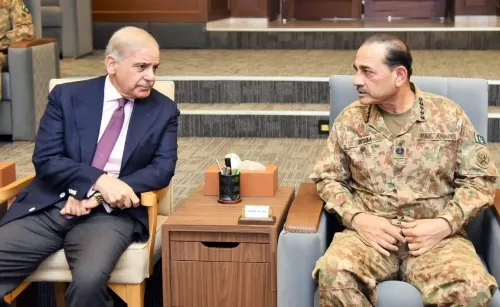
The imposition of emergency and Governor's rule in Khyber Pakhtunkhwa is widely seen as a calculated political move by the Shehbaz Sharif government to dislodge the Pakistan Tehreek-e-Insaf (PTI)-led provincial administration. While the official rationale cited deteriorating law and order under the PTI government, officials speaking on condition of anonymity say the underlying motive was to clear obstacles to foreign participation in the region's mining sector. 'The real reason was to get the PTI out of the way, as it created a lot of problems for Pakistan where the mining sector is concerned,' one official said.
In Balochistan, Islamabad already has an ally in Chief Minister Mir Sarfaraz Bugti, regarded as a central government-friendly leader. Removing PTI from KP, officials argue, was the final piece needed to present a unified administrative front to prospective investors.
PMIF 2026: Pakistan's High-Stakes Mineral Investment Forum
All eyes are now on the Pakistan Minerals Investment Forum (PMIF) 2026, scheduled for 12–13 November. The forum is expected to draw international mining executives, investment houses, and policymakers from across the globe. According to officials, the Sharif government is working at pace to finalise legislation providing legal protection, investment guarantees, and contractual security for any minerals deals signed. 'The Sharif government is working overtime to prepare legislation to ensure that any minerals deal would have maximum legal protection, investment guarantees and contractual security,' an official said.
Notably, the investments being courted are expected to involve substantial Western capital — a detail with significant geopolitical implications given the ideological posture of militant groups active in both provinces.
The Security Nightmare: TTP, BLA, BLF, and the AQIS Wildcard
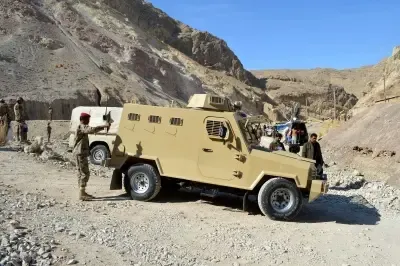
Officials acknowledge that the security landscape across KP and Balochistan is, in their own words, 'a nightmare.' The Tehreek-e-Taliban Pakistan (TTP), the Balochistan Liberation Army (BLA), and the Balochistan Liberation Front (BLF) represent the most immediate threats to any mining investment in these regions. An Intelligence Bureau official warned that the security situation is likely to worsen, with these groups expected to intensify their offensive as the minerals framework takes shape.
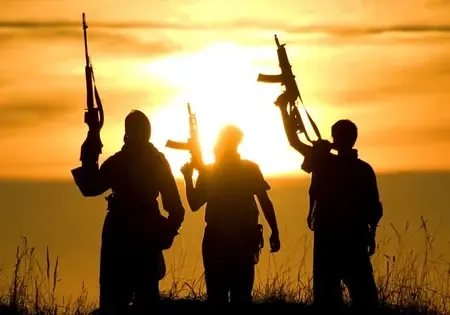
The risk extends beyond domestic insurgency. Officials warn that Al-Qaeda in the Sub-Continent (AQIS) could exploit the influx of Western investment as a propaganda and recruitment tool. Al-Qaeda has historically framed its campaign as a fight against Western presence — and Pakistan's emerging mineral deals could hand AQIS a fresh ideological talking point. Any large-scale counter-insurgency operation would come at a steep human cost, officials concede, potentially resulting in the loss of thousands of lives across both regions.
Can Pakistan Balance Investment Ambition Against Ground Realities?
The gap between Islamabad's ambitions and the ground reality in KP and Balochistan is stark. While the government is accelerating a legislative framework to reassure foreign investors, officials privately admit that operational security for mining projects in these territories remains deeply uncertain. The Chinese — already the most invested foreign player in Pakistan's resource sector, most visibly through the China-Pakistan Economic Corridor (CPEC) — have long grappled with militant attacks on their personnel and infrastructure, making them the most seasoned cautionary example of what Western investors now face.
The PMIF 2026 forum will serve as an early test of how much credibility the Sharif government's investment pitch can command against a backdrop of escalating insurgent activity. The road ahead, as officials themselves acknowledge, is formidable.
Point of View
But the TTP and BLA have repeatedly demonstrated they can disrupt infrastructure projects far better-protected than a nascent mining corridor. The political decapitation of PTI in KP reveals an uncomfortable truth: Islamabad is prioritising deal-making over democratic legitimacy, betting that administrative control equals investable stability. It rarely does in conflict zones. The Chinese experience along CPEC — persistent attacks on workers and pipelines despite a massive military umbrella — is the most credible stress-test available, and it does not flatter the forecast. If Western investors walk into PMIF 2026 without a serious threat assessment, the security bill will eventually arrive, and it will be denominated in lives, not just dollars.
NationPress
3 Nov 2026
Frequently Asked Questions
How much are Pakistan's mineral reserves worth?
Pakistan's mineral reserves are estimated to be worth approximately $7 trillion, according to official assessments. The deposits include copper, gold, rare earth elements, tungsten, and antimony, primarily concentrated in Khyber Pakhtunkhwa and Balochistan.
What is the Pakistan Minerals Investment Forum (PMIF) 2026?
The Pakistan Minerals Investment Forum (PMIF) 2026 is a high-profile investment event scheduled for 12–13 November, designed to attract international mining companies and investment firms. The Shehbaz Sharif government is using it to present Pakistan as a major destination for global mineral sector investment, backed by new legislation offering legal and contractual protections.
Why was Governor's rule imposed in Khyber Pakhtunkhwa?
The official reason cited by Islamabad was a failure by the PTI-led provincial government to maintain law and order. However, officials say the primary motivation was to remove PTI, which had blocked or complicated foreign participation in KP's mining sector, and to install a more Islamabad-aligned administration ahead of major minerals deals.
Which militant groups threaten Pakistan's mining investment plans?
The Tehreek-e-Taliban Pakistan (TTP), the Balochistan Liberation Army (BLA), and the Balochistan Liberation Front (BLF) are identified as the primary security threats to mining investments in KP and Balochistan. Additionally, Al-Qaeda in the Sub-Continent (AQIS) could leverage Western involvement in Pakistan's minerals sector as a propaganda tool, officials warn.
How is the Shehbaz Sharif government preparing for the PMIF 2026?
The Sharif government is fast-tracking legislation to provide maximum legal protection, investment guarantees, and contractual security for any minerals deals. It is also seeking to consolidate political control over KP and Balochistan to present a unified administrative environment to prospective investors ahead of the November forum.