Pakistan's alleged proxy ties span Kabul and Mumbai attacks
Synopsis
A 2021 visit to Kabul by Pakistan's intelligence chief recalls decades of disputed allegations over militant ties, including the Taliban insurgency and attacks in Kabul and Mumbai. Pakistan has denied accusations of sheltering or assisting such groups.
Key Takeaways
Then intelligence chief Faiz Hameed visited Kabul on 4 September 2021 , shortly after the Taliban took the city.
Analysts at the US Military Academy's Combating Terrorism Centre said the Taliban's Quetta Shura directed its insurgency from Pakistan.
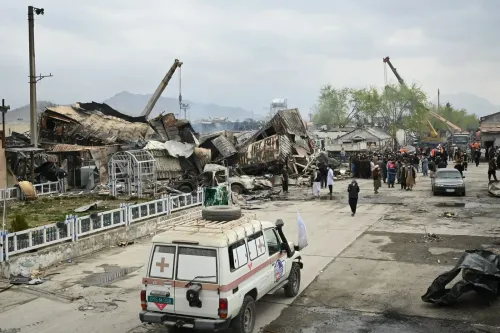
A July 2008 suicide bombing at the Indian Embassy in Kabul killed dozens; Pakistan denied allegations that its intelligence officers helped plan it.
The 1993 Bombay bombings killed 257 people ; accused mastermind Dawood Ibrahim has never faced trial for the attacks.
The United States suspended most security assistance to Pakistan in January 2018 , seeking action against the Taliban and the Haqqani network.
Pakistan's alleged proxy ties to militant groups have come under scrutiny for decades, from the Taliban insurgency in Afghanistan to attacks in India. A visit to Kabul by then Inter-Services Intelligence chief Lieutenant General Faiz Hameed on 4 September 2021, shortly after the Taliban took the Afghan capital, drew attention to that history.
Photographed holding a cup of tea, Hameed was asked by a journalist what would happen next. “Don't worry, everything will be okay,” he replied. Pakistan has denied allegations that it sheltered or assisted militant groups.
The Taliban's leadership in Pakistan
After the United States drove the Taliban from power in 2001, members of its leadership fled to Pakistan's Balochistan province, according to analysts at the US Military Academy's Combating Terrorism Centre. The analysts said the leadership council known as the Quetta Shura directed the insurgency from Pakistani territory.
Pakistan denied the council existed until 2009. In May 2016, a US drone strike killed Taliban leader Mullah Akhtar Mansour in Balochistan; Pakistan's Foreign Office later confirmed that a Pakistani passport issued in the name Wali Muhammad had been found at the scene.
Haqqani network and attacks in Kabul
A suicide bombing at the Indian Embassy in Kabul killed dozens of people in July 2008. Weeks later, The New York Times reported that US officials, citing intercepted communications, had concluded that officers from Pakistan's Inter-Services Intelligence had helped plan the attack. Pakistan denied the allegation.
The day after Kabul fell in August 2021, then Pakistani prime minister Imran Khan said Afghans had “broken the shackles of slavery”, a remark widely interpreted as praise for the Taliban victory.
Less than a year later, a US drone strike killed al-Qaeda leader Ayman al-Zawahiri at a house in central Kabul. A senior US intelligence official said the house belonged to a top aide of Taliban interior minister Sirajuddin Haqqani, linking the location of the strike to the Haqqani network.
India attacks and disputed allegations
In March 1993, coordinated bombings killed 257 people in Bombay, now Mumbai. The accused mastermind, Dawood Ibrahim, fled India and has never faced trial for the attacks.
The US Treasury designated Ibrahim a global terrorist in October 2003, saying he had assisted al-Qaeda. According to Al Jazeera, Washington also supported India's longstanding claim that he was hiding in Pakistan; Islamabad denied it.
Lashkar-e-Taiba, the group behind the 2008 Mumbai attacks, and Jaish-e-Mohammed, which claimed the 2019 Pulwama bombing, are both on the UN Security Council's sanctions list. Their leaders lived openly in Pakistan for years, while the state faced international pressure to act against them.
US pressure and Pakistan's own losses
On 1 January 2018, then US president Donald Trump wrote that the United States had “foolishly” given Pakistan more than $33 billion in aid over 15 years, receiving “nothing but lies and deceit” while Pakistan gave “safe haven to the terrorists we hunt in Afghanistan.” Pakistan disputed the figure.
Three days later, the Trump administration suspended most US security assistance to Pakistan pending “decisive action” against the Taliban and the Haqqani network. The suspension reflected a strain in relations over groups operating across the Afghanistan-Pakistan border.
Pakistan has also pointed to the tens of thousands of its own citizens lost to terrorism. The Pakistani Taliban, which now fights the Pakistani state, emerged from militant networks that grew around the Afghan Taliban in Pakistan's tribal areas.
The record leaves questions about accountability for past attacks and the treatment of militant networks central to future relations among Pakistan, its neighbours and international partners.
Point of View
While Afghanistan remains central to the regional consequences. Allegations should be tested against credible evidence, and denials should not substitute for transparent investigation or action against designated groups.
NationPress
23 Nov 2026
Frequently Asked Questions
What are the allegations about Pakistan's proxy ties?
Pakistan has faced allegations that it sheltered or assisted militant groups used to advance its regional interests. Pakistan denies such allegations.
Why did Faiz Hameed visit Kabul in 2021?
The source does not specify the purpose of Faiz Hameed's visit to Kabul on 4 September 2021. The then Pakistani intelligence chief arrived less than three weeks after the Taliban took the Afghan capital.
What was the Quetta Shura?
The Quetta Shura was the Taliban leadership council that analysts at the US Military Academy's Combating Terrorism Centre said directed the insurgency from Pakistan. Pakistan denied the council existed until 2009.
Why did the US suspend security assistance to Pakistan in 2018?
The United States suspended most security assistance pending what it called decisive action against the Taliban and the Haqqani network. The decision followed then president Donald Trump's criticism of Pakistan's record on terrorism.
How has Pakistan itself been affected by terrorism?
Pakistan says it has lost tens of thousands of its citizens to terrorism. The Pakistani Taliban, which emerged from militant networks in the country's tribal areas, now fights the Pakistani state.