Taliban accuses Pakistan over Nuristan incursion in long history of proxy war claims
Synopsis
The Nuristan incursion is no longer just a border skirmish — it has become Exhibit A in the Taliban's case against Pakistan. Captured fighters describe a recruitment pipeline running from Iran through Gwadar and Islamabad to Chitral, while Afghanistan's Ambassador in Moscow calls Pakistan the 'only threat' to regional security. The episode lays bare how economic desperation among Afghan migrants is being weaponised, whoever the architect.
Key Takeaways
The Taliban has accused Pakistan of facilitating the Nuristan incursion by allowing anti-Taliban fighters to transit its territory — an allegation Islamabad rejects.
Captured fighters reportedly described a transit route from Iran via Chabahar and Gwadar , through camps near Islamabad , and then to Chitral before entering Afghanistan.
Most detainees were reportedly unemployed Afghan migrants lured by promises of salaries; fighter Javed said those promises were 'completely false' .
Afghanistan's Ambassador to Russia, Gul Hassan Hassan , called Pakistan the 'only threat' to regional security at a CSTO-CIS-SCO conference in Moscow in October .
Hassan cited two specific incursions: into Badakhshan's Zebak district on 23 July and into Nuristan's Kamdesh district on 25 September .
Researchers warn that Afghanistan's economic crisis has created a pool of vulnerable young men susceptible to recruitment by armed actors.
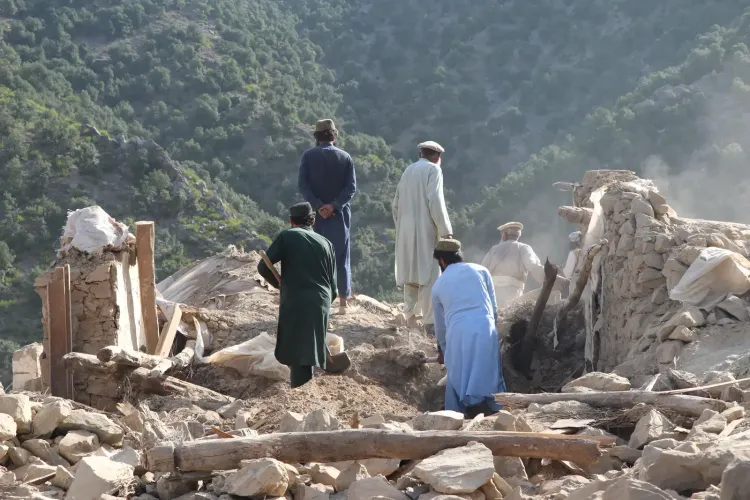
The recent armed incursion into Afghanistan's Nuristan province is increasingly being viewed as more than an isolated militant attack, with the Taliban's allegations against Pakistan fitting into a decades-long pattern of accusations around proxy warfare, recruitment networks, and cross-border militant deployment, according to a report by the Afghan Diaspora Network.
What the Captured Fighters Said
Testimonies from captured fighters paint a detailed picture of an organised logistical chain. According to the Afghan Diaspora Network report, several detainees stated they were transported from Iran via the ports of Chabahar and Gwadar, moved through camps near Islamabad, and subsequently taken to Chitral before crossing into Afghanistan. The accounts describe a structured network covering recruitment, transportation, accommodation, training, and final deployment.
Notably, the consistency of these testimonies does not, by itself, establish state-level involvement. However, researchers say it does expose how economically desperate Afghan migrants can be drawn into armed conflict. The majority of those questioned were reportedly migrant workers or unemployed Afghan nationals who had spent time in Iran.
Economic Desperation as a Recruitment Tool
Several detainees said they were lured by promises of salaries and employment. One captured fighter, identified as Javed, stated that the promises made about money or anything else are 'completely false', suggesting financial incentives were used to recruit but not honoured.
A. Shafaq (a pseudonym), a researcher and lecturer at a private university in Kabul, said in the Afghan Diaspora Network report: 'If so, the Nuristan episode reveals a disturbing reality. Afghanistan's prolonged economic crisis has created a pool of vulnerable young men who can be mobilised by armed actors willing to exploit their insecurity. Whether recruitment is conducted by opposition groups, criminal networks, or regional proxies, the underlying mechanism remains the same: economic hardship becomes a gateway to conflict.'
Taliban and Kabul's Accusations Against Pakistan
The Taliban has formally accused Pakistan of permitting anti-Taliban fighters to transit through its territory and providing logistical support to opposition groups — allegations Islamabad has rejected. The statements released following the Nuristan clashes, however, indicate the episode went beyond routine insurgent activity, according to the Afghan Diaspora Network.
In October, Afghanistan's Ambassador to Russia, Gul Hassan Hassan, described Pakistan as the 'only threat' to Afghanistan's security and to the wider region. Speaking at a joint security conference of the Collective Security Treaty Organisation (CSTO), the Commonwealth of Independent States (CIS), and the Shanghai Cooperation Organisation (SCO) in Moscow, Hassan alleged that Islamabad was sheltering multiple terrorist groups, including ISIS (Daesh).
'We must state clearly that the threat to the security and stability of our region now comes from Pakistan. Pakistan not only shelters armed opponents of Afghanistan's government, but has also provided fertile ground there for narcotics and for Daesh's activities,' Hassan said.
He further asserted: 'This is not an empty allegation. You will also have followed reports on this in Pakistani and international media.'
Specific Incursion Incidents Cited
Hassan claimed that hundreds of armed fighters belonging to these groups were brought through Chitral into the Zebak district of Badakhshan province on 23 July, and in a second attempt into the Kamdesh district of Nuristan province on 25 September. He also alleged that Pakistan had provided an environment for these groups to recruit members and raise funds within its territory.
A Pattern Decades in the Making
This comes amid a broader deterioration in Afghanistan-Pakistan relations since the Taliban's return to power in 2021. Cross-border accusations are not new — Afghanistan has repeatedly alleged Pakistani involvement in militant activity on its soil, while Pakistan has consistently pointed to the presence of Tehrik-i-Taliban Pakistan (TTP) fighters sheltering in Afghan territory. The Nuristan episode, analysts say, adds a fresh data point to a conflict dynamic that shows no signs of de-escalation.
Point of View
Complete with named transit routes and captured witnesses. What makes this iteration different is the Taliban as the accuser: a government that itself once benefited from cross-border sanctuary is now on the receiving end of the same playbook it helped write. The deeper structural problem, as the Kabul researcher's testimony makes clear, is economic: as long as millions of Afghan men remain unemployed and stateless, any armed actor with money can field a force. Pakistan denies the charges, but neither side has invited independent verification — which means the cycle of accusation and counter-accusation is likely to continue, regardless of what the fighter testimonies ultimately prove.
NationPress
8 Nov 2026
Frequently Asked Questions
What happened in Afghanistan's Nuristan province?
An armed incursion took place in Nuristan's Kamdesh district on 25 September, which the Taliban has attributed to fighters allegedly facilitated by Pakistan through a cross-border logistical network. Captured fighters' testimonies describe a recruitment and transit route running through Iran, Gwadar, Islamabad, and Chitral before entry into Afghanistan.
What did captured fighters say about how they were recruited?
Several detainees reportedly stated they were transported from Iran via Chabahar and Gwadar, moved through camps near Islamabad, and taken to Chitral before crossing into Afghanistan. Most were described as unemployed Afghan migrants or labourers who had been in Iran and were offered salaries — promises that fighter Javed described as 'completely false'.
Has Pakistan responded to the Taliban's allegations?
Islamabad has rejected the Taliban's accusations of providing logistical support to anti-Taliban fighters or allowing them to transit Pakistani territory. Pakistan has not publicly addressed the specific testimony details reported by the Afghan Diaspora Network.
What did Afghanistan's Ambassador to Russia say about Pakistan?
Ambassador Gul Hassan Hassan, speaking at a joint CSTO-CIS-SCO security conference in Moscow in October, called Pakistan the 'only threat' to Afghanistan's security and the broader region. He alleged that Pakistan shelters multiple terrorist groups including ISIS (Daesh), and cited two specific incursions — into Badakhshan on 23 July and Nuristan on 25 September — involving fighters brought through Chitral.
Why are Afghan migrants reportedly vulnerable to militant recruitment?
Researchers cited in the Afghan Diaspora Network report say Afghanistan's prolonged economic crisis has left a large number of young men unemployed and stateless, making them susceptible to recruitment by armed actors who exploit financial desperation. The majority of captured fighters from the Nuristan incursion were reportedly migrant workers or unemployed nationals who had been living in Iran.