Pakistan's proxy wars come home: Balochistan, KP, PoJK and Afghan crisis explained
Synopsis
Pakistan is simultaneously fighting wars on four fronts — Afghan border, Balochistan, KP, and PoJK — all of them rooted in decades of state-sponsored militant patronage. With peace talks in Istanbul collapsing before they concluded and airstrikes resuming, the country that built proxies to project power abroad is now being dismantled by them at home, while its economy teeters between Beijing and Washington.
Key Takeaways
Pakistan launched airstrikes inside Afghan territory even as informal peace talks were ongoing in Istanbul on Tuesday , with the Taliban retaliating along the Durand Line .
The Baloch Liberation Army (BLA) has escalated attacks on military convoys and CPEC infrastructure in Balochistan , straining Pakistan's ties with both China and Iran .
The alleged Tehreek-e-Taliban Pakistan (TTP) has reportedly established a parallel authority in Khyber Pakhtunkhwa , shrinking the Pakistani state's writ despite repeated military operations.
Unrest in Pakistan-Occupied Jammu and Kashmir (PoJK) over economic hardship and political repression has exposed Islamabad's weakening hold on the territory.
Pakistan's economy is trapped in a cycle of debt and near-default, forcing Islamabad to balance between China's CPEC financing and US -backed IMF bailouts.
Regional peace talks — held in Urumqi and Istanbul — have repeatedly failed since the major border closure in October 2025 .
Pakistan is being consumed by the very conflicts it helped engineer — from the rugged terrain of Khyber Pakhtunkhwa (KP) and the deserts of Balochistan to the simmering unrest in Pakistan-Occupied Jammu and Kashmir (PoJK) and the volatile Afghan frontier. Decades of militant patronage, once a tool of statecraft, have turned inward with devastating force. As analysts put it, the master of proxies has become their victim.
The Afghan Front: Talks Collapse, Airstrikes Follow
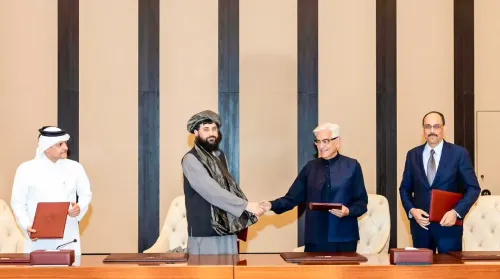
Since a major Pakistan-Afghanistan border firefight and the closure of trade routes in October 2025, regional powers have attempted peace negotiations multiple times — all without success. An informal round of talks was held in Istanbul earlier this week, following a similar attempt in Urumqi, China, which itself came after earlier stalled meetings between Islamabad and Kabul.
Even before the Istanbul meeting could conclude on Tuesday, Pakistan launched airstrikes inside Afghan territory. The Taliban retaliated with heavy firing along the Durand Line. Each round of diplomacy has been overtaken by fresh violence, raising serious doubts about whether dialogue can meaningfully de-escalate the crisis.
The roots of this conflict stretch back to the 1980s, when Pakistan nurtured the Afghan Mujahideen and, subsequently, the Taliban. Since the Taliban's return to power in Kabul in 2021, they have refused to take direction from either Pakistan's civilian government or the army establishment in Rawalpindi. Pakistan's military, once the Taliban's patron, is now locked in open hostilities with them.
Balochistan: A Bleeding Wound with Regional Implications
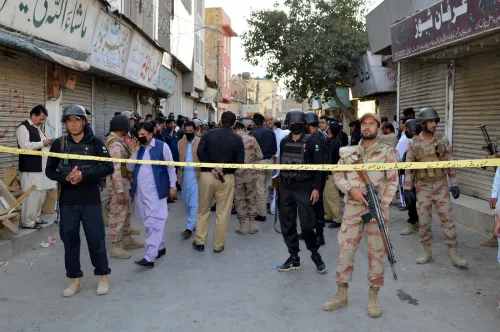
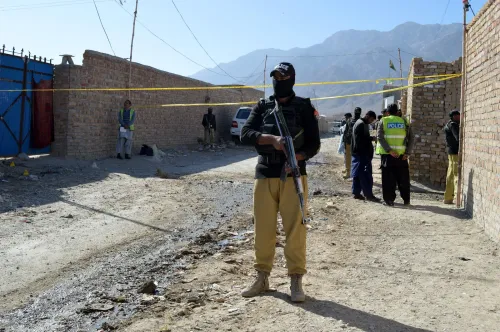
The insurgency in Balochistan has intensified, with the Baloch Liberation Army (BLA) and allied groups targeting military convoys, energy pipelines, and critical infrastructure. For Beijing, Balochistan is the linchpin of its Belt and Road Initiative ambitions through the China-Pakistan Economic Corridor (CPEC). For Pakistan, it is an unresolved internal wound.
The unrest carries a transnational dimension as well. Iran's Sistan-Baluchestan province faces similar instability, and Tehran has accused Islamabad of tolerating militant sanctuaries near the shared border. Pakistan's domestic rebellion thus doubles as a regional liability, straining ties with a neighbour it can ill afford to antagonise.
Khyber Pakhtunkhwa: Shrinking State Writ
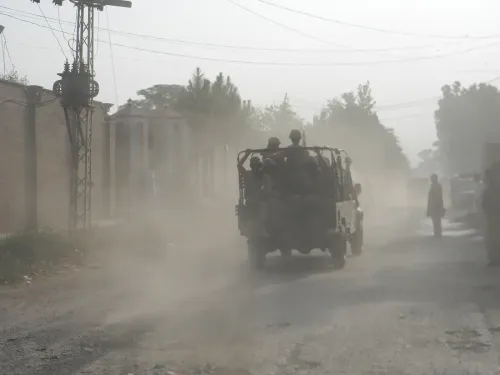
In Khyber Pakhtunkhwa, the alleged Tehreek-e-Taliban Pakistan (TTP) has reportedly entrenched itself as a parallel authority, with the Pakistani state's administrative reach visibly shrinking. Despite repeated military operations, the insurgents have remained resilient. According to analysts, the province stands as a stark reminder of how decades of state neglect and militant patronage can hollow out sovereignty from within.
PoJK and the India Dimension
Pakistan-Occupied Jammu and Kashmir (PoJK) has long served as a launchpad for cross-border militancy directed at India. That strategy has reportedly boomeranged. India's counter-terror operations have intensified, while unrest within PoJK itself — driven by economic hardship and political repression — has exposed Islamabad's weakening grip on the territory. What was designed as a pressure point against India has, critics argue, become a pressure cooker at home.
Economy in Freefall, Caught Between Two Patrons
Pakistan's military entanglements are compounded by a fragile economy caught in a vicious cycle of debt, dwindling foreign reserves, and political turmoil. The country has repeatedly teetered on the brink of default, forcing Islamabad to balance between China and the United States.
Beijing, through CPEC, provides infrastructure financing and long-term investment — but at the cost of mounting debt and strategic dependence. Washington remains Pakistan's critical gateway to IMF bailouts and global financial legitimacy, leveraging its influence over multilateral institutions. Caught between two patrons, neither of whom offers unconditional support, Pakistan's financial fragility has become a geopolitical vulnerability in its own right.
With no front showing signs of stabilisation and peace talks repeatedly overtaken by violence, Pakistan faces the prospect of navigating simultaneous crises — military, economic, and diplomatic — with diminishing capacity on every front.
Point of View
The Baloch insurgency, the TTP's parallel state in KP: each is a direct consequence of Rawalpindi's doctrine of strategic depth through militant proxies. What mainstream coverage often misses is that this is not a governance failure alone — it is a strategic doctrine failing in real time. The more troubling signal is economic: a state fighting four internal wars while dependent on rival patrons for solvency has almost no fiscal space to absorb further shocks. The Istanbul talks collapsing before they concluded — not after, but during — suggests that even the diplomatic reflex is now outpaced by the violence it is meant to contain.
NationPress
26 Oct 2026
Frequently Asked Questions
Why is Pakistan fighting wars on multiple fronts simultaneously?
Pakistan is confronting simultaneous insurgencies in Balochistan, Khyber Pakhtunkhwa, and along the Afghan border — all rooted in its decades-long policy of nurturing militant proxies to project regional influence. Those proxies have turned against the Pakistani state, creating crises that Islamabad now lacks the military and financial capacity to resolve cleanly.
What happened at the Pakistan-Afghanistan peace talks in Istanbul?
An informal round of Pakistan-Afghanistan peace talks was held in Istanbul earlier this week, following earlier failed attempts in Urumqi, China. The talks did not conclude — Pakistan launched airstrikes inside Afghan territory before they ended, and the Taliban retaliated with heavy firing at the Durand Line.
What is the Baloch Liberation Army and why does it matter for China?
The Baloch Liberation Army (BLA) is the primary insurgent group in Balochistan, targeting military convoys, energy pipelines, and infrastructure. It is a direct threat to the China-Pakistan Economic Corridor (CPEC), which runs through Balochistan and is central to Beijing's Belt and Road Initiative — making the insurgency a concern not just for Islamabad but for Chinese strategic investments.
How does the unrest in PoJK affect India-Pakistan relations?
Pakistan-Occupied Jammu and Kashmir has historically served as a staging ground for cross-border militancy directed at India. According to reports, India has intensified counter-terror operations in response, while internal protests over economic hardship and political repression in PoJK have weakened Islamabad's grip on the territory, reducing its effectiveness as a pressure point against India.
How is Pakistan's economy connected to its security crisis?
Pakistan's economy is caught in a cycle of debt and near-default, forcing Islamabad to depend on China for CPEC-linked financing and on the United States for access to IMF bailouts. Neither patron offers unconditional support, and the combination of military expenditure across multiple fronts and financial fragility has made Pakistan's instability a geopolitical vulnerability for the wider region.