Pakistan's Defense Pact with Saudi Arabia: A Betrayal Unveiled
Synopsis
A report reveals that Pakistan's commitment to its defense agreement with Saudi Arabia is largely symbolic, with Islamabad's response to Iranian aggression falling short. This betrayal raises questions about the reliability of Pakistan as an ally.
Key Takeaways
Pakistan's defense pact with Saudi Arabia is under scrutiny for being largely symbolic.
Islamabad's response to Iranian attacks has been deemed inadequate.
Saudi Crown Prince expressed frustration with Pakistan's reluctance.
Historical patterns show Pakistan often exploits its alliances.
Saudi Arabia feels betrayed due to Pakistan's inaction.
Kabul, April 11 (NationPress) Pakistan's adherence to the bilateral defense agreement with Saudi Arabia seems to be largely superficial, as Islamabad's reaction to Iranian assaults in the Kingdom has proven insubstantial, according to a report.
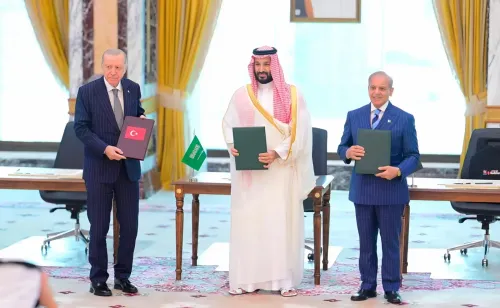
The Afghan Diaspora Network indicates that during a Senate address on March 3, Deputy Prime Minister Ishaq Dar reminded the Iranian Foreign Minister of the Strategic Mutual Defence Agreement (SMDA) with Saudi Arabia.
However, referencing a treaty is not synonymous with fulfilling its commitments. The report highlighted that Islamabad did not deploy air defense systems, fighter jets, or interceptor batteries but instead offered to mediate.
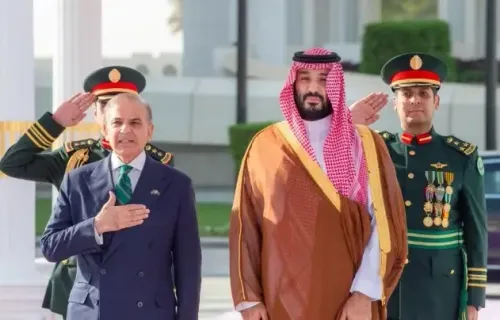
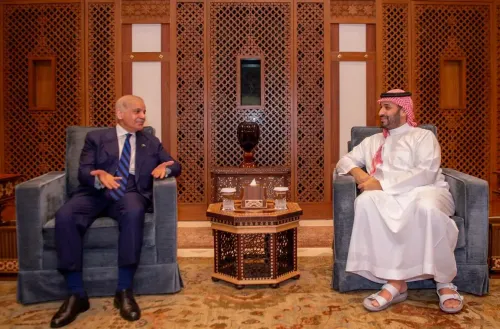
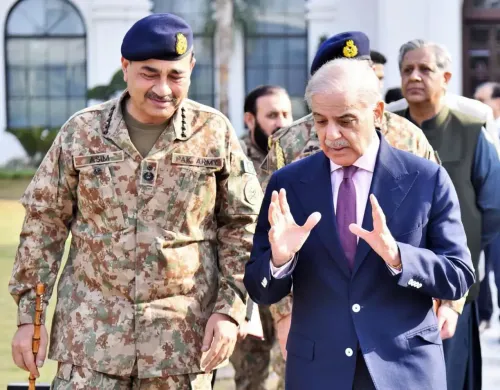
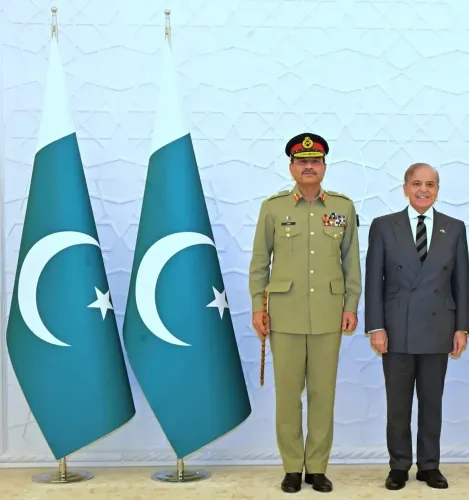
On March 12, Saudi Crown Prince Mohammed bin Salman convened Pakistani Prime Minister Shehbaz Sharif, Army Chief Asim Munir, and Dar in Jeddah.
The report indicated that Saudi Arabia explicitly invoked the SMDA, urging Islamabad's active military participation.
As Pakistan hesitated, the Crown Prince reportedly grew frustrated with Islamabad’s unwillingness, marking a 'clear violation' of the SMDA.
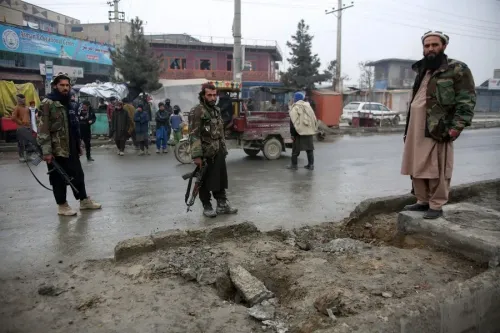
Pakistan's justification has been the ongoing military strife with Afghanistan, which it initiated itself. With its forces heavily engaged against the Taliban, Islamabad claims it cannot allocate resources for Saudi defense. Pakistan is likely to restrict itself to minimal defensive support rather than direct intervention, citing the Afghan conflict, potential Iranian retaliation, and internal sectarian issues. However, this rationale collapses under scrutiny, as Pakistan has chosen to escalate the conflict with Afghanistan and ignored all mediation attempts, the Afghan Diaspora Network report elaborated.
“Pakistan's Defence Minister warned in February that action would precede Ramadan, yet the timing of the escalation, shortly before the Iran conflict, appears more about strategic positioning than counterterrorism. Saudi Arabia and Qatar, former mediators in the Pakistan-Afghanistan dispute, will be too focused on the Iran crisis to intervene, allowing Pakistan to maintain hostilities without external pressure,” it added.
The report emphasized that Pakistan’s reluctance is a recurring theme, not an isolated incident. In 2015, when Saudi Arabia initiated Operation Decisive Storm against Houthi rebels in Yemen and explicitly requested Pakistan for fighter jets, troops, and naval support, Pakistan's parliament unanimously voted to remain neutral. This occurred without a formal defense pact but resulted in a chill in bilateral relations.
The same pattern is observed in 2026, despite a signed defense agreement. Pakistan has historically utilized its alliances as tools of exploitation, extracting billions from the United States during the war on terror while providing sanctuary to the groups America was combating. Additionally, China has invested billions through the China-Pakistan Economic Corridor (CPEC), yet Pakistan struggles to ensure basic security for Chinese initiatives,” the report noted.
The report concluded that Pakistan's refusal to act on its defense pact commitments has damaged Saudi Arabia's trust.
“Saudi Arabia, which significantly supports Pakistan’s economy, deposits billions in its central bank, and employs millions of its laborers, now finds itself under persistent Iranian aggression and has every reason to feel betrayed,” it stated.
Point of View
It's crucial to analyze the implications of Pakistan's actions on its international relationships. The apparent breach of the defense pact raises serious questions about trust and reliability in diplomacy. It emphasizes the need for accountability and transparency in international agreements.
NationPress
24 Sept 2026
Frequently Asked Questions
What is the Strategic Mutual Defence Agreement?
The Strategic Mutual Defence Agreement (SMDA) is a bilateral defense pact between Pakistan and Saudi Arabia aimed at mutual military cooperation.
Why is Pakistan's response to Iranian strikes considered hollow?
Pakistan's lack of military deployment and reliance on mediation instead of active military support has led to perceptions of a hollow commitment to its defense pact.
What has been Saudi Arabia's reaction to Pakistan's actions?
Saudi Arabia has expressed frustration over Pakistan's reluctance to fulfill its commitments under the SMDA, viewing it as a breach of trust.
How has Pakistan historically treated its alliances?
Pakistan has often viewed its alliances as mechanisms for extraction, securing financial support while simultaneously sheltering groups opposed to its allies' interests.
What are the implications of Pakistan's refusal to act on the defense pact?
Pakistan's refusal to act on the defense pact could lead to a deterioration of relations with Saudi Arabia and impact its economic support.