Pakistan's constitutional coup: Asim Munir pushes plan for 12 new provinces
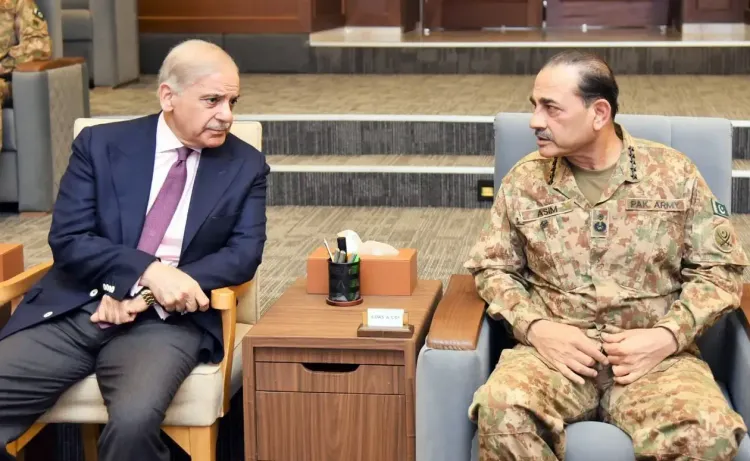
Synopsis
Pakistan's army chief Asim Munir floated a plan to carve the country's four provinces into up to 12 units — not through parliament or public debate, but from a podium in Karachi. Analysts say this is the final piece of a constitutional coup: after neutering elections, the judiciary, and parliament via the 26th and 27th Amendments, the military is now going after the last centres of autonomous political power.
Key Takeaways
General Asim Munir proposed restructuring Pakistan's four provinces into as many as 12 administrative units during an address to business leaders in Karachi .
Interior Minister Mohsin Naqvi and MQM-P leaders swiftly backed the proposal, endorsing what they called Munir's 'vision.' No official map, draft legislation, or clear criteria for the reorganisation has been released.
The 26th Amendment weakened judicial independence; the 27th Amendment unified military command under Munir and granted him lifetime constitutional immunity.
Analysts describe the provincial push as an attempt to fragment the last centres of autonomous political power beyond the military's direct control.
The February 2024 elections produced a Parliament whose composition reportedly bore little relationship to actual votes cast, after Imran Khan 's party was systematically dismantled.
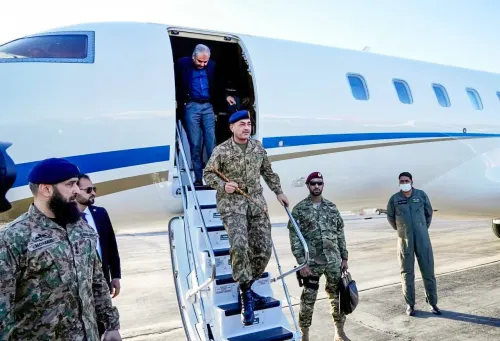
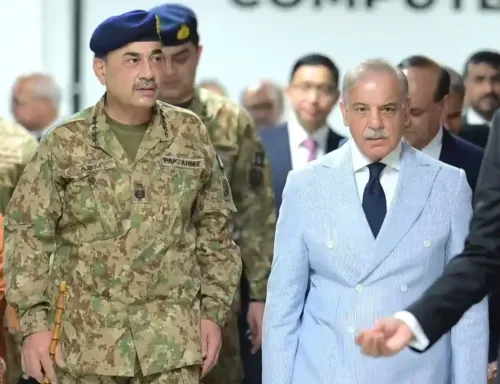
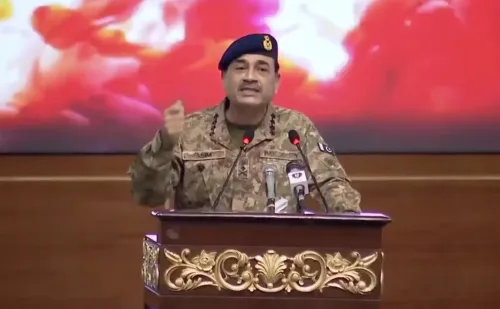
Pakistan's military chief General Asim Munir has proposed redrawing the country's provincial map — a move analysts describe as the latest phase of what they call a creeping constitutional coup, according to a detailed report by Parrhesia News. The proposal to create new provinces, reportedly floated by Munir during an address to business leaders in Karachi, did not emerge from a parliamentary commission, national debate, or any popular demand for devolution.
Where the proposal came from
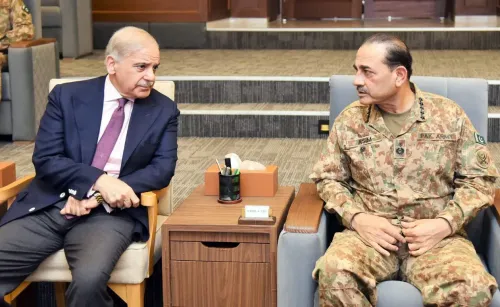
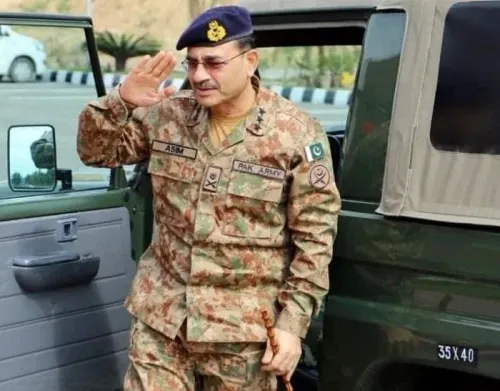
The push for provincial restructuring originated directly from Asim Munir, who currently holds multiple roles: Chief of Defence Forces, army chief, nuclear custodian, and — following the 27th Constitutional Amendment — a lifetime beneficiary of constitutional immunity and the country's only serving five-star officer. Interior Minister Mohsin Naqvi, described in the report as one of the military establishment's most active civilian allies, swiftly urged political parties to 'settle' the matter. Leaders of the Muttahida Qaumi Movement-Pakistan (MQM-P) followed, openly endorsing what they called Munir's 'vision.'
What is being proposed
Reports citing Pakistani media describe a plan to restructure the country's existing four provinces into as many as 12 administrative units. Notably, no official map, detailed draft, or clear criteria for the reorganisation has so far emerged. According to the Parrhesia News report, this ambiguity is deliberate: 'This deliberate vagueness is not incidental. It allows the establishment to market the proposal simultaneously as administrative modernisation, economic decentralisation, ethnic accommodation and better governance, while avoiding the only question that matters: who will gain power from the new arrangement?'
The constitutional coup in stages
The report situates the province proposal within a broader, multi-phase erosion of democratic structures. The February 2024 elections, it notes, produced a Parliament whose composition bore 'only a tenuous relationship to the actual votes cast.' The state had, by that point, already dismantled former Prime Minister Imran Khan's party, jailed its leadership, stripped it of its electoral symbol, and prevented victorious independents from converting their mandate into a government.
The 26th Amendment subsequently weakened judicial independence and gave the political executive greater influence over the appointment of the chief justice. The 27th Amendment went further, placing the armed services under Munir's unified command, extending his tenure, reinforcing executive control over constitutional adjudication, and granting him lifetime immunity. As Parrhesia News put it: 'Pakistan did not abolish democracy. It preserved the scenery while transferring the theatre to Rawalpindi.'
Why the provinces are the next target
According to the report, the proposed reorganisation is the 'logical next step' in this unfolding process. Having, in the establishment's view, neutralised elections, Parliament, and the judiciary, the focus has now shifted to the provinces — described as 'the last remaining centres of autonomous political power.' The stated objective, critics argue, is not to abolish federalism outright but to 'break it into pieces too small, too dependent and too politically fragile to resist the centre.'
With no official draft yet tabled in Parliament, the proposal remains at a vague, pre-legislative stage — but its origin at the top of the military hierarchy has drawn sharp scrutiny from analysts and the Pakistani diaspora watching these developments closely.
Point of View
Not an elected body, is driving constitutional geography. The 26th and 27th Amendments have already insulated Munir from judicial oversight and political accountability; a fragmented provincial map would complete the picture by eliminating the one tier of government capable of mobilising mass resistance. Mainstream coverage tends to treat each amendment as an isolated event; the Parrhesia analysis is more useful precisely because it reads them as a sequence.
NationPress
22 Sept 2026
Frequently Asked Questions
What is the proposal to create new provinces in Pakistan?
Pakistan's army chief General Asim Munir proposed restructuring the country's existing four provinces into as many as 12 administrative units, reportedly during an address to business leaders in Karachi. No official map, draft law, or detailed criteria has been made public so far.
What is Pakistan's 'constitutional coup' and which amendments are involved?
Analysts use the term 'constitutional coup' to describe a series of legal changes that have concentrated power in the military establishment. The 26th Amendment weakened judicial independence, while the 27th placed all armed services under Munir's unified command, extended his tenure, and granted him lifetime immunity — all without a genuine parliamentary mandate, critics argue.
Why is Asim Munir's role in proposing new provinces significant?
Constitutional changes of this nature would normally originate from elected parliaments or independent commissions. The fact that the proposal came from a serving military chief — who already holds immunity from legal accountability — has drawn sharp scrutiny from analysts who see it as a further erosion of civilian governance.
Who has supported the new provinces proposal in Pakistan?
Interior Minister Mohsin Naqvi urged political parties to 'settle' the matter shortly after Munir's address. Leaders of MQM-P also came out in open support, endorsing Munir's 'vision.' No major opposition party has been reported as endorsing the proposal.
How does this connect to the February 2024 elections and Imran Khan?
The February 2024 elections produced a Parliament analysts say bore little relation to actual votes cast, after the state dismantled former Prime Minister Imran Khan's party, jailed its leadership, and stripped it of its electoral symbol. The province proposal is described as the next logical step in the same process of consolidating central — and military — control.