US report flags Pakistan military's grip on fiscal, civilian policy in 2026

Synopsis
Washington's own fiscal watchdog report has handed Pakistan's civil-military imbalance a damning international audit. With General Asim Munir reportedly embedded in population policy, economic councils, and diplomatic missions — and defence budgets shielded from parliamentary scrutiny — the US report makes explicit what analysts have long argued: civilian governance in Pakistan is increasingly a formality.
Key Takeaways
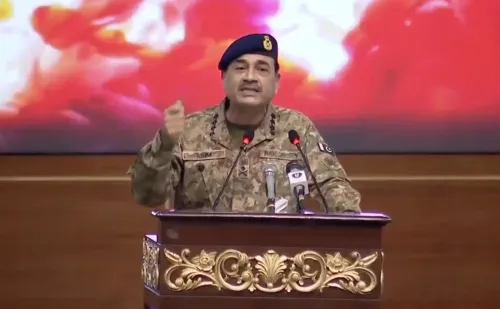
The US Department of State's Fiscal Transparency Report 2026 flagged Pakistan's military and intelligence budgets as lacking 'adequate parliamentary or civilian public oversight.' Army Chief General Asim Munir is reportedly involved in Pakistan's population management committee , the Special Investment Facilitation Council (SIFC) , disaster management, and high-level diplomatic engagements.
Pakistan records nearly 6.7 million births annually and could become the world's fourth most populous country by 2030 .
The military's expanding civilian role is seen by critics as undermining the 18th Constitutional Amendment , which devolved key powers to provincial governments.
The US report warns that fiscal opacity raises corruption risks and could deter foreign investment — a significant concern given Pakistan's dependence on external financing.
The United States Department of State's Fiscal Transparency Report 2026, released this week, has raised serious concerns about Pakistan's governance framework, specifically flagging that military and intelligence budgets are not subjected to 'adequate parliamentary or civilian public oversight.' The findings cast a long shadow over Islamabad's credibility with international lenders and investment partners.
Key Findings of the US Fiscal Transparency Report
The report identifies multiple structural deficiencies in Pakistan's public finance management: opaque defence spending, delayed publication of executive budget proposals, and limited disclosure of debt obligations. Collectively, these gaps, according to the report, undermine fiscal accountability, erode public trust, and raise red flags for international creditors who depend on transparent fiscal data to assess Pakistan's economic viability.
The report explicitly urges Islamabad to subject military budgets to parliamentary scrutiny, warning that fiscal opacity heightens corruption risks and weakens investor confidence — a significant concern for a country that relies heavily on external financing from partners including Washington.
Army Chief Asim Munir's Expanding Civilian Role
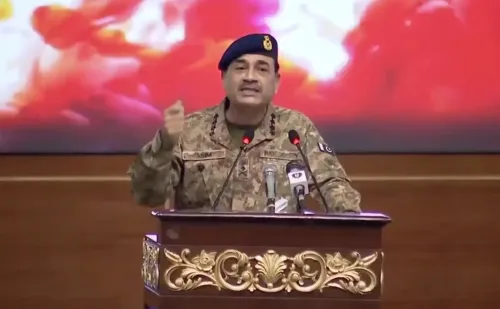
At the centre of this governance debate is Pakistan Army Chief General Asim Munir, whose institutional reach has reportedly expanded well beyond defence into areas traditionally reserved for elected civilian governments. According to recent reports, Munir has been involved in Pakistan's population management committee, a body tasked with addressing the country's demographic challenges.
The demographic stakes are considerable: Pakistan records nearly 6.7 million births annually, and projections suggest it could become the world's fourth most populous country by 2030. Critics argue that placing the army chief within a body governing population policy — a domain constitutionally devolved to provincial governments under the 18th Constitutional Amendment — represents a direct erosion of civilian authority.
Munir is also reportedly a member of the Special Investment Facilitation Council (SIFC), a civil-military body overseeing investment coordination and economic policy. The SIFC was designed to address investment bottlenecks and promote foreign direct investment, but its structure effectively places the military at the heart of Pakistan's economic decision-making, further blurring the boundary between civilian governance and military command.
Militarisation of Disaster Management and Diplomacy
Reports this month have also cited Munir's involvement in disaster management — a domain primarily handled by civilian institutions — adding another dimension to what analysts describe as creeping militarisation. Notably, Munir has also been identified as a central figure in Pakistan's diplomatic engagements, including high-level meetings in Washington, a role that conventionally falls within the purview of elected leadership and the foreign ministry.
Constitutional Implications and Democratic Erosion
The 18th Constitutional Amendment, enacted to reverse decades of centralised and military-influenced governance, devolved key responsibilities — including population welfare and disaster response — to provincial governments. It also removed the President's power to unilaterally dissolve Parliament.
Experts argue that the current pattern of military involvement in civilian policy effectively circumvents the spirit of that amendment. This centralisation, they contend, risks alienating provincial governments and weakening democratic institutions — or, as critics suggest, merely reflects their already diminished state. Islamabad has reportedly acquiesced to military leadership in these domains rather than empowering constitutionally mandated provincial authorities.
What Comes Next
The US report's findings arrive at a moment when Pakistan is navigating fragile economic conditions and seeking to attract foreign investment. The combination of fiscal opacity and expanding military influence over civilian governance could complicate Islamabad's engagement with multilateral lenders and bilateral partners. Whether the civilian government moves to assert oversight over military budgets — as the report recommends — or continues on the current trajectory will be closely watched by international observers and domestic democratic forces alike.
Point of View
Public indictment of a governance model where the military has made itself indispensable to every consequential civilian function. What makes this moment distinct is the breadth: Munir's reported footprint now spans demography, economics, disaster response, and diplomacy — domains that, in functional democracies, are precisely where militaries do not operate. Pakistan's civilian government faces a structural paradox: it needs military backing to survive politically, yet that reliance is the very mechanism eroding the institutional legitimacy it needs to attract investment and international support. The 18th Amendment was Pakistan's most serious attempt to break this cycle; the current trajectory suggests it is being quietly hollowed out.
NationPress
12 Aug 2026
Frequently Asked Questions
What did the US Fiscal Transparency Report 2026 say about Pakistan?
The US Department of State's Fiscal Transparency Report 2026 found that Pakistan's military and intelligence budgets lack 'adequate parliamentary or civilian public oversight.' The report also flagged opaque defence spending, delayed budget disclosures, and limited debt transparency, urging Islamabad to subject military finances to parliamentary scrutiny.
What is General Asim Munir's role in Pakistan's civilian governance?
General Asim Munir is reportedly involved in Pakistan's population management committee, the Special Investment Facilitation Council (SIFC), disaster management coordination, and diplomatic engagements including meetings in Washington. Critics argue this represents an unprecedented expansion of military authority into domains constitutionally reserved for civilian and provincial governments.
What is the Special Investment Facilitation Council (SIFC)?
The SIFC is a civil-military body established to address Pakistan's investment bottlenecks, attract foreign direct investment, and foster public-private partnerships. Its structure places the military at the centre of economic policymaking, effectively giving the army a formal role in decisions traditionally managed by elected civilian governments.
How does Pakistan's military role affect the 18th Constitutional Amendment?
The 18th Constitutional Amendment devolved key responsibilities — including population welfare and disaster management — to Pakistan's provincial governments and removed the President's power to unilaterally dissolve Parliament. Experts argue that the military's current involvement in these domains circumvents the amendment's intent, recentralising authority that was constitutionally distributed.
Why does Pakistan's fiscal opacity matter to international lenders?
International lenders and investors rely on transparent fiscal data to assess a country's economic viability and creditworthiness. The US report warns that Pakistan's opaque defence budgets heighten corruption risks and could deter foreign investment — a serious concern given that Pakistan depends heavily on external financing from multilateral institutions and bilateral partners including the United States.