Pakistan's FY26 current account near-balanced, but remittances mask export weakness
Synopsis
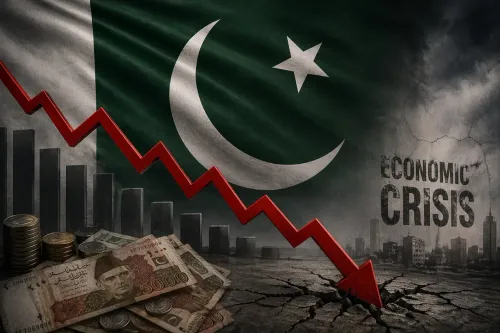
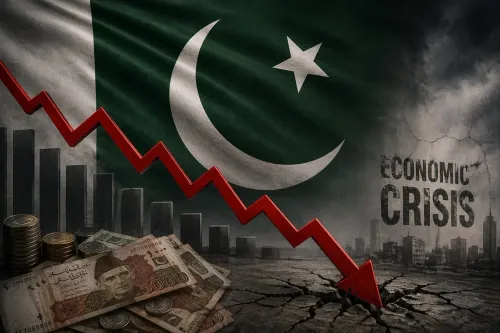
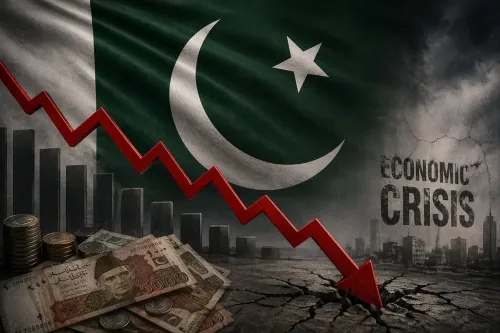
Pakistan's FY26 numbers look reassuring on the surface — a near-zero current account deficit and reserves up $4 billion. But strip out a record $41.6 billion in worker remittances and the picture is starkly different: exports fell, imports rose, and the country's external gap nearly hit $44 billion. The stability is borrowed, not earned.
Key Takeaways
Pakistan posted a current account deficit of just $139 million in FY26 , a near-balanced position.
The State Bank of Pakistan (SBP) held foreign exchange reserves of approximately $18.4 billion at end- June 2026 , up nearly $4 billion year-on-year.
A record $41.6 billion in workers' remittances almost entirely offset a goods and services trade deficit of $35.5 billion .
Goods exports declined while imports rose in FY26, indicating remittance-financed consumption rather than export-led recovery.
The SBP's reserve accumulation reflects absorption of remittance inflows, not structural growth in external earning capacity.
Heavy reliance on Middle East -sourced remittances exposes Pakistan to geopolitical and Gulf labour market risks.
Pakistan closed fiscal year 2026 (FY26) with a current account deficit of just $139 million and foreign exchange reserves of approximately $18.4 billion — but according to a Business Recorder analysis, the apparent stabilisation of its external position rests almost entirely on record remittance inflows rather than any structural improvement in exports or economic competitiveness. Analysts warn the recovery remains fragile and heavily contingent on factors outside Islamabad's control.
Headline Numbers and What They Conceal
The State Bank of Pakistan (SBP) ended June 2026 with reserves nearly $4 billion higher than a year earlier, before a post-year-end decline due to external debt payments. At the surface, the numbers suggest a country that has pulled back from the brink of a balance-of-payments crisis. The reality, according to the report, is considerably more precarious.
Pakistan recorded a goods and services trade deficit of roughly $35.5 billion in FY26. After factoring in primary income outflows — including interest payments and profit repatriation — the external gap widened to nearly $44 billion. That shortfall was almost entirely plugged by secondary income inflows of $43.8 billion, of which a record $41.6 billion came from workers' remittances.
Exports Fell, Imports Rose
Goods exports declined over the fiscal year even as imports rose, a combination that signals the current account improvement was financed by remittance-driven consumption rather than export-led growth. Critically, the underlying competitiveness of Pakistan's tradeable sector does not appear to have improved — a structural weakness that previous IMF programmes have repeatedly flagged.
This is not the first time Pakistan has posted a narrow current account deficit while masking deep external vulnerabilities. The country navigated a near-default in 2023 before securing an IMF bailout, and the current configuration — high remittances, weak exports — mirrors the pre-crisis pattern of earlier cycles.
SBP Intervention and Reserve Accumulation
The SBP actively purchased dollars from the interbank market during FY26 to rebuild reserves. Analysts note, however, that this accumulation reflects the central bank's effort to absorb excess foreign currency generated by remittance flows — not a genuine expansion of Pakistan's external earning capacity. The distinction matters: reserves built on absorbed remittances are more vulnerable to a sudden drop in diaspora transfers than reserves built on export receipts.
Geopolitical Exposure and the Remittance Risk
Pakistan's growing dependence on remittances has simultaneously heightened its exposure to geopolitical developments in the Middle East, where a significant share of its overseas workforce is employed. Any regional disruption — conflict escalation, labour policy shifts in Gulf states, or a slowdown in Gulf construction activity — could rapidly erode the remittance buffer that is currently holding the current account together.
As Pakistan heads into the next fiscal year, the central question is whether Islamabad can translate external stability into export diversification and productivity gains — or whether the country will remain a remittance-dependent economy one geopolitical shock away from renewed balance-of-payments stress.
Point of View
On paper, a remarkable turnaround for a country that was negotiating emergency IMF support just two years ago. But the composition of that improvement should give pause: Pakistan did not grow its way to stability — it remitted its way there. A $41.6 billion remittance inflow is a lifeline, not a foundation. Exports fell and imports rose, which means the productive base is not expanding to meet the country's import appetite. The SBP's reserve build-up, meanwhile, is a sterilisation exercise, not a competitiveness signal. The deeper risk is geopolitical: Pakistan's external buffer is now hostage to Gulf labour markets and Middle East stability — neither of which Islamabad controls. Until export diversification and domestic productivity become the story, each 'stabilisation' cycle risks being the prelude to the next crisis.
NationPress
20 Oct 2026
Frequently Asked Questions
What was Pakistan's current account deficit in FY26?
Pakistan recorded a current account deficit of just $139 million in fiscal year 2026, a near-balanced position. However, analysts caution that this improvement was driven almost entirely by record remittance inflows rather than export growth.
How much did Pakistan receive in workers' remittances in FY26?
Pakistan received a record $41.6 billion in workers' remittances in FY26, forming the bulk of $43.8 billion in total secondary income inflows. This almost entirely offset a goods and services trade deficit of roughly $35.5 billion.
What are Pakistan's foreign exchange reserves as of June 2026?
The State Bank of Pakistan held approximately $18.4 billion in foreign exchange reserves at the end of June 2026, nearly $4 billion higher than a year earlier. Reserves subsequently declined due to post-year-end external debt payments.
Why are analysts concerned about Pakistan's economic recovery?
Analysts are concerned because Pakistan's external improvement is driven by remittances rather than export competitiveness or productivity gains. Goods exports fell while imports rose in FY26, and the country's growing reliance on Middle East-sourced remittances exposes it to geopolitical risks outside its control.
What is the risk of Pakistan's dependence on Middle East remittances?
Any disruption in the Middle East — including conflict, Gulf labour policy changes, or a slowdown in construction activity — could sharply reduce remittance flows that are currently holding Pakistan's current account together. This makes the country's external stability structurally fragile despite the headline improvement.