Pakistan mineral deals with US ring hollow as security crisis deepens
Synopsis
Pakistan is pitching its copper, gold, and critical mineral reserves to Washington as a strategic asset — but a new MEMRI report exposes a damning gap between promise and delivery. With 1,066 militant attacks in 2025 (the highest since 2014), the Reko Diq project stalled again, and the military tightening its grip on economic decisions, Pakistan's mineral diplomacy risks becoming another headline that never translates into investment.
Key Takeaways
A MEMRI report finds Pakistan's mineral diplomacy with the US is undermined by persistent gaps between promises and delivery.
The multibillion-dollar Reko Diq copper and gold project in Balochistan faces renewed delays due to security concerns.
Pakistan recorded at least 1,066 militant attacks in 2025 — a 17 per cent rise from 2024 and the highest annual total since 2014 .
316 militant attacks were recorded in the first quarter of 2026 , with March alone seeing 146 incidents .
The report warns that Field Marshal Asim Munir's consolidation of military authority is reshaping the environment in which Pakistan's resources are offered to foreign investors.
Washington's critical mineral interest could inadvertently strengthen Pakistani institutions with limited civilian oversight, the report cautions.
Pakistan's renewed push to position its vast mineral wealth as a cornerstone of its relationship with the United States is running into a harsh reality check, according to a report by the US-based Middle East Media Research Institute (MEMRI). The report, released on 31 October, finds persistent and widening gaps between Islamabad's ambitious economic promises and its actual capacity to deliver on them.
Decades of Investment, Little to Show
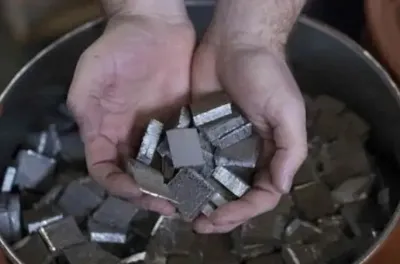
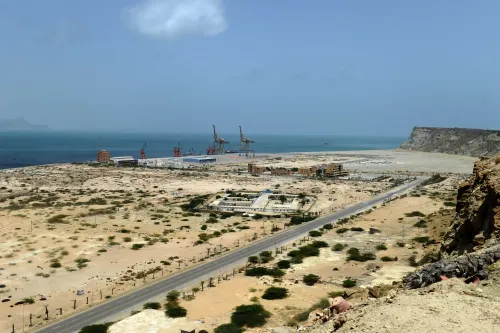
Despite years of Chinese capital flowing into infrastructure, energy, and mining ventures under the China-Pakistan Economic Corridor (CPEC), the country's mining sector has failed to emerge as a meaningful driver of economic growth. Gwadar district in Balochistan province continues to fall well short of its commercial potential, while the multibillion-dollar Reko Diq copper and gold project — one of the world's largest undeveloped deposits — faces renewed delays, reportedly due to worsening security conditions in the region.
The MEMRI report draws attention to the structural contradiction at the heart of Pakistan's mineral pitch: 'Pakistan's vast mineral resources are emerging as a new pillar of its relationship with the United States. From Balochistan's copper and gold deposits to the chromite, gemstones and other minerals of Khyber Pakhtunkhwa, these resources offer considerable economic potential. Yet their development raises a fundamental question: who controls Pakistan's mineral wealth, and who benefits from its extraction?'
Military's Growing Grip on Economic Decisions
The report identifies Pakistan's military establishment as a central and increasingly dominant force in shaping both economic policymaking and foreign investment decisions. It singles out Field Marshal Asim Munir, whose consolidation of military authority has coincided with a contraction of civic space and a centralisation of control over natural resource policy.
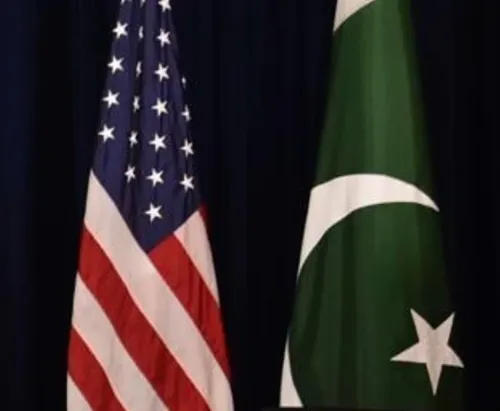
According to the report, Washington's interest in diversifying its critical mineral supply chains — reducing dependence on China — creates fresh openings for Pakistan. However, it cautions that this convergence of interests risks strengthening institutions that operate with limited civilian oversight, complicating the long-term governance of any investment framework.
Security Crisis Undermines Investment Case
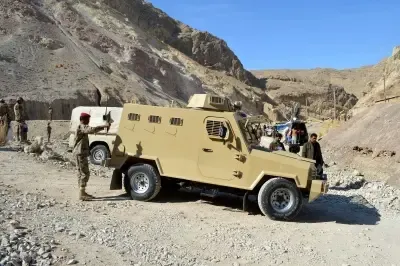
The report identifies Pakistan's deteriorating internal security environment as the single biggest obstacle to realising its mineral investment potential. Militant violence continues to disrupt areas that contain some of the country's richest reserves — precisely the regions being offered to foreign investors.
Citing data from the Pakistan Institute for Conflict and Security Studies (PICSS), the report states that Pakistan recorded at least 1,066 militant attacks in 2025, a rise of approximately 17 per cent from the 908 incidents logged in 2024. That figure represents the highest annual total since 2014.
The trend showed no sign of abating in 2026. PICSS monthly data recorded 316 militant attacks in the first quarter alone. March 2026 saw 146 incidents — roughly 76 per cent higher than the 83 attacks recorded in February.
What Persistent Insecurity Means for Mining Projects
The report spells out the operational consequences for any prospective investor: 'Mining projects depend upon secure transport corridors, predictable access to extraction sites, protection of technical personnel and substantial long-term capital commitments. Persistent insecurity raises operational costs, complicates financing and can delay the construction of mines, processing facilities and related infrastructure.'
This comes amid a broader geopolitical context in which Pakistan is seeking to leverage US interest in critical minerals to diversify away from near-total economic dependence on China. Notably, Beijing has already channelled significant investment into the same sectors — yet repeated security-related delays have raised serious questions about the commercial viability of those ventures. The pattern, analysts warn, is at risk of repeating itself with American capital.
What Happens Next
Whether Washington proceeds with deeper mineral engagement will likely depend on how seriously it weighs the governance and security risks flagged in analyses such as this one. For Pakistan, the challenge is not just attracting investment — it is demonstrating that it can protect it. Until the security situation in Balochistan and Khyber Pakhtunkhwa stabilises, the country's mineral diplomacy may continue to generate headlines without generating returns.
Point of View
Attract foreign interest, and defer the hard questions about governance and security. The MEMRI report is notable for naming what most diplomatic engagements politely avoid — that the Pakistani military's expanding commercial footprint means any foreign investor is, in effect, entering a partnership with an institution that answers to no civilian authority. Washington's hunger for non-Chinese critical mineral supply chains is real, but strategic impatience has a cost: pouring capital into an environment where 1,066 militant attacks occurred in a single year is not diversification — it is risk substitution. The Reko Diq saga, now in its third decade of stops and starts, is the clearest evidence that Pakistan's mineral wealth will remain a geopolitical talking point rather than an economic reality until the security and governance fundamentals change.
NationPress
31 Oct 2026
Frequently Asked Questions
Why is Pakistan promoting its mineral wealth to the United States?
Pakistan is seeking to leverage US interest in diversifying critical mineral supply chains away from China, positioning its copper, gold, chromite, and gemstone reserves as a strategic alternative. However, a MEMRI report warns that persistent security threats and military dominance over economic decisions undermine the investment case.
What is the Reko Diq project and why is it delayed?
Reko Diq is one of the world's largest undeveloped copper and gold deposits, located in Pakistan's Balochistan province. The project has faced renewed delays due to worsening security conditions in the region, continuing a pattern of disruptions that has plagued it for decades.
How bad is Pakistan's militant violence problem in 2025 and 2026?
According to the Pakistan Institute for Conflict and Security Studies (PICSS), Pakistan recorded at least 1,066 militant attacks in 2025 — a 17 per cent increase from 908 incidents in 2024 and the highest annual total since 2014. In the first quarter of 2026, 316 attacks were recorded, with March alone seeing 146 incidents, roughly 76 per cent more than February.
What role does Pakistan's military play in its mineral sector?
The MEMRI report identifies Pakistan's military establishment as having a growing and overlapping influence over economic policymaking and foreign investment decisions. It specifically highlights Field Marshal Asim Munir's consolidation of authority and the shrinking of civilian oversight as key factors reshaping the environment for natural resource investment.
How does Pakistan's US mineral diplomacy affect its relationship with China?
Pakistan's engagement with the US adds a new geopolitical dimension to its longstanding economic relationship with China, which has already invested heavily in infrastructure, energy, and mining through CPEC. Repeated security-related delays have raised questions about the viability of Chinese-backed ventures, a pattern the report warns could repeat with American investment.