Pakistan's pluralism rhetoric vs reality: Minorities, press freedom, and 'Containeristan'
Synopsis
Pakistan's leaders told Geneva and the UN General Assembly that their country champions pluralism and dialogue — yet back home, only 37 of 1,817 minority religious sites remain operational, 273 enforced disappearances were recorded in 2025, journalists face life sentences, and 2,000 shipping containers ring Islamabad to stop political protests. The gap between the rhetoric and the record has now been named, in their own words, by Pakistani lawyers, editors and content creators.
Key Takeaways
Pakistan's National Assembly Speaker Sardar Ayaz Sadiq called for pluralism in Geneva on 29 July 2025 ; PM Shehbaz Sharif echoed the theme at the UN General Assembly on 25 September 2026 .
Only 37 of 1,817 Hindu temples and Sikh gurdwaras in Pakistan remain operational, according to figures placed before the country's Minority Caucus in late 2025 .
Ahmadiyya community records show 21 mosques desecrated, 381 graves destroyed, and 250 members booked in religious cases in 2025 alone.
The HRCP recorded 273 enforced disappearances in 2025 ; journalists and human rights lawyers were sentenced to life terms and 17 years respectively in early 2026 .
At least 2,000 shipping containers were deployed to seal off Islamabad ahead of a PTI march for Imran Khan 's release in early October 2026 .
Amnesty International counted at least 40 dead — 34 protesters — after Pakistan banned the Jammu Kashmir Joint Awami Action Committee in PoK on 5 June 2026 .
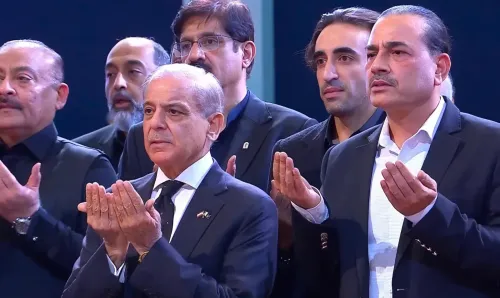
While Pakistan's National Assembly Speaker Sardar Ayaz Sadiq spoke of pluralism at the World Conference of Speakers of Parliament in Geneva on 29 July 2025, and Prime Minister Shehbaz Sharif urged dialogue and diversity before the 81st UN General Assembly session on 25 September 2026, the country's domestic record presents a sharply different picture — one its own citizens, lawyers, and rights bodies have documented in detail.
A Tale of Two Speeches
Sadiq's Geneva address cautioned fellow parliamentary leaders against 'ultra-nationalism' and 'narrow interpretations of nationalism', closing with a call to 'accept diversity'. Fourteen months later, Sharif told the General Assembly that Pakistan had 'chosen dialogue over confrontation' and pledged 'full diplomatic, political, and moral support' to Kashmiris, while citing a mosque demolition in Saharanpur as evidence of Islamophobia in India.
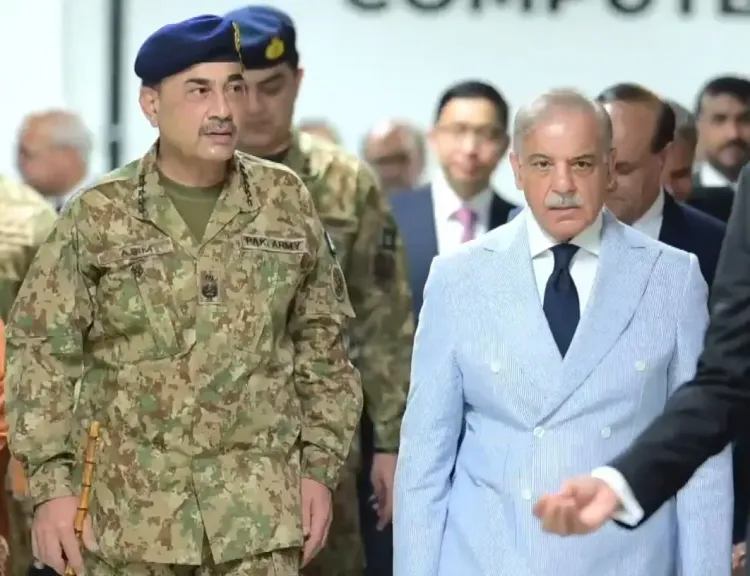
Both speeches were crafted for international audiences. Notably, the most telling moment in Sharif's address came when he thanked Field Marshal Asim Munir for helping 'create space for diplomacy' — an elected head of government publicly crediting his army chief from the UN podium, a detail that speaks volumes about where effective power resides in Islamabad.
Minorities: The Ground Reality
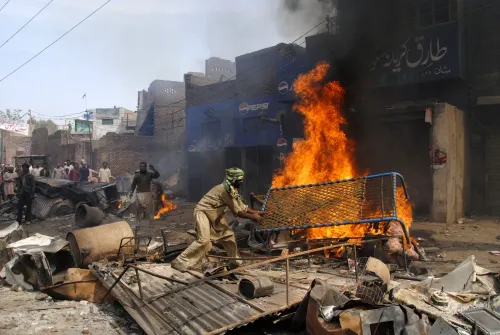
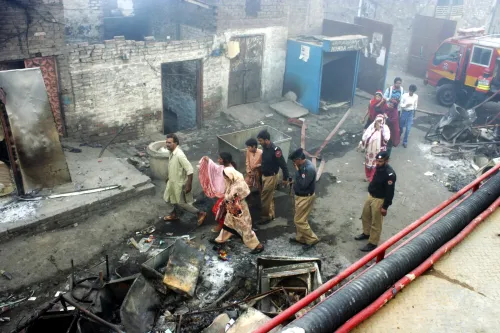
Pakistan's own parliament has been informed that of the 1,817 Hindu temples and Sikh gurdwaras across the country, only 37 remain operational — a figure placed before its Minority Caucus in late 2025. Hindu legislator Ramesh Kumar Vankwani attributed the decline to the Evacuee Trust Property Board, the body mandated to protect these sites, which critics allege prioritises the land value of these properties over their preservation.
For the Ahmadiyya community, the situation is documented as more acute. Community records indicate 21 mosques desecrated, 381 graves destroyed, and 250 Ahmadis booked in religious cases in 2025 alone. These figures are broadly consistent with documentation by the US Commission on International Religious Freedom, including the demolition of three Ahmadiyya mosques in Punjab within ten days in February 2025, and the lynching of Laeeq Cheema by a mob of over 400 in Karachi in April 2025.
In January 2025, police and municipal staff razed a pre-Partition mosque in Daska — built under the direction of Pakistan's first Foreign Minister Sir Muhammad Zafarullah Khan — following months of pressure from the Tehreek-e-Labbaik Pakistan, even after the community had complied with the official notice. The Dawoodi Bohra community of Karachi faced bombings in 2012 and 2015, illustrating that the hierarchy of belonging now operates within Islam as well as outside it. Pakistan's roughly 14,500 Baha'is, categorised as non-Muslims under the Constitution, face structural exclusion.
Press Freedom and Civil Liberties Under Strain
The Human Rights Commission of Pakistan (HRCP) recorded 273 new enforced disappearances in 2025. At the launch of its report in May 2026, rights veteran Hina Jilani stated that the Pakistani state had 'surrendered to the security apparatus', describing the country as a 'security state'.
On 2 January 2026, an anti-terrorism court in Islamabad handed journalists Moeed Pirzada, Shaheen Sehbai, and Wajahat Saeed Khan two life sentences each in absentia for alleged 'May 9 digital terrorism'. Three weeks later, human rights lawyers Imaan Mazari and Hadi Ali Chattha were sentenced to 17 years each under the Prevention of Electronic Crimes Act for tweets — a sentence the Supreme Court suspended only in September 2026.
The Kashmir Contradiction
Sharif informed the General Assembly that Kashmiris had waited eight decades for a plebiscite. This came just two months after Pakistan-occupied Kashmir (PoK) held its own legislative election under an internet blackout. The Jammu Kashmir Joint Awami Action Committee — a coalition of traders, transporters, lawyers and students — which had been demanding the abolition of 12 assembly seats reserved for refugees living elsewhere in Pakistan, was banned under anti-terrorism law on 5 June. By 28 July, Amnesty International had counted at least 40 dead, 34 of them protesters. Critics argue that a state which has not permitted the Kashmiris it already governs to freely choose their own assembly is in a contradictory position asking the world to hold a plebiscite for Kashmiris it does not.
'Containeristan': Democracy Under the Stack
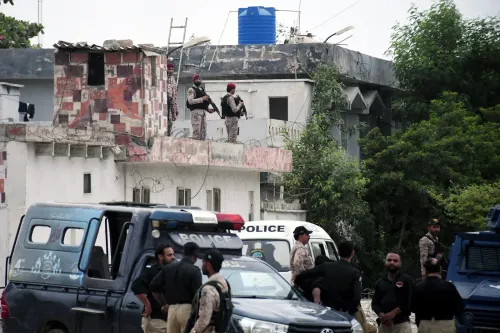
In the weeks surrounding the UNGA address, Islamabad was sealed off with at least 2,000 shipping containers, according to BBC Urdu, stacked two storeys high with spikes welded on top, to block the Pakistan Tehreek-e-Insaf (PTI) from marching for Imran Khan's release — earning the capital the moniker 'Containeristan'. The New York Times quoted an Islamabad urban economist observing that containers, normally a symbol of trade, had become symbols of 'chaos and restriction'. Truckers in Karachi reportedly refused to drive north, fearing vehicle seizure.
Talks between the government and the opposition collapsed in the early hours of 4 October 2026 over whether PTI leaders could even meet Khan and his doctors. Khyber Pakhtunkhwa Chief Minister Sohail Afridi launched the march from Lakki Marwat the same afternoon. Pakistani content creators watching India's youth-led protests over the NEET paper leaks — which led to Education Minister Dharmendra Pradhan's resignation in July 2026 — noted the contrast: Muhammad Waleed said Pakistan 'never had a democracy to begin with', Mahwash Ajaz observed that Indian protesters sing Vande Mataram while Pakistani protesters are labelled separatists, and former Dawn editor Cyril Almeida called Jantar Mantar a 'warning to Pindi'.
The march now moving towards Islamabad will test whether the system retains any capacity to absorb dissent, or whether coercion has become the state's only available instrument.
Point of View
But the current iteration is unusually well-documented — by Pakistani rights bodies, Pakistani editors, and Pakistani creators, not by adversaries. That the critique India voiced at the Human Rights Council had already been made more forcefully inside Pakistan strips it of its usual 'foreign propaganda' deflection. The deeper structural problem is that the Pakistani state's international legitimacy rests on strategic usefulness rather than citizen consent, which means it has little incentive to close the gap — until the cost of maintaining it externally outweighs the cost of confronting it at home. The containers around Islamabad suggest that moment has not yet arrived.
NationPress
5 Oct 2026
Frequently Asked Questions
What did Pakistan's leaders say at Geneva and the UN General Assembly?
National Assembly Speaker Sardar Ayaz Sadiq called for pluralism and acceptance of diversity at the World Conference of Speakers of Parliament in Geneva on 29 July 2025. PM Shehbaz Sharif told the 81st UN General Assembly session on 25 September 2026 that Pakistan had chosen dialogue over confrontation and pledged support for Kashmiris.
What is the status of minority religious sites in Pakistan?
Only 37 of 1,817 Hindu temples and Sikh gurdwaras in Pakistan remain operational, according to figures presented to the country's Minority Caucus in late 2025. Hindu legislator Ramesh Kumar Vankwani blamed the Evacuee Trust Property Board, which is meant to protect these sites, for their deterioration.
What has happened to Ahmadiyya Muslims and journalists in Pakistan in 2025-26?
Ahmadiyya community records show 21 mosques desecrated, 381 graves destroyed, and 250 members booked in religious cases in 2025 alone. In January 2026, three journalists received life sentences in absentia for 'digital terrorism', and two human rights lawyers were sentenced to 17 years under cybercrime law for tweets.
What is 'Containeristan' and why has Islamabad been blocked off?
'Containeristan' is the name given to Islamabad after authorities deployed at least 2,000 shipping containers, stacked two storeys high with spikes on top, to prevent a PTI march demanding Imran Khan's release in early October 2026. Talks between the government and PTI collapsed on 4 October over access to Khan, and the march was launched from Khyber Pakhtunkhwa the same day.
What is the contradiction in Pakistan's Kashmir position?
PM Sharif told the UN that Kashmiris have waited 80 years for a plebiscite, yet just two months earlier Pakistan-occupied Kashmir held elections under an internet blackout, and at least 40 people — 34 of them protesters — died after Pakistan banned a local civic coalition demanding fairer assembly representation in PoK.