Pakistan uses women as political targets: Imran Khan's sisters jailed

Synopsis
Pakistan is detaining women not for crimes committed but for influence they might wield — Imran Khan's three sisters were jailed under a public order ordinance to prevent a protest march, and a rights lawyer was re-arrested hours after the Supreme Court freed her. The pattern, documented by Parrhesia News, reveals a state that now treats prospective political persuasion as a criminal act.
Key Takeaways
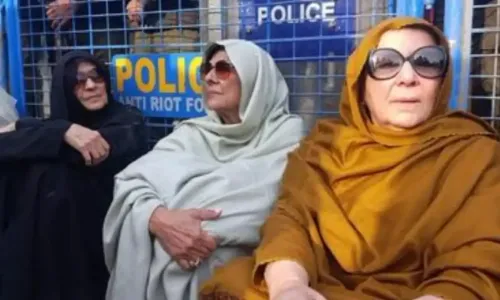
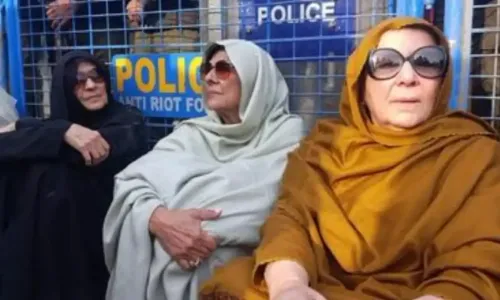
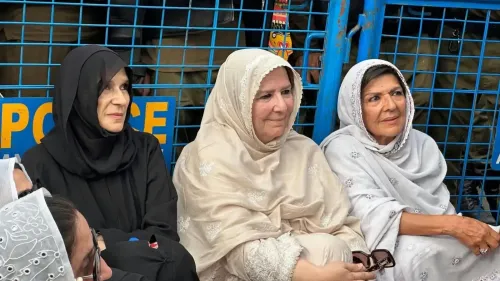
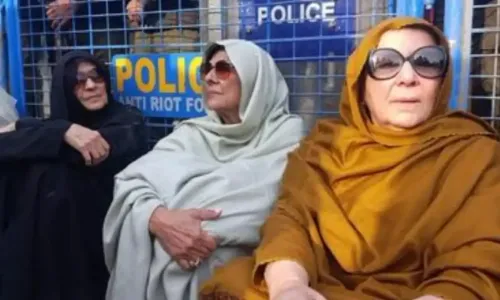
Aleema Khan , Uzma Khan , and Noreen Niazi — sisters of former PM Imran Khan — were detained in Lahore on 20–21 September under the Punjab Maintenance of Public Order Ordinance .
All three received 30-day detention orders ahead of a protest originally scheduled for 27 September and later moved to 4 October .
Their family says the sisters have begun a hunger strike as the only protest available to them.
Rights lawyer Imaan Zainab Mazari-Hazir and husband Hadi Ali Chattha were re-arrested hours after the Supreme Court granted them bail and suspended their 17-year cybercrime sentences.
A Parrhesia News report argues Pakistan is using detention of women as a tool of political control, targeting prospective influence rather than proven criminal conduct.
Pakistan's systematic repression of women has crossed into the terrain of deliberate political strategy, with female relatives and activists being detained not for criminal acts but to neutralise movements the state perceives as threats, according to a detailed report by Parrhesia News. The pattern, analysts argue, transforms women into instruments of control — where demanding the release of a political prisoner can itself become grounds for imprisonment.
Imran Khan's Sisters Detained in Lahore
Former Pakistani Prime Minister Imran Khan's three sisters — Aleema Khan, Uzma Khan, and Noreen Niazi — were detained in Lahore in the run-up to a planned demonstration demanding their brother's release. According to the Parrhesia News report, Aleema was taken into custody on 20 September, while Uzma and Noreen were arrested the following day. All three received 30-day detention orders under the Punjab Maintenance of Public Order Ordinance.
The protest they were reportedly mobilising for was originally scheduled for 27 September and later postponed to 4 October. The march, the report notes, has been relocated — but the women remain behind bars. Their family has since announced that the three sisters have begun a hunger strike, reportedly the only form of protest the authorities have left available to them.
The Official Justification and Its Contradictions
Authorities claimed the women were mobilising supporters and posed a potential threat to 'public peace and tranquillity.' The Parrhesia News report pointedly observed that the stated danger amounted to three sisters speaking publicly about their brother's imprisonment and encouraging others to peacefully demonstrate. 'They were not detained because a court had established that they had committed a crime. They were detained because the government feared what they might persuade others to do in the future,' the report stated.
Notably, these arrests occurred in Lahore — not in the border regions where Pakistani authorities have historically invoked insurgency narratives to suspend legal protections. The report highlighted the significance of this geography, arguing that no foreign conspiracy or militant threat was required: three elderly women advocating for a jailed sibling were apparently sufficient to activate the machinery of public safety law.
A Wider Pattern of Targeted Detentions
The Parrhesia News analysis contextualises the Khan sisters' arrests within a broader crackdown. The case of human-rights lawyer Imaan Zainab Mazari-Hazir and her husband Hadi Ali Chattha illustrates the scale of the problem. The couple was re-arrested just hours after the Supreme Court of Pakistan granted them bail and suspended their 17-year prison sentences in a cybercrime case.
The report described this sequence as 'almost pedagogical' — a demonstration that court orders carry practical weight only when the security apparatus chooses to honour them. Mazari-Hazir, a lawyer who has represented Baloch students, families of the forcibly disappeared, journalists, and others the state prefers to keep from public attention, has reportedly been targeted precisely because of that work.
Political Calculation Behind the Crackdown
The Parrhesia News report argues that imprisoning Imran Khan alone proved insufficient, because his sisters continued to amplify his cause, carry his messages, and sustain supporter engagement. Detaining them, therefore, serves to disrupt the movement without requiring prosecutors to establish a criminal offence. In this framework, the report contends, influence itself becomes the offence — with a 'prediction about tomorrow' supplying the legal justification for imprisonment today.
Critics and rights groups argue this represents a fundamental subversion of due process, in which prospective political impact — rather than past conduct — determines who gets detained. How Pakistan's government responds to mounting domestic and international scrutiny of these arrests will test whether judicial oversight retains any practical authority over the country's security apparatus.
Point of View
And the Punjab variant is no different. What is striking here is the candour of the justification: authorities did not allege violence or conspiracy, only the potential to persuade. If influence is now a detainable offence, the space for any organised political opposition effectively collapses. The Mazari-Hazir re-arrest, hours after a Supreme Court order, is the sharper signal: it tells every lawyer, activist and journalist exactly how much judicial protection they can rely on when the security apparatus decides otherwise.
NationPress
3 Oct 2026
Frequently Asked Questions
Why were Imran Khan's sisters arrested in Lahore?
Aleema Khan, Uzma Khan, and Noreen Niazi were detained under the Punjab Maintenance of Public Order Ordinance ahead of a protest demanding Imran Khan's release. Authorities claimed they were mobilising supporters and posed a threat to public peace, though no criminal charges were filed against them.
How long can they be held without trial?
All three sisters received 30-day detention orders under the Punjab Maintenance of Public Order Ordinance, which allows preventive detention without a court-established criminal offence. Their detention began on 20–21 September.
What is the hunger strike about?
According to their family, the sisters began a hunger strike while in detention, described by the Parrhesia News report as 'the one means of protest the authorities have left within their reach' after their arrest prevented them from participating in or organising the planned march.
Who is Imaan Zainab Mazari-Hazir and why was she re-arrested?
Imaan Zainab Mazari-Hazir is a Pakistani human-rights lawyer who has represented Baloch students, families of the forcibly disappeared, and journalists. She and her husband Hadi Ali Chattha were re-arrested hours after the Supreme Court granted them bail and suspended their 17-year cybercrime sentences, in what the Parrhesia News report describes as an illustration of the security apparatus overriding judicial authority.
Is this pattern of detaining women activists new in Pakistan?
According to the Parrhesia News report, the targeting of women connected to opposition movements reflects a deliberate political strategy rather than isolated incidents. The report argues that women have become vital to movements the state seeks to suppress, making their detention an efficient tool to disrupt those movements without needing to prove a criminal offence.