Pakistan's Taliban pressure may push Kabul closer to India: Analysis
Synopsis
Pakistan's coercive strategy against the Taliban over the TTP may be producing the opposite of its intended effect — pushing Kabul toward India, the one relationship Islamabad has spent decades trying to block. With Moscow Format talks imminent, a temporary ceasefire in rhetoric looks more likely than a structural fix to one of South Asia's most combustible fault lines.
Key Takeaways
Pakistan's military pressure on the Taliban over the TTP risks pushing Kabul closer to India , according to a Middle East Monitor analysis.
India has quietly rebuilt ties with the Taliban government since 2021 without formally recognising it, giving Kabul diplomatic and economic alternatives to Islamabad.
The Taliban have accused Pakistan of backing armed opposition fighters who clashed with their forces in Badakhshan and Nuristan .
The Moscow Format meeting on 6 October 2026 brings Afghanistan , Pakistan , China , India , Iran , Russia , and Central Asian states together but is expected to produce only a temporary de-escalation.
The deeper question remains whether Islamabad can reconcile its security needs with the Taliban-controlled Afghan order that has been in place since 2021 .
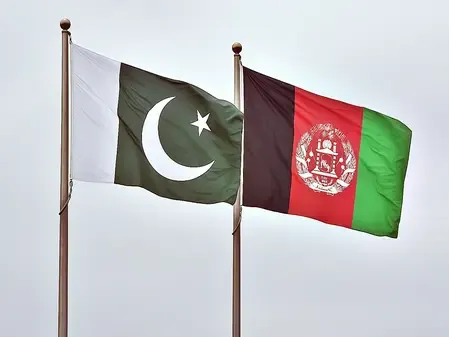
Pakistan's ongoing military pressure on Afghanistan's Taliban government over the Tehreek-e-Taliban Pakistan (TTP) is unlikely to produce the security cooperation Islamabad seeks — and may instead drive Kabul closer to India, according to an analysis published ahead of the Moscow Format talks on Monday, 6 October 2026. The assessment, carried in Middle East Monitor, arrives at a moment of acute strain in Pakistan-Taliban relations.
The Limits of Coercion
The analysis argues that Pakistan's strategy of border pressure and military strikes inside Afghan territory has a structural ceiling. 'This exposes the limits of coercion. Pakistan can raise the price of non-compliance through border pressure and military force, as its latest strikes inside Afghanistan demonstrate. But if the obstacle is partly structural, greater pressure will not necessarily produce proportionately greater cooperation. It can also increase Kabul's incentive to reduce its vulnerability to Islamabad,' the Middle East Monitor analysis stated.
In other words, the harder Islamabad pushes, the stronger the Taliban's motivation becomes to seek alternative partners — and India is positioned to fill that role.
India's Quiet Inroads with Kabul
India has steadily rebuilt ties with the Taliban administration since the latter's takeover in 2021, without extending it formal diplomatic recognition. That careful calibration has given Kabul both economic and diplomatic options that do not run through Islamabad. The analysis notes that 'for India, deterioration in Pakistan–Taliban relations offers an opportunity to recover strategic space' — a development Pakistan has historically worked to prevent.
Notably, the analysis frames this as an uncomfortable reversal for Islamabad: 'Pressure intended to make the Taliban more responsive to its security demands can encourage Kabul to deepen precisely the relationship Islamabad has historically sought to constrain.'
The TTP at the Heart of the Dispute
The Taliban administration has accused Pakistan of providing support to armed opposition groups — including former Afghan security personnel — who have clashed with Taliban forces in the provinces of Badakhshan and Nuristan. Islamabad denies the charges, but the accusations have deepened mutual distrust.
The analysis also flags an alternative Pakistani calculation: 'Opposition forces capable of contesting parts of Afghanistan could erode the Taliban's monopoly of force, compel it to divert military resources internally and create pressure that cross-border coercion has failed to generate.' This suggests Islamabad may be weighing destabilisation as a lever — a high-risk strategy with unpredictable regional spillover.
What the Moscow Format Talks Can and Cannot Fix
The Moscow Format meeting will bring Afghanistan and Pakistan to the same table alongside China, India, Iran, Russia, and the Central Asian states. The analysis is cautious about expectations: the talks may produce a temporary de-escalation, but Pakistan's underlying problem — reconciling its security requirements with the Taliban-controlled Afghan order that emerged after 2021 — will persist.
'The question after Moscow will therefore not simply be whether Pakistan and the Taliban can stop their latest confrontation. It will be whether Islamabad still believes the Afghan order created after 2021 can be made compatible with its security requirements through changes in Taliban behaviour alone,' the report concluded.
How that question is answered will shape the trajectory of one of South Asia's most consequential — and least-discussed — geopolitical fault lines.
Point of View
Rarely questioned assumption: that Kabul can be kept strategically dependent on Islamabad through a mix of patronage and coercion. The TTP crisis is stress-testing that assumption in real time, and it is failing. India's careful, non-recognition-based engagement with the Taliban is not accidental — it is precisely calibrated to exploit this window without triggering a diplomatic blowback. The Moscow Format talks will paper over the immediate friction, but the structural problem is worse than Islamabad admits: a Taliban government that no longer needs Pakistani legitimacy and is actively auditioning replacements. The irony is sharp — Pakistan's pressure campaign may yet deliver India the Afghan strategic depth it was denied for three decades.
NationPress
4 Oct 2026
Frequently Asked Questions
Why is Pakistan pressuring the Taliban?
Pakistan is pressuring the Taliban to act against the Tehreek-e-Taliban Pakistan (TTP), a militant group that has carried out attacks inside Pakistan and is believed to operate from Afghan territory. Islamabad has used border pressure and military strikes inside Afghanistan in an attempt to compel Taliban cooperation.
How could Pakistani pressure push Kabul closer to India?
According to the Middle East Monitor analysis, coercive pressure increases the Taliban's incentive to reduce its dependence on Pakistan by deepening ties with alternative partners. India has been steadily rebuilding economic and diplomatic ties with Kabul since 2021, offering exactly that alternative without demanding formal concessions.
What are the Moscow Format talks?
The Moscow Format is a multilateral diplomatic platform that brings together Afghanistan, Pakistan, China, India, Iran, Russia, and Central Asian states to discuss Afghan stability. The October 2026 meeting was expected to address the latest Pakistan-Taliban tensions, though analysts are cautious about lasting outcomes.
Has India formally recognised the Taliban government?
No. India has rebuilt ties with the Taliban administration since 2021 — including reopening its embassy in Kabul — without extending formal diplomatic recognition. This calculated ambiguity has given India influence with Kabul while avoiding the political costs of full recognition.
What is the Taliban's accusation against Pakistan?
The Taliban have accused Pakistan of supporting armed opposition fighters, including former Afghan security personnel, who have clashed with Taliban forces in the provinces of Badakhshan and Nuristan. These accusations have significantly deepened mistrust between the two sides.