Justice Ujjal Bhuyan: Mass disenfranchisement intrinsically arbitrary, violates Constitution
Synopsis
A sitting Supreme Court judge has called mass disenfranchisement 'intrinsically arbitrary' and constitutionally impermissible — invoking the basic structure doctrine at a time when petitions challenging large-scale electoral roll deletions are pending before the very court he sits on. The remarks set a striking constitutional benchmark just as the Election Commission's roll revision exercise faces mounting legal scrutiny.
Key Takeaways
Justice Ujjal Bhuyan of the Supreme Court condemned mass electoral disenfranchisement as 'intrinsically arbitrary' on 4 October 2026 .
He invoked Article 326 (universal adult suffrage) and Article 14 (right to equality), calling them non-negotiable pillars of the Constitution.
He held that except for deceased voters, no name can be removed from electoral rolls without notice and a hearing .
The remarks come amid petitions challenging large-scale deletions under the Election Commission of India's Special Intensive Revision of electoral rolls.
Justice Bhuyan described detaching voting rights from citizenship as 'like taking out the soul from the body.'
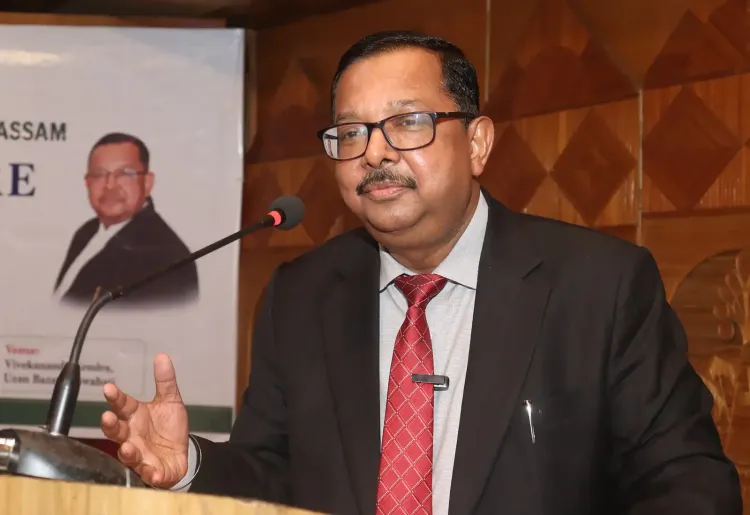
Supreme Court judge Justice Ujjal Bhuyan on Sunday, 4 October 2026, delivered a sharp rebuke of any electoral process that results in the wholesale exclusion of citizens from voter rolls, calling such a process 'intrinsically arbitrary' and a direct assault on the Constitution. His remarks came during the valedictory address of the 19th Justice Bodh Raj Sawhney Memorial Moot Court Competition at NALSAR University of Law, Hyderabad.
Key Remarks from Justice Bhuyan
Speaking to an audience of law students and legal scholars, Justice Bhuyan said: 'If any process results in disenfranchising millions and millions of Indian citizens, making them second-class citizens in their own country in the sense of being citizens without voting rights, such a process is intrinsically arbitrary. No amount of whataboutery can justify it.'
He emphasised that the Indian Constitution does not contemplate two classes of citizens — one with voting rights and another without. Invoking Article 326 (universal adult suffrage) and Article 14 (right to equality), he declared: 'No authority can do it; no court can condone it. No one is above the Constitution.'
Right to Vote as Basic Structure
Justice Bhuyan underlined that the right to vote is deeply intertwined with India's freedom struggle and forms part of the basic structure of the Constitution. He asserted that Article 326 'cannot be tinkered with at all.' He further held that except in the case of a deceased voter, no name can be deleted from the electoral rolls without notice and a hearing — a procedural safeguard he described as constitutionally non-negotiable.
Detaching the right to vote from citizenship, he remarked, would be 'like taking out the soul from the body' — a formulation that underscores the foundational nature of adult suffrage to Indian democratic identity.
Context: Electoral Roll Deletions Under Scrutiny
The remarks carry significant weight amid ongoing controversies surrounding large-scale deletions reportedly carried out under the Election Commission of India's Special Intensive Revision of electoral rolls. Related petitions are currently pending before the Supreme Court. Critics have alleged that the revision process has disproportionately affected marginalised communities, though the Election Commission has defended the exercise as a legitimate update of voter data.
Notably, this is not the first time judicial voices have raised concerns about the process — but Justice Bhuyan's formulation, framing mass disenfranchisement as constitutionally impermissible on its face, goes further than prior cautionary observations.
Broader Constitutional Implications
Justice Bhuyan's observations reinforce the judiciary's role as a guardian of adult suffrage, which courts have consistently held to be a cornerstone of Indian democracy. The invocation of the basic structure doctrine — under which Parliament itself cannot amend certain constitutional provisions — signals that any legislative or administrative attempt to whittle down voting rights faces an extremely high constitutional bar.
As petitions challenging electoral roll deletions await hearing, the Supreme Court's eventual ruling on the matter is expected to set binding precedent on the procedural safeguards required before any citizen's name is struck off the rolls.
Point of View
Then any administrative exercise that deletes millions of names without due process is not merely irregular but potentially void. Mainstream coverage has focused on the political dimensions of roll deletions; the deeper story is whether the judiciary is signalling a constitutional floor that administrative action cannot breach. The Election Commission's silence in response will itself be telling.
NationPress
5 Oct 2026
Frequently Asked Questions
What did Justice Ujjal Bhuyan say about mass disenfranchisement?
Justice Ujjal Bhuyan said that any process resulting in disenfranchising millions of Indian citizens is 'intrinsically arbitrary' and violates the Constitution. Speaking at NALSAR University of Law in Hyderabad on 4 October 2026, he declared that no authority can justify such a process and no court can condone it.
Which constitutional articles did Justice Bhuyan invoke?
Justice Bhuyan invoked Article 326, which guarantees universal adult suffrage, and Article 14, which guarantees the right to equality. He stated that Article 326 forms part of the basic structure of the Constitution and 'cannot be tinkered with at all.'
Why are Justice Bhuyan's remarks significant right now?
The remarks come at a time when petitions challenging large-scale deletions from electoral rolls — carried out under the Election Commission of India's Special Intensive Revision — are pending before the Supreme Court. His comments set a high constitutional bar against administrative disenfranchisement.
Can a voter's name be deleted from electoral rolls without notice?
According to Justice Bhuyan, no name can be deleted from electoral rolls without notice and a hearing, except in the case of a deceased voter. He described this procedural safeguard as constitutionally non-negotiable.
What is the Election Commission's Special Intensive Revision?
The Special Intensive Revision is a process by which the Election Commission of India periodically reviews and updates voter rolls, including deleting names of ineligible or non-existent voters. Critics allege the latest revision has led to large-scale and arbitrary exclusions, which the Election Commission has defended as a legitimate data-cleaning exercise.