Pakistan's provincial restructuring plan: More bureaucracy, less governance
Synopsis
Pakistan's recurring proposal to carve up Sindh and Punjab into new provinces is back — and analysts say it could make things significantly worse. With half the population in poverty, 28 million children out of school, and a depleted national treasury, the fear is that restructuring creates new patronage networks rather than better public services, as even the Interior Minister has admitted the system has 'collapsed.'
Key Takeaways
Pakistan's debate over territorial restructuring has reignited, with Sindh province again at the centre of the controversy.
Analysts warn each new province adds a governor, cabinet, secretariat, and police command , diverting scarce resources from public services to political patronage.
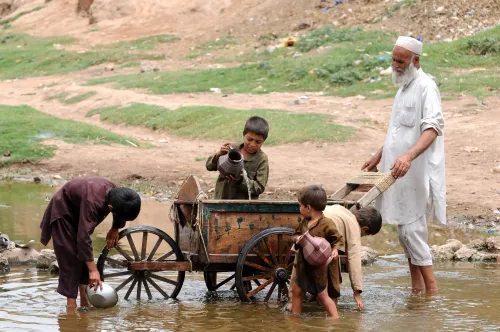
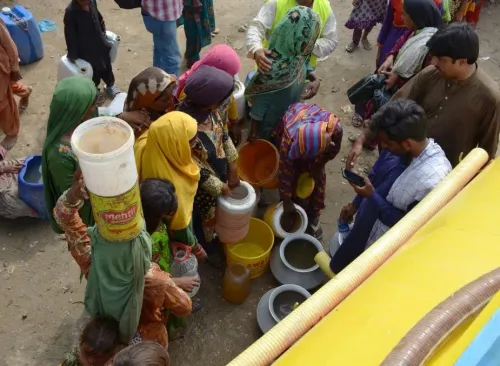
Half of Pakistan's population lives below the poverty line; 28 million children are out of school and three-fourths lack clean water.
Since 2023 , Pakistan has been under a gruelling economic stabilisation programme with fiscal and foreign exchange buffers still depleted.
Interior Minister Mohsin Naqvi said in July that Pakistan's governance system has 'collapsed' and called for cross-party reform talks.
Critics argue restructuring risks fuelling identity-driven politics in an already fragile, multiethnic state.
Pakistan's debate over territorial restructuring has resurfaced with fresh intensity, with Sindh province once again at the centre of a long-running controversy. A new analysis warns that multiplying the number of provinces will not shrink the distance between citizens and decision-makers — it will simply add layers of patronage, cost, and bureaucratic weight to a state already struggling to function.
The Hidden Costs of More Provinces
Every new province, analysts note, demands its own governor, cabinet, secretariat, police command, and full administrative machinery. Resources that could otherwise build schools, hospitals, or critical infrastructure would instead be absorbed by the expanding apparatus of government. 'The costs of such restructuring are not trivial,' the analysis states. 'Worse, it creates fresh avenues for patronage, diverting scarce resources into political bargaining rather than public service.'
Proposals to divide Punjab or Sindh resurface every few years, typically framed as remedies for unwieldy governance. Critics argue the logic is flawed. If Pakistan were to carve out 10 or 12 new provinces, the result would likely be more secretariats, more assemblies, and another tier of file-stamping bureaucrats — with the culture of centralised control remaining fundamentally unchanged.
Electoral System and Urban Governance Failures
The analysis also flags structural problems within the electoral framework. Metropolitan economies, it argues, require leadership accountable to entire cities. Instead, Pakistan's ward-based system incentivises representatives to maximise benefits for their own neighbourhoods, producing fragmented outcomes in transit planning, housing, and economic strategy. 'The result is incoherence… a fragmentation that mirrors the failures of provincial governance itself,' it notes.
Economic Fragility Makes Restructuring More Dangerous
The timing is particularly fraught. Since 2023, Pakistan has been locked in a gruelling economic stabilisation programme that has choked growth while attempting to rebuild fiscal and foreign exchange buffers — buffers that, according to the analysis, remain depleted. Pursuing restructuring against popular sentiment risks stoking identity-driven politics across what is already a complex, multiethnic landscape.
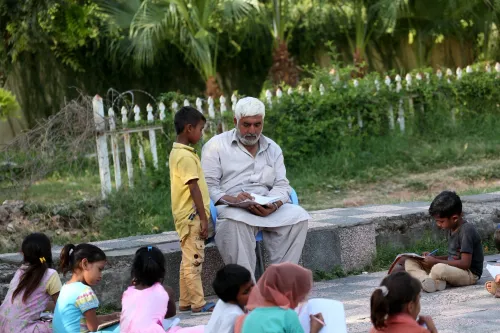
The human cost of existing failures is stark. According to figures cited in the analysis, half of Pakistan's population lives below the poverty line, 28 million children are out of school, four in ten experience stunted growth, and three-fourths lack access to clean drinking water. Domestic and foreign investors, meanwhile, are reportedly deterred by persistent insecurity. Against this backdrop, analysts argue, provincial restructuring is not a solution — it is a distraction.
What Pakistan's Interior Minister Said
In July, Interior Minister Mohsin Naqvi acknowledged the depth of Pakistan's governance crisis at the Pakistan Economic Summit. 'The system we are living under has collapsed. Problems cannot be solved through it,' Naqvi said, as quoted by leading Pakistani daily Dawn. He called for cross-party talks on reforms, proposed creating new provinces, and warned that Pakistan would still be debating the same issues a decade from now if no structural reset occurred. Naqvi also pointed to the paradox of an agricultural nation importing wheat as evidence of systemic failure that has persisted, in his words, for 70 years.
What Comes Next
The restructuring debate is unlikely to resolve quickly, given the competing ethnic, political, and resource-based interests at stake. For Pakistan's young population — already bearing the weight of unemployment, poverty, and institutional failure — how the state chooses to deploy its limited resources in the coming months will be as consequential as any provincial boundary drawn on a map.
Point of View
At its core, a displacement activity — it gives politicians a structural argument to make while avoiding accountability for governance failures that are cultural and institutional, not cartographic. Adding provinces without fixing the centralised patronage culture simply replicates the problem at a smaller scale, at greater cost. What is striking is that even the Interior Minister has admitted the system has collapsed, yet the proposed remedy is more of the same architecture. For a country where half the population lives in poverty and 28 million children are out of school, the opportunity cost of this debate is not abstract — it is measured in schools not built and hospitals not funded.
NationPress
5 Oct 2026
Frequently Asked Questions
Why is Pakistan's territorial restructuring controversial?
The debate is controversial because creating new provinces requires significant resources — governors, cabinets, secretariats, and police commands — that critics say should instead fund schools, hospitals, and infrastructure. Analysts warn it risks generating more patronage networks and bureaucratic layers without improving governance or public services.
What did Pakistan's Interior Minister Mohsin Naqvi say about the governance system?
Interior Minister Mohsin Naqvi said at the Pakistan Economic Summit in July that Pakistan's governance system has 'collapsed' and cannot resolve the country's problems. He called for cross-party talks on reforms and proposed creating new provinces, warning that without a reset, Pakistan would still be debating the same issues in a decade.
What is Pakistan's current economic situation?
Since 2023, Pakistan has been under a gruelling economic stabilisation programme aimed at rebuilding fiscal and foreign exchange buffers, which analysts say remain depleted. Half the population lives below the poverty line, 28 million children are out of school, and investors are reportedly deterred by persistent insecurity.
Would creating more provinces improve governance in Pakistan?
Analysts argue it would not. Their view is that multiplying provinces shifts the geographical seat of power but leaves the culture of centralised control intact. If Pakistan were to create 10 or 12 new provinces, the likely outcome would be more secretariats and assemblies rather than better services or closer accountability between citizens and decision-makers.
Which provinces are at the centre of Pakistan's restructuring debate?
Punjab and Sindh are the two provinces most frequently cited in restructuring proposals, with Sindh again emerging as the primary flashpoint in the current round of debate. Both are large, multiethnic provinces where resource distribution and identity politics intersect.